This article contains affiliate links: if you buy through them we may earn a commission, at no extra cost to you. Read our affiliate disclosure.
Eight swimmers in matching suits, a wall of sound from the pool speakers, and then one of them is thrown into the air and lands in a perfectly straight line, with the rest of the team already moving into the next shape. At Los Angeles in 1984, this sport (then called synchronized swimming) made its Olympic debut, and the United States won the first solo and duet golds. In 2028 it returns to Los Angeles, at the Long Beach Aquatics Center. Artistic swimming, formerly called synchronized swimming, is a sport of choreographed routines performed in the water, judged on difficulty, execution, artistry and how well the swimmers move together.
Artistic Swimming guides: what do you need?
New to artistic swimming? Start with the first card. Everything here is general education, not medical advice.
History & Origins of Artistic Swimming
Artistic swimming, long known as synchronized swimming, is one of the youngest Olympic aquatic sports. Its Olympic debut came at Los Angeles in 1984, with solo and duet events, and the United States won both golds. The team event replaced the solo in 1996, and the duet returned for 2000 (World Aquatics).
In the United States the sport’s national championships date back to 1946, a year after the AAU first recognised it, and USA Artistic Swimming was established in 1979 as U.S. Synchronized Swimming. Worldwide the sport sits under World Aquatics. A recent change is that teams of eight may now include up to two men, the rule used at the Paris 2024 Games, and mixed duets are part of the World Championships program. The Olympic duet remains two women. Los Angeles hosts the sport again in 2028 at the Long Beach Aquatics Center, with 10 teams and 18 duets (96 athletes). We list documented milestones only; stories of water ballet before the 1940s are not covered here.
- 1946: First U.S. national championships.
- 1979: U.S. Synchronized Swimming, now USA Artistic Swimming, is established.
- 1984: Olympic debut in Los Angeles, with solo and duet; the US wins both golds.
- 1996: The team event replaces the solo at the Olympics.
- 2000: The duet returns to the Olympic programme.
- 2024: Paris Games: teams of eight may include up to two men.
- 2025: Singapore World Championships; Iris Tio Casas wins titles in all four disciplines over her career.
- 2027: Budapest World Championships, the start of LA28 qualification.
- 2028: Duet final planned for July 26 and team final for July 29 in Long Beach.
Source: our artistic swimming page sources, World Aquatics (LA28 qualification) and World Aquatics sport terminology.
Recent Champions
Scope: this list covers the 2025 World Aquatics Championships in Singapore only, every artistic swimming event we could confirm. It is not every championship, and Olympic and earlier World Championship results are not included here because we could not confirm them against an official page.
| Event | Champion(s), Singapore 2025 |
|---|---|
| Women’s solo technical | Iris Tio Casas (ESP) |
| Women’s solo free | Xu Huiyan (CHN) |
| Men’s solo technical | Aleksandr Maltsev (Neutral Athlete) |
| Men’s solo free | Aleksandr Maltsev (Neutral Athlete) |
| Women’s duet technical | Anna-Maria and Eirini-Marina Alexandri (AUT) |
| Women’s duet free | Iris Tio Casas and Lilou Lluis Valette (ESP) |
| Mixed duet technical | Aleksandr Maltsev and Mayya Gurbanberdieva (Neutral Athletes) |
| Mixed duet free | Iris Tio Casas and Dennis Gonzalez Boneu (ESP) |
| Team technical, team free, team acrobatic | China (all three) |
Source: World Aquatics, milestones and breakthroughs, results report summary and mixed duet free report. In the mixed duet free, Spain beat Neutral Athletes B by 0.4125 points. For the Olympics, see our aquatics page and World Aquatics.
Results verified through November 13, 2026. The latest completed World Aquatics Championships is Singapore 2025; the next is Budapest in 2027. We have not checked 2026 regional events.
Records & Milestones
Artistic swimming is judged, and scoring rules change between cycles, so there is no comparable list of world records. Here are verified championship milestones instead.
| Milestone | Athlete or team | Event and date |
|---|---|---|
| First artistic swimmer with world titles in all four disciplines (solo, duet, mixed duet, team); three golds and three bronzes at one championships | Iris Tio Casas (ESP) | World Aquatics Championships, Singapore, July 2025 |
| Swept all three team events (technical, free, acrobatic) | China | Singapore, July 2025 |
| Won the mixed duet free by 0.4125 points over Neutral Athletes B | Spain (Tio Casas, Gonzalez Boneu) | Singapore, July 2025 |
| Medals reached athletes from nine national federations; Spain won nine medals, the most of any country | Spain | Singapore, July 2025 |
Source: World Aquatics (links in the section above). Records verified through November 13, 2026.
Notable Athletes
Contemporary athletes who stand out from the latest World Championships. This is not a ranking.
- Iris Tio Casas (ESP): won the solo technical, women’s duet free and mixed duet free at Singapore 2025 and became the first artistic swimmer to hold world titles in all four disciplines.
- Aleksandr Maltsev (Neutral Athlete): won the men’s solo technical and free and the mixed duet technical in Singapore, and silver in the mixed duet free.
- Xu Huiyan (CHN): won the women’s solo free at Singapore 2025.
- Anna-Maria and Eirini-Marina Alexandri (AUT): sisters who won the women’s duet technical in Singapore.
- Dennis Gonzalez Boneu (ESP): mixed duet free champion at Singapore 2025 with Tio Casas.
- Lilou Lluis Valette (ESP): women’s duet free champion at Singapore 2025 with Tio Casas.
Source: World Aquatics. We left out historic Olympic champions until we can confirm them against official sources.
How we keep this current: we re-check results after each major championship and update the date above. Spot an error? See our editorial policy.
This page explains how the sport works, who can take part, what it asks of the body and what to know about safety. It is one of the aquatic sports, along with swimming, diving and water polo.
Artistic swimming at a glance
| What it is | Routines of music-timed movements, lifts and throws, performed by solos, duets and teams. |
|---|---|
| How it is scored | Scores run from 0 to 10 in 0.25 steps. An element panel and an artistic impression panel of five judges each score the routine; technical controllers check synchronisation and the declared difficulty. |
| Team size | Teams have eight athletes, up to two of them men. Olympic duets are two women. |
| Routine types | Technical, free and acrobatic routines, with different time limits and required elements. |
| Where it is played | Indoor pools. At the Olympics, in a 25 to 29 July 2028 window in Long Beach. |
| Governing bodies | World Aquatics worldwide; USA Artistic Swimming (founded 1979 as U.S. Synchronized Swimming) in the United States. |
| Levels | Age group (12-19), Junior (15-18), Senior and Masters (20+), collegiate, national and Olympic teams. |
How it works
World Aquatics describes three kinds of routine. A technical routine has set elements: a team swims five technical required elements plus four free ones, within 2 minutes 50 seconds, and a women’s duet swims five required plus three free elements within 2 minutes 20 seconds. A free routine has no limits on music or choreography: a team has up to 3 minutes 30 seconds, a duet 2 minutes 45 seconds. The acrobatic routine is a team showpiece lasting 3 minutes, built from seven acrobatic elements and seven transitions. Time limits come with small tolerances, and the total includes a short stretch of “deck work” at the start.
Elements are scored for execution and multiplied by a degree of difficulty; the artistic impression panel judges choreography and musicality, performance and transitions. Acrobatic moves fall into four groups: airborne (jumps and throws), balance (stacks and lifts), combined, and platform (the team forms a base to lift a swimmer). Hybrids are combinations of leg movements done with held breath, in families such as thrusts, rotations and flexibility.
Who plays it and at what level
USA Artistic Swimming runs competition categories for Age Group swimmers (12 to 19), Junior (15 to 18) and Senior and Masters (20 and over), starting at the local level, and lists collegiate teams and a U.S. Collegiate Nationals. It also names Youth, Junior and Senior National Teams with National Team Trials. The sport’s national championships date back to 1946, a year after the AAU first recognised it.
Olympic and Paralympic status (as of 2026). Artistic swimming debuted at the Olympics in 1984 with solo and duet events. Team replaced them in 1996, and the duet returned for 2000. World Aquatics lists the duet and team events on the LA28 program, with 10 teams and 18 duets (96 athlete places), the USA qualifying automatically as host. Qualification starts at the 2027 World Aquatics Championships in Budapest, with continental championships and a World Cup Super Final to follow. The duet final is scheduled for 26 July 2028 and the team final for 29 July 2028. We could not find the sport in any official Paralympic programme; check the official programme of the current Games.
What it demands of the body
Artistic swimming combines hard effort with long breath-holds. In a study of 16 elite swimmers doing free duet routines, oxygen use reached nearly 90 percent of peak within 67 seconds, blood lactate peaked at about 5.9 mmol/L and heart rate swung from about 72 to about 204 beats per minute, dropping during breath-holds. A 2026 review of 36 studies found older routines spent roughly 59 to 64 percent of the performance time holding the breath. Beyond fitness, the sport asks for shoulder and hip mobility, strength to lift or stay vertical, and the control of the core and legs to hold shapes in the water. A study of 36 national-team swimmers in Spain measured these qualities across youth, junior and senior ages.
Health and safety
This is general information, not medical advice. If you are hurt, see a sports medicine doctor, physical therapist or athletic trainer.
Injuries. A 2025 systematic review of 11 studies found a clear trend of joint, ligament, muscle and tendon injuries in the shoulders, back and knees, with a lot of training and forced positions behind them. It also warned that the research is limited, so firm numbers are not yet possible. At the 2019 FINA World Championships in Gwangju, the most frequent injury among elite athletes across the aquatic sports was overuse of the shoulder.
Breath-holding. A 2026 review warns that routines scored under recent rules reward long underwater work, which could expose younger athletes to more hypoxic stress; the authors call for more research. Anyone training long breath-holds should do it with a coach on deck, never alone, and never by forcing extreme breath-holds. Our swimming injuries page covers hypoxic blackout warnings for parents and coaches.
Head injuries. Lifts, throws and tight team formations put heads close to other swimmers and the pool wall. The CDC’s HEADS UP guidance applies: if a swimmer has a head blow and shows headache, dizziness, confusion or balance trouble, take her out of the water and have a healthcare provider decide when she can return. Call 911 for danger signs such as repeated vomiting or a seizure.
Ears, eyes and skin. Hours in pools mean swimmer’s ear and chlorine irritation. The CDC advises towel-drying ears, tilting the head to drain water and seeing a provider for ear pain or drainage, and showering to remove sweat and dirt, which helps cut chloramine irritation.
Training, recovery and nutrition pointers
Training is split between pool time, dryland strength and flexibility, and routine rehearsals with music. Because the sport is a close cousin of swimming, the pool-fitness basics in our swimming training guide apply, and the same goes for swimming recovery and swimming nutrition.
Gear
Competition suits and accessories follow the event’s rules, so ask your club and check the current rulebook before buying. Useful extras are for care around the pool: ear plugs for swimmers prone to swimmer’s ear, and after-practice tools for tired shoulders and legs. Recovery tools are for comfort, not treatment.

Mack's AquaBlock Swimming Ear Plugs
- Reusable silicone
- Triple flange
- Marketed as the official ear plugs of USA Swimming
$6.99 at Amazon, as of Nov 17, 2026 02:07 UTC
Check price on Amazon
TriggerPoint GRID 1.0 Foam Roller
- 13 x 5 inch
- Multi-density
- Hollow core keeps its shape
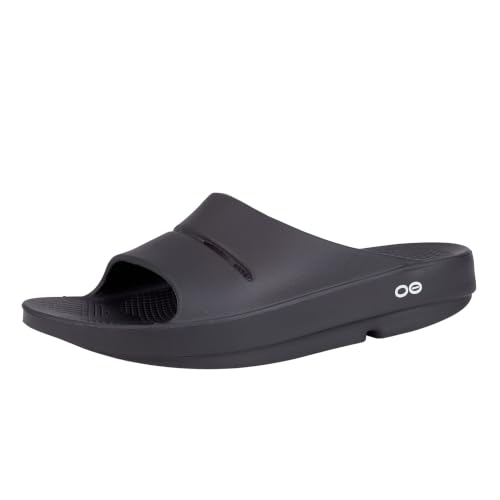
OOFOS OOahh Slide
- OOfoam slide
- APMA Seal of Acceptance
- Machine washable
$59.95 at Amazon, as of Nov 17, 2026 02:07 UTC
Check price on AmazonRelated sports and disciplines
- Aquatics, the parent hub for the water sports.
- Swimming, open-water swimming, diving and water polo.
- Gymnastics and dance for other artistic sports.
Artistic swimming FAQs
Can men do artistic swimming?
Yes, in teams. World Aquatics teams are eight athletes with up to two men. The women’s duet events are for two women.
Is artistic swimming the same as synchronized swimming?
It is the same sport under a newer name. The Olympic debut in 1984 was under the older name.
How are routines scored?
Panels of judges score execution of elements, multiplied by difficulty, plus artistic impression for choreography, musicality, performance and transitions. Technical controllers check synchronisation and the declared difficulty.
How do I start?
Find a club through USA Artistic Swimming’s club directory. Comfort in deep water and basic swimming skill help, and most clubs run introductory sessions.
Is it safe for kids?
It can be, with qualified coaching. Shoulder, back and knee overuse and head contact in lifts are the main concerns, and breath-hold work should always be supervised.
Sources
- World Aquatics, Sport terminology: understanding artistic swimming.
- World Aquatics, Artistic swimming path to LA28 and LA28 schedule.
- USA Artistic Swimming, About USA Artistic Swimming.
- Epidemiological study of injuries in artistic swimming: a systematic review (2025).
- Physiological load and breath-holding in artistic swimming: a scoping review (2026).
- Physiological responses to full and segmented duet routines in elite artistic swimmers (2025).
- Injuries and illness during the 2019 Gwangju FINA and Masters World Championships.
- CDC, HEADS UP: signs and symptoms; preventing swimmer’s ear; preventing eye irritation from pool chemicals.
Keep exploring: the swimming hub, swimming injuries, our recovery tools guide, foam rollers and the sports hub.