This article contains affiliate links: if you buy through them we may earn a commission, at no extra cost to you. Read our affiliate disclosure.
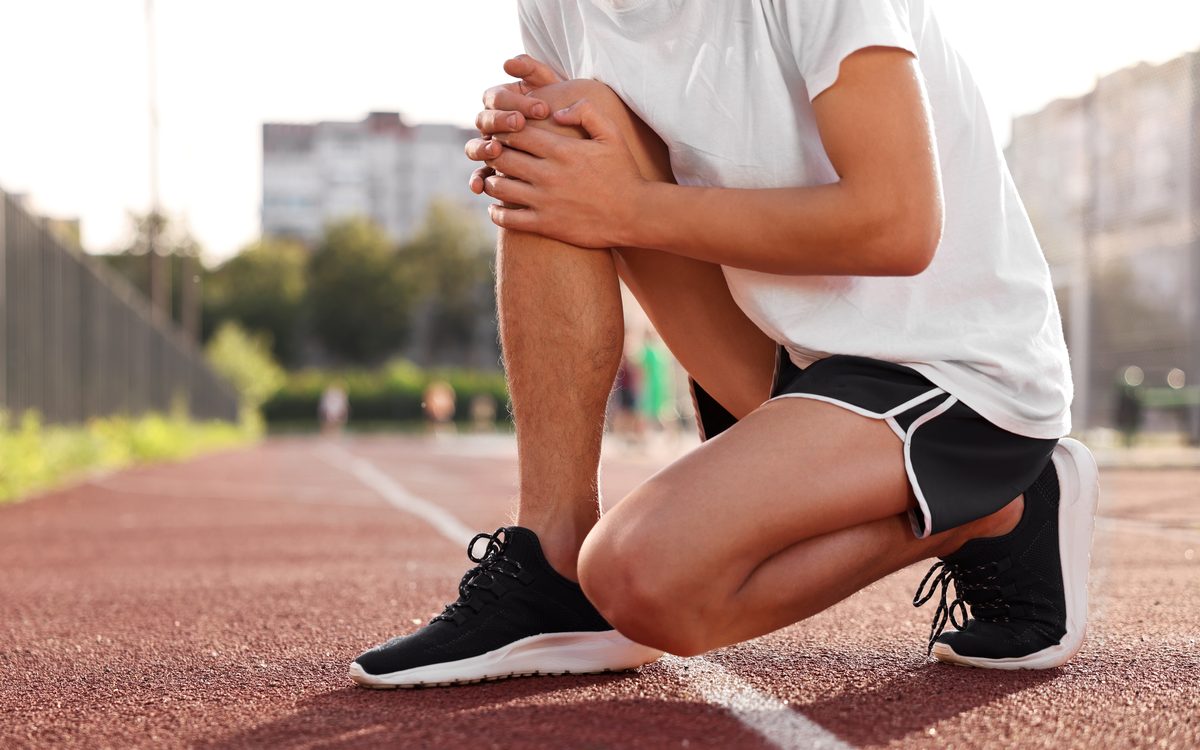
It happens in a second. A midfielder plants her foot to cut past a defender, feels a pop, and the knee gives out under her. Or it creeps up instead: a runner who notices an ache around the kneecap on every flight of stairs, then every mile. Either way, the knee is suddenly the only thing anyone is talking about. Knee injuries are damage to the bones, ligaments, cartilage or tendons that make up the knee joint, and they are among the most common problems athletes face, from youth leagues to the pros.
What should I do about a knee injury? Different knee injuries can feel alike: a twist with a pop and swelling might be a ligament (ACL) or cartilage (meniscus) injury, while a dull ache around the kneecap that builds with stairs or running is often patellofemoral pain. Only an exam, and sometimes imaging, can tell them apart. See a clinician if you heard a pop and the knee gave out, if the knee is swollen, if you cannot move it or you start limping, or if pain does not improve within a few days.
When to get urgent medical help
The American Academy of Orthopaedic Surgeons (AAOS) says to seek treatment as soon as possible after a knee injury if any of these apply:
- You heard a popping sound and felt the knee give out when it happened.
- You have severe pain.
- You cannot move the knee.
- You have started limping.
- The knee is swollen.
AAOS also lists knee dislocations (bones partly or fully out of place) and broken bones, including the kneecap, among common knee injuries. As general first-aid caution, if the knee looks out of place or misshapen, if you cannot put any weight on the leg, or if the lower leg or foot feels numb or looks pale after a hard fall or collision, go to an emergency department or call your local emergency number. Any blow to the head during the same fall also needs a medical check; see the CDC HEADS UP guidance on concussion. Don’t wait for a game to end, and don’t try to “walk it off.”
How the knee works and how it gets hurt
MedlinePlus describes the knee as a joint made of bone, cartilage, ligaments and fluid, with muscles and tendons helping it move. Knee problems are very common and happen at all ages. The AAOS lists the common knee injuries as ligament tears (the ACL, the posterior cruciate ligament and the two side ligaments), meniscus tears, tendon tears of the quadriceps and patellar tendons, fractures and dislocations. This page focuses on the three problems athletes ask about most.
ACL injuries
The anterior cruciate ligament (ACL) runs diagonally through the middle of the knee. According to AAOS OrthoInfo, it keeps the shinbone from sliding forward on the thighbone and gives the knee rotational stability. Most ACL injuries happen without direct contact: pivoting, cutting, jumping, landing with the leg straight, or stopping suddenly while running. Direct hits, such as a football tackle, can also cause them. OrthoInfo says more than 200,000 people in the US are affected each year, that ACL tears make up more than 50% of knee injuries, and that female athletes have ACL injuries at 2 to 8 times the rate of male athletes.
Meniscus tears
The menisci are two wedge-shaped pieces of fibrocartilage between the thighbone and the shinbone. AAOS says they act as shock absorbers, help carry weight across the knee and add stability. Sudden tears usually happen in sports, with or without contact, often during pivoting or cutting, and they often come along with other injuries such as an ACL tear. Tears can also be degenerative, becoming more likely with age as worn tissue tears more easily; a simple twist when getting up from a chair can be enough.
Patellofemoral (kneecap) pain
Patellofemoral pain syndrome is a broad term for pain at the front of the knee, around the kneecap. It is sometimes called “runner’s knee.” OrthoInfo says it is common in people who play sports, especially females and young adults, and also affects non-athletes. It usually comes from overuse, such as repeated jogging, squatting or stair climbing, or from a sudden jump in how often, how long or how hard someone trains. Changes in footwear, playing surface or equipment can contribute, and so can a kneecap that does not track well in its groove, sometimes linked to weak or imbalanced thigh and hip muscles. Researchers in this field meet at the International Patellofemoral Pain Research Retreat, whose consensus statements are published in the British Journal of Sports Medicine.
Sports where knee injuries are most common
AAOS names volleyball, soccer, football and basketball as the sports where ACL injuries are most common, and kneecap pain is a familiar companion of running. Other sports with plenty of cutting, jumping and landing include lacrosse, rugby, handball, tennis and skiing. Our sport-specific guides cover what is typical for each: soccer injuries, basketball injuries, football injuries, volleyball injuries and running injuries.
Signs and symptoms
| Injury | What AAOS OrthoInfo says people notice |
|---|---|
| ACL tear | A popping noise and the knee giving out at the time of injury; swelling within 24 hours; pain, loss of full range of motion, tenderness along the joint line and discomfort walking. |
| Meniscus tear | Sometimes a pop; many people can still walk and some keep playing, but over 2 to 3 days the knee typically gets stiffer and more swollen. Pain, catching or locking, a sense of the knee giving way, and trouble moving through the full range. |
| Patellofemoral pain | A dull, aching pain in the front of the knee that comes on gradually with activity; pain with stairs, running, jumping or squatting, and after sitting a long time with the knees bent; sometimes popping or crackling. |
These lists overlap, which is exactly why guessing is a bad idea. A knee that locks, gives way or swells deserves an exam, and the AAOS notes that going back to normal activity on an unstable knee risks further damage.
What usually happens next in care
This is general information about the usual path, not a diagnosis or a plan for you. At a visit, the doctor asks how the injury happened, examines the knee and often orders imaging: X-rays, an MRI, or both. AAOS says MRI is the preferred test for acute meniscus tears, while for patellofemoral pain an X-ray is usually ordered to rule out bone damage.
For the ACL, OrthoInfo says treatment can be non-operative (physical therapy to rebuild quadriceps strength and confidence in the knee) or surgical (reconstruction is the most common operation), and the choice depends on injury severity, age, joint wear, instability and activity level. For the meniscus, treatment depends on age, symptoms, activity level and the type, size and location of the tear. The outer third has a good blood supply and may heal on its own or be repaired, while tears in the inner two-thirds, which have little blood supply, are more often trimmed if they stay symptomatic. OrthoInfo gives rehabilitation of about 3 to 6 weeks after trimming and about 3 to 6 months after a repair. For patellofemoral pain, OrthoInfo describes activity changes, low-impact exercise, physical therapy focused on the quadriceps, hip muscles and core, and, rarely, surgery. Your own plan, timing and options are for your clinician to set.
Prevention and risk reduction
No program can promise a knee will never get hurt, but there is real guidance. The National Athletic Trainers’ Association (NATA) position statement on ACL injury prevention (Journal of Athletic Training, 2018) recommends multicomponent neuromuscular training programs for reducing non-contact and indirect-contact ACL injuries. It says such a program should, at minimum, give feedback on movement technique in at least 3 of these categories: strength, plyometrics (jumping), agility, balance and flexibility. Coaches and parents can look for warm-ups built this way; the FIFA 11+ is one example of a neuromuscular training program used in soccer.
For kneecap pain, AAOS OrthoInfo suggests wearing appropriate shoes, warming up and stretching the quadriceps and hamstrings, increasing training gradually, and keeping a healthy weight. The thread through both: build strength and landing control over time, and avoid sudden jumps in training load. Our soccer training guide and running training guide show what gradual looks like.
Returning to play
A qualified clinician decides when it is safe to return, not the scoreboard, a coach or a calendar. OrthoInfo describes rehab as rebuilding range of motion, strength and confidence in the knee, and warns that returning to normal activity while the knee is still unstable risks further damage. Ask your clinician what milestones you need to pass at each stage, and expect to move step by step from everyday activity to training to games. We don’t give a one-size timeline here because the right one depends on the injury, the treatment and the person.
Youth and women athletes
Because AAOS reports ACL injury rates 2 to 8 times higher in female athletes, prevention programs are often aimed at girls’ and women’s teams, and OrthoInfo also names females and young adults as the group most affected by patellofemoral pain. For a young athlete whose knee swells after a twist, or who suddenly stops wanting to play on it, a visit to a pediatrician or sports medicine doctor beats a wait-and-see week.
Knee supports and gear
Supports are a comfort choice, not a treatment, and they do not replace an exam, strength work or a clinician’s advice. Some athletes like the feel of a compression sleeve or brace during activity once a clinician has cleared them to be active. Read our guides to the best knee brace for running and the best knee sleeves before you buy, and ask your clinician whether a support suits your knee.

Bauerfeind GenuTrain
- Knit compression
- Omega+ pad around kneecap
- Machine washable

Bauerfeind Sports Compression Knee Sleeve
- Thin AirKnit, not neoprene
- Silicone grip zones
- Machine washable
$44.99 at Amazon, as of Nov 17, 2026 01:07 UTC
Check price on AmazonKnee injury FAQs
How can I tell if my knee injury is serious?
You can’t reliably tell on your own. AAOS says to get care as soon as possible if you heard a pop and the knee gave out, have severe pain, cannot move the knee, have started limping or the knee is swollen. A clinician’s exam, sometimes with imaging, is how these injuries are sorted out.
Does every ACL tear need surgery?
No. AAOS OrthoInfo says non-operative care, including physical therapy, is always an option, and that the decision depends on severity, age, joint wear, instability and activity level. Which route fits you is a conversation with an orthopedic or sports medicine doctor.
Can I keep playing on a possible meniscus tear?
OrthoInfo notes that some athletes with a meniscus tear can walk and even keep playing at first, with stiffness and swelling building over 2 to 3 days. That is not a green light: locking, catching, giving way or swelling are reasons to be examined before you return, and playing on a damaged knee risks more damage.
What is “runner’s knee”?
It is a common name for patellofemoral pain syndrome, pain at the front of the knee around the kneecap. OrthoInfo says it often comes from overuse or a sudden increase in training and affects non-runners too. See a doctor if the pain doesn’t improve within a few days, moving the knee gets harder, or rest and over-the-counter pain relievers aren’t helping.
Can a knee brace prevent an injury?
We found no authoritative source promising that a brace or sleeve prevents knee injuries, so we don’t make that claim. The prevention guidance we could confirm, from NATA, is about multicomponent training programs: strength, jumping, agility, balance and flexibility with feedback on technique.
Sources
- AAOS OrthoInfo: Common Knee Injuries
- AAOS OrthoInfo: Anterior Cruciate Ligament (ACL) Injuries
- AAOS OrthoInfo: Meniscus Tears
- AAOS OrthoInfo: Patellofemoral Pain Syndrome
- MedlinePlus: Knee Injuries and Disorders
- NATA Position Statement: Prevention of Anterior Cruciate Ligament Injury (J Athl Train, 2018)
- Patellofemoral pain consensus statement, 3rd International Patellofemoral Pain Research Retreat (Br J Sports Med, 2014)
- CDC HEADS UP
General information for education only, not medical advice. It cannot diagnose or treat any injury, and it does not replace an exam by a doctor, physical therapist or athletic trainer. Read how we work in our editorial policy and find more in Injuries and Joint Health.