This article contains affiliate links: if you buy through them we may earn a commission, at no extra cost to you. Read our affiliate disclosure.
The first open-water swim usually starts with a gear mistake: goggles that fogged halfway to the first buoy, a cap that blends into the grey water, a wetsuit that pinches under the arms. Open-water swimming gear is mostly small items that fit well, are visible and are allowed by the event. This page covers what matters, what the rules say, and how to check your kit.
Quick answer: Start with goggles that fit and a bright cap. A wetsuit is compulsory in World Aquatics races below 18.0 C and must be 3 to 5 mm thick; recreational events set their own rules, so check first. A tow float improves visibility to boats. Maker claims about speed or buoyancy are not independently tested here, and no gear replaces a buddy or supervision.
Product cards are Amazon affiliate links; no prices are shown. General information, not medical advice. See the open-water swimming hub for the whole picture and the swimming guide for the pool side. Pool gear is on swimming gear.
Our picks

Speedo Vanquisher 2.0 Mirrored Goggles
- Panoramic lens, anti-fog, UV protection
- Cushioned silicone seals
- 4 interchangeable nosepieces

Speedo Silicone Swim Cap
- Elastomeric silicone
- Latex-free
- Does not pull hair

Mack's AquaBlock Swimming Earplugs
- Soft silicone, triple flange
- Reusable
- Carry case
$6.99 at Amazon, as of Nov 17, 2026 00:07 UTC
Check price on Amazon
Garmin Swim 2 GPS Swim Watch
- GPS swim smartwatch
- Pool and open water modes
- Estimated wrist heart rate
We did not have a verified listing for a swim wetsuit or a tow float in our records, so none appears above. Buy those from a swim shop or the maker after checking the fit and the event rules.
Goggles, caps and ear plugs
- Goggles. Fit matters more than brand: the seal should hold without a tight strap. In bright sun, tinted or mirrored lenses help; in murky or cloudy water, clear or light lenses are common. Spare goggles in the bag cost little. World Aquatics permits goggles, a nose clip and ear plugs in warm-water races.
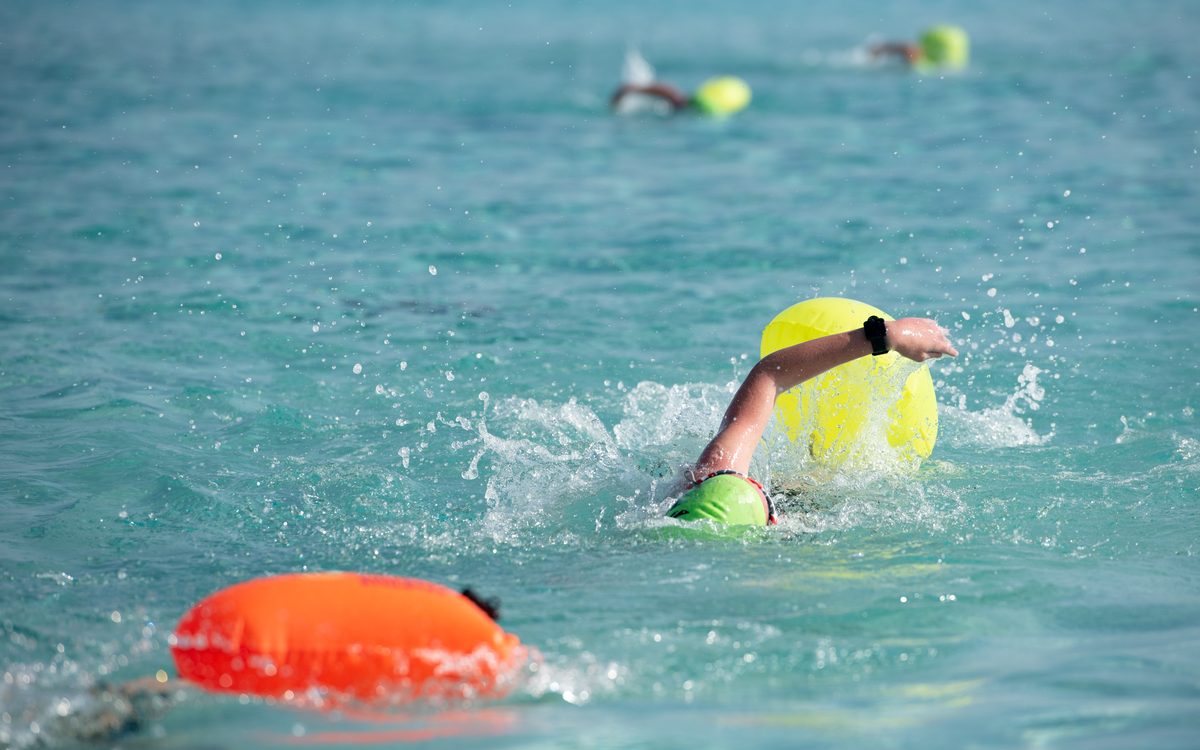
- Caps. A bright silicone cap helps boats and safety crews see you; USMS advises a bright cap, not white. In warm water the World Aquatics rules allow one or two caps, and in cold water two caps may help keep warmth; check the event rule.
- Ear plugs. The CDC suggests ear plugs, a cap, draining each ear and towel-drying to help prevent swimmer’s ear, and never putting objects in the ear canal.
Wetsuits
World Aquatics requires a wetsuit when the water is below 18.0 C and approves suits 3 to 5 mm thick (limited exceptions), in one piece covering torso, back and thighs; races below 16 C do not go ahead. The referee can require wetsuits between 18 and 20 C in hazardous conditions. Swim wetsuits differ from diving suits: they are thinner at the shoulders for stroke freedom. Checks (general practice): the suit should be snug but not restrict breathing; a 2026 study of swimming-induced pulmonary oedema listed wetsuit tightness among reported symptoms, so choose a size that lets you breathe fully. Rinse and dry the suit after use and check seams and zips before each season. For events with approvals, look for the event’s own list.
Tow floats and safety kit
USMS describes a tow float as an inflatable buoy on a waist belt that makes you more visible to boaters, and recommends using one. It is a visibility aid, not a life jacket, and it does not replace a buddy. Also bring warm clothes, a towel, food and water for afterwards, and tell someone your plan.
Watches and tracking
A GPS swim watch such as the Garmin Swim 2 can record distance and open-water tracks in training. Under World Aquatics rules (2026), technology used in races needs advance approval, and devices that give speed or buoyancy are not allowed. Wrist heart-rate readings in water are estimates. A 2026 study of five elite swimmers used 1 Hz GPS to analyse pacing, showing how location data can be used in coaching.
Inspecting your gear
- Goggle straps, seals and nosepieces for cracks.
- Cap for tears.
- Wetsuit seams, zip and neck for wear.
- Tow float for leaks, and the belt for secure clips.
- Watch battery and GPS lock before you enter the water.
Gear helps but is not protection on its own. See injury prevention, the rules page and recovery for what to do around the swim.
Open-water swimming gear FAQs
What do I need for my first open-water swim?
Goggles that fit, a bright cap, swimwear, a tow float, warm clothes for afterwards, and a buddy. Add a wetsuit if the water is cool or the event requires it.
Do I need a wetsuit?
In World Aquatics races, below 18.0 C. For other swims it depends on the event and your comfort in cold water.
Are tow floats worth it?
USMS recommends them for visibility. They do not replace a buddy or a life jacket.
Can I wear a watch in a race?
World Aquatics requires prior approval for body-data devices. Check your event’s rules.
How do I stop goggles fogging?
Many swimmers use an anti-fog coating and avoid touching the inside of the lens. These are common tips rather than tested guidance.
Sources
- World Aquatics Competition Regulations, Part Three (open water), Feb 2026
- World Aquatics: 16 C threshold research
- USMS: Safety tips for open-water swimming
- CDC: Preventing swimmer's ear
- SIPE at moderate elevations, 2026 (PMID 42131935)
- Pacing and trajectories in elite open-water swimming, 2026 (PMID 41410548)
- Speedo Vanquisher 2.0 goggles (Amazon)
- Speedo silicone cap (Amazon)
- Mack's AquaBlock ear plugs (Amazon)
- Garmin Swim 2 (Amazon)
General information for education only, not medical advice. It does not replace a sports medicine doctor, physical therapist, athletic trainer or registered dietitian who knows you. See how we work in our editorial policy.