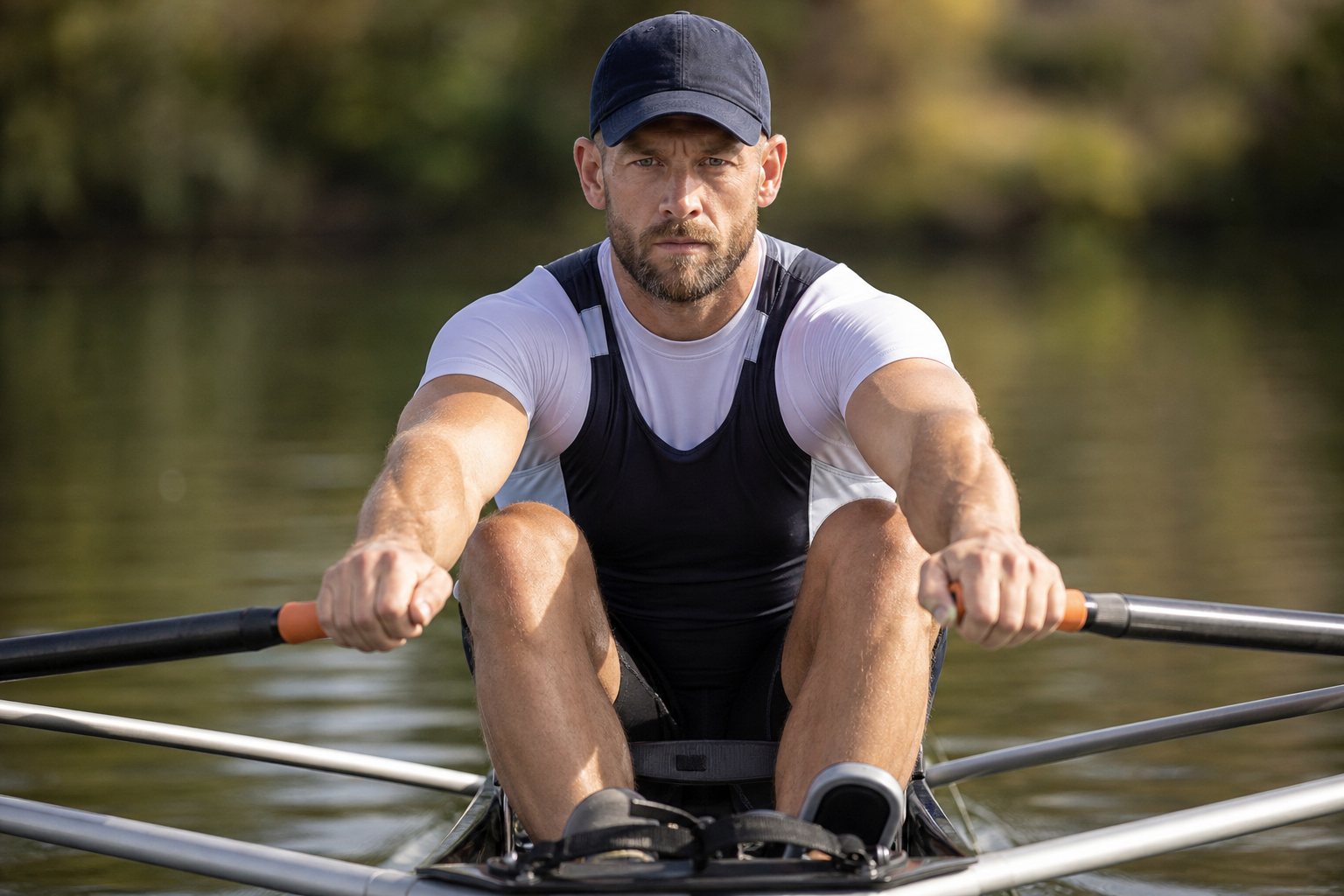
At the Paris 2024 Paralympic regatta at Vaires-sur-Marne, Australia’s Nikki Ayers and Jed Altschwager answered every push from the British boat in the PR3 mixed double sculls and crossed first, becoming the first Paralympic champions in that event, according to World Rowing’s report. Para rowing (also called adaptive rowing) is rowing and sculling for athletes with a physical or vision impairment: the same lake, the same 2,000 m, the same first-across-the-line result as Olympic rowing, in boats and seats set up for each athlete.
Quick answer: Para rowing is a 2,000 m race in which the first boat over the line wins. Athletes are placed in a sport class (PR1, PR2 or PR3) by how much of the arms, trunk and legs they can use, and the class decides the boat and seat. To start, find a club, tell the coach about your impairment and try the boat or the indoor rower; classification is only needed when you want to race in Para events. If you have a medical condition, see a sports medicine doctor first.
Outside the US, start with your national rowing federation. Gear is on our gear page, safety on injury prevention, the overview on the Para rowing hub. The standard sport is on the rowing hub.
How a Para rowing race works
Para rowing was created by World Rowing, and Para crews race at the same regattas, from the same docks, as other rowers, according to Paralympic.org. The distance is 2,000 m, the same as Olympic rowing; that was adopted in 2017 and first used at the Paralympics in Tokyo 2020, replacing 1,000 m races at the 2008, 2012 and 2016 Games. Boats race side by side in lanes on a straight course marked with buoys, and the first bow across the line wins. Conditions change from regatta to regatta, so rowing keeps “World Best Times” rather than world records, as Paralympic.org explains.
Boats are similar to Olympic boats with safety changes. Single boats must have floats or pontoons on both sides for balance, and rowers are strapped in with seats that do not slide, according to Paralympic.org. In the doubles the seat is also fixed, but the rower can use the torso more. In the coxed four, the PR3 boat, the seats slide as in standard rowing.
The five Paralympic events
- PR1 men’s single sculls and PR1 women’s single sculls.
- PR2 mixed double sculls (one woman, one man).
- PR3 mixed double sculls, new at Paris 2024.
- PR3 mixed coxed four (mixed gender), the class that includes rowers with a vision impairment.
Those five events were raced at Paris 2024, and the IPC’s LA28 programme, announced in 2025, also lists five Para rowing events with 104 athlete places. As always, check the official programme for the current Games before you plan around it.
The classes in plain language
A sport class groups athletes so that the result is decided by training and racing, not by the type or size of the impairment. In Para rowing the question is what an athlete can use to drive the boat. USRowing and Paralympic.org describe it this way:
- PR1: little or no trunk function, so the boat is driven mainly with the arms and shoulders; a strap around the midsection gives support.
- PR2: working arms and trunk, but the legs cannot drive a sliding seat. Examples USRowing lists include a double amputation around the knee or a significant loss of leg strength.
- PR3: legs, trunk and arms can be used, including the sliding seat, with a physical impairment or a vision impairment. USRowing notes that the PR3-II group is not part of World Rowing events.
- NE (Not Eligible): an athlete who does not meet the minimum for Para eligibility can still row as an adaptive athlete in non-Para events.
A 2025 study in Frontiers in Sports and Active Living shows why trunk function is central: PR1 classification rests on demonstrating impaired trunk swing, and in fixed-seat 500 m tests only PR1 rowers did not slow down when the trunk was restricted, while PR2 and NE rowers did.
Basic skills for a beginner
Every stroke has four parts, as Paralympic.org describes them: the catch (the oar enters the water), the drive (the push that moves the boat), the finish (the oar leaves the water) and the recovery (the oar travels back above the water). What changes by class is where the drive comes from: arms and shoulders in PR1, arms and trunk in PR2, legs, trunk and arms in PR3. A “crab” is when an oar gets stuck in the water and slows the boat.
For a first session, general coaching practice is to work on sitting balance and a smooth catch and release before speed. On the water, USRowing’s safety guidelines ask programs to test swimming (floating or treading water for ten minutes and putting on a life jacket while floating), and say single scullers should be able to flip and re-enter their boat, which programs adapt to each athlete. Anyone who cannot swim wears a life jacket in the boat at all times.
How to start, step by step
- Find a program. USRowing says adaptive rowing can be recreational or competitive, on the water or indoors, and points to its club finder at usrowing.org/find-a-club.
- Try it. Many clubs lend adapted equipment. You do not need classification to row for fun.
- Check eligibility. USRowing’s steps start with World Rowing’s list of eligible impairments; the online tool is informational only.
- Get medical paperwork. Your physician completes the World Rowing medical diagnostics form for a physical or a vision impairment.
- Request classification. USRowing asks for the classification request form at least 60 days before the evaluation where you plan to race, with all documents; questions go to [email protected].
Indoor adaptive rowing
Indoor rowing has its own seven categories. World Rowing’s November 2025 document lists IAR1 to IAR7, from athletes with the greatest limits (static seat and straps for safety) to open categories such as IAR6 (intellectual impairments per Virtus, sliding seat) and IAR7 (athletes who cannot use a sliding seat but do not meet IAR1 to IAR4). If you already hold a Para rowing sport class, an Invictus Games categorisation, Virtus eligibility or an IBSA class, World Rowing says it translates automatically with no re-assessment. See training for the weekly shape.
Levels and where to go next
Para rowing first raced at the 2002 World Rowing Championships in Seville, joined the Paralympic programme in 2005 and made its Paralympic debut at Beijing 2008, according to World Rowing; In the US, USRowing offers a Pathways Program, Para camps and national championships, and lists under-23 elite racing. We could not confirm a single school or college route for Para rowing, so ask your club.
Official rulebooks
Equipment, strapping and boat rules sit in World Rowing’s Para rowing competition regulations, which are updated between Games. The versions we could read were older or came from national federations (a 2023 Rowing Australia document that adopts the World Rowing standards), so always read the current World Rowing text for a race. Concept2 summarises one point from those rules: strapping gives stability, not restraint, and must allow a quick release and safe exit.
Para rowing rules and getting started FAQs
Do I need classification to start Para rowing?
No. Classification is for racing in Para events. USRowing says athletes who do not meet the Para minimum can still row as adaptive athletes in non-Para events, and many clubs welcome new rowers without any paperwork.
What do PR1, PR2 and PR3 mean?
They are sport classes by what the rower can use to drive the boat: arms and shoulders (PR1), arms and trunk without a sliding seat (PR2), or legs, trunk and arms (PR3, including vision impairment).
How long is a Para rowing race?
2,000 m, the same as Olympic rowing. It was 1,000 m at the 2008, 2012 and 2016 Paralympics.
Do I have to swim?
Programs that follow USRowing’s guidelines run a swim test, and non-swimmers wear a life jacket in the boat at all times. Tell your coach before the first session.
Can I try Para rowing indoors only?
Yes. World Rowing has seven indoor adaptive categories (IAR1 to IAR7), and USRowing describes adaptive rowing as possible indoors or on the water.
Are there men’s and women’s events?
Yes in PR1 singles. The PR2 and PR3 doubles and the PR3 coxed four are mixed gender, per Paralympic.org.
Sources
- Paralympic.org: 10 things to know about Para rowing
- World Rowing: five Paralympic finals in Paris (2024)
- World Rowing: What is Para-rowing
- USRowing: Para classification
- USRowing: Para and adaptive rowing
- IPC: LA28 medal event programme and quotas
- World Rowing: Indoor Adaptive Rowing categories (Nov 2025)
- USRowing Safety Guidelines (Dec 2022)
- Frontiers in Sports and Active Living 2025: trunk swing in fixed-seat rowing
- Rowing Australia 2023 Para-Rowing Competition Regulations
- Concept2 Australia: adaptive and Para rowing
General information for education only, not medical advice, and not a substitute for care from a sports medicine doctor, physical therapist, athletic trainer or your classification and coaching team. See how we write and check our pages in our editorial policy.