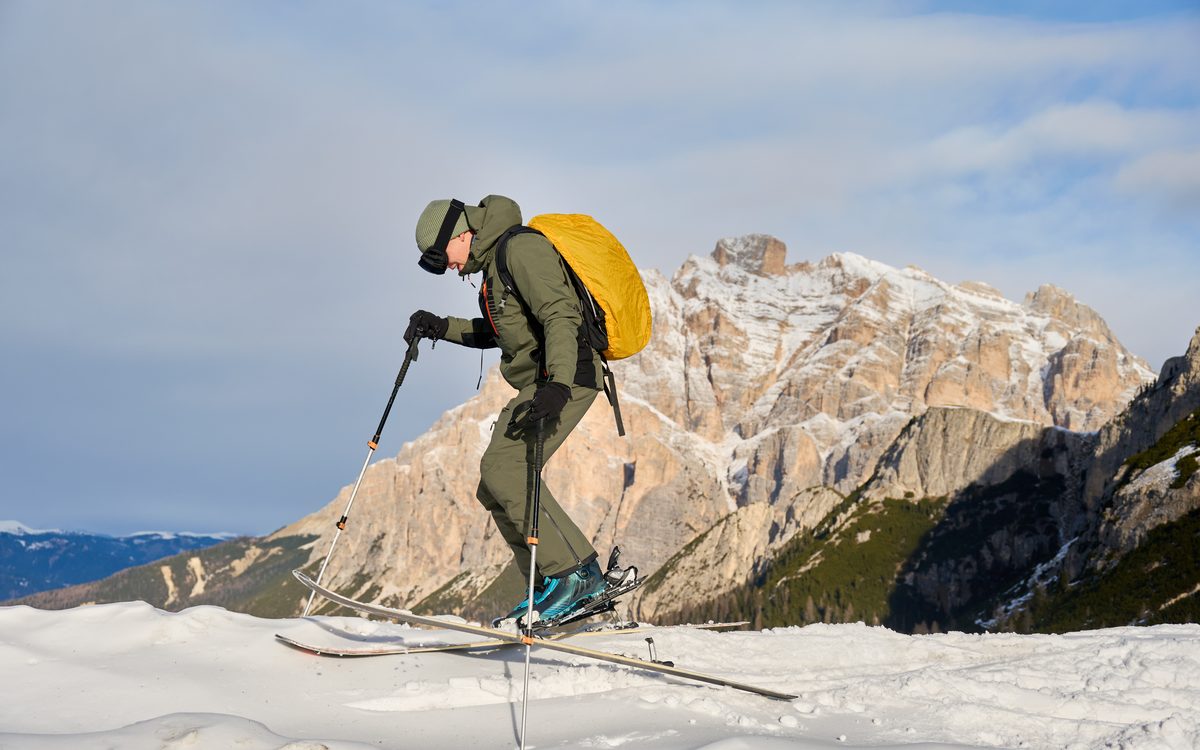
Five a.m., a resort uphill route, headlamps bobbing in the dark. The group moves in near-silence for forty minutes, heart rates high but steady, until the ridge turns pink. This is the real training of a skimo racer: hours of aerobic climbing that most spectators never see. Skimo training is the planned mix of climbing fitness, leg strength, transition practice and skiing skill that prepares you for a race that is decided mostly uphill. Here is what the research says, and what is general coaching practice. Start with the ski mountaineering hub if you are new.
Quick answer: Research on skimo racers points to uphill fitness first: in a 2026 study of 36 athletes at the Olympic test event, the uphill ski and foot sections explained 81.5% of sprint-time variation. A sensible week is mostly easy aerobic work, one or two harder sessions, two strength sessions, some transition and ski-skill practice, and rest days. The weekly shape below is common coaching practice, not a published prescription. If you have heart, lung or joint concerns, check with a doctor before ramping up.
What the sport demands
A 2026 narrative review in Scandinavian Journal of Medicine and Science in Sports (Zoppirolli and colleagues) groups skimo with cross-country skiing and biathlon as endurance-dominant sports that rely on high aerobic capacity and movement efficiency. It also notes the research on skimo is limited compared with cross-country skiing. In the Mottet study of 36 athletes at the pre-Olympic test event in Bormio, the uphill ski and foot sections explained 81.5% of sprint-time variability. In nine Swiss elite sprinters tested in a lab, uphill speed was best predicted by oxygen uptake relative to body mass and the ability to clear lactate, and the authors stress fast, error-free gear changes. A smaller study of 13 male sprinters (Kural and colleagues, 2025) linked hamstring strength at high speed to performance.
A study of 29 Swiss national-team athletes (Schorderet and colleagues, 2026) found a strong relationship between haemoglobin mass relative to body mass and VO2max (r = 0.80), yet the top tier did not have higher haemoglobin mass, so other factors matter too. In short, aerobic capacity is central, but it is not the whole story.
A sensible weekly shape (coaching practice)
No published study prescribes a skimo week for recreational athletes. The pattern below follows widely used endurance-coaching principles. The US Physical Activity Guidelines recommend 150 to 300 minutes of moderate aerobic activity a week for adults and muscle-strengthening on at least two days, which is a floor, not a racing plan.
- Mostly easy volume. Long climbs at a conversational pace, on skis uphill or on a hiking, running or bike substitute in the off-season.
- One or two harder sessions. Uphill intervals of a few minutes at hard effort with easy recovery. The 2026 thermoregulation study used 15-minute uphill efforts at 85 to 90% of maximum heart rate, which shows how hard racers go, not how much a beginner should do.
- Two short strength sessions. Squats, lunges, step-ups, hip hinges and trunk work. The hamstring result above is one reason to include posterior-chain strength.
- Transition and ski-skill practice. Ten minutes of repeated transitions at home or at the base of a hill, and descent practice on tired legs.
- One or two rest or very light days. The American Academy of Pediatrics recommends one to two days off a week for young athletes (Brenner, 2016).
A heart-rate chest strap is a common way to keep easy days easy. See our recovery page for load management.
Periodisation basics (coaching practice)
Skimo is a winter and spring sport, so many athletes build a base in the autumn with long, easy aerobic work and strength, add more intensity and ski-specific work as the season approaches, then hold fitness through the race months with fewer, sharper sessions. A recent narrative review by Sperlich and Holmberg (2026) on endurance training in Olympic winter sports discusses individual volume and intensity, integrating strength training with endurance work, and using heat or hypoxia, but it is a research review, not a plan for amateurs, and we do not copy its numbers. Increase load gradually, and take an easier week every few weeks. The usual guidance of limiting jumps in volume to about 10% a week is a rule of thumb many coaches use. We did not find a skimo study that tests it.
Strength and the descent
Race courses climb on skis, then on foot, then ski downhill gates. Strength work for the legs and trunk supports climbing efficiency, and ski-specific strength helps you hold a position on tired legs. The 2026 injury study of skimo racers (Schöffl and colleagues) found 90.3% of acute injuries happened on the descent, mostly the knee, so skiing practice and strength work are not just performance tools. See our injury prevention page.
Altitude and cold
Many skimo races start high. The CDC Yellow Book describes altitude illness and advises gradual ascent; headache, nausea and dizziness at elevation are reasons to stop and descend. A 2026 study of 13 elite skimo athletes at 2,600 m (Dünnwald and colleagues) found skin temperature dropped, especially in the hands and feet, and that about half the athletes could not hold their core temperature during simulated races at -8.3 to 1.3 C air temperature. Everyone differs, so practice your layering in training.
Using wearables
Heart rate, pace and elevation gain are easy to record. Treat the numbers as a guide, not a verdict. Our HRV for athletes guide explains what recovery scores can and cannot tell you.
For nutrition on long days see nutrition, and for the mental side mental training.
Frequently asked questions
How many hours a week do skimo racers train?
We did not find a published figure for recreational racers. Elite athletes train far more than beginners. Build gradually from what you already do, and ask a coach.
Can I train for skimo without snow?
Many athletes use hiking, running or cycling uphill for aerobic work, plus strength training and transition practice at home. Ski-specific skills need snow.
Is strength training important?
Strength work for the legs and trunk is a common part of racers’ training, and one small study linked hamstring strength to sprint performance. Most evidence is limited.
Should I wear a heart-rate strap?
Many athletes do, to pace easy days and hard efforts. It is a tool, not a requirement.
How is training different for youth?
Youth need rest days, varied activities and gradual increases. The American Academy of Pediatrics advises one to two days off a week. A coach familiar with young endurance athletes can guide specifics.
Sources
- Zoppirolli et al., Olympic Snow Sports, Scand J Med Sci Sports 2026
- Mottet et al., sprint performance determinants (2026)
- Schorderet et al., aerobic and haematological parameters in elite skimo (2026)
- Kural et al., isokinetic knee strength in skimo sprinters (2025)
- Dünnwald et al., thermoregulation of elite ski mountaineers (2026)
- Sperlich and Holmberg, endurance training in Olympic winter sports (2026)
- Schöffl et al., skimo anthropometry, injuries and illnesses (2026)
- AAP, Brenner, sports specialization and intensive training (2016)
- US Physical Activity Guidelines, top 10 things to know
- CDC Yellow Book: high-altitude travel and altitude illness
General information for education only, not medical advice. It does not replace a visit with a doctor, physical therapist or athletic trainer, and it is not avalanche training. See how we write and check our pages in our editorial policy.