This article contains affiliate links: if you buy through them we may earn a commission, at no extra cost to you. Read our affiliate disclosure.
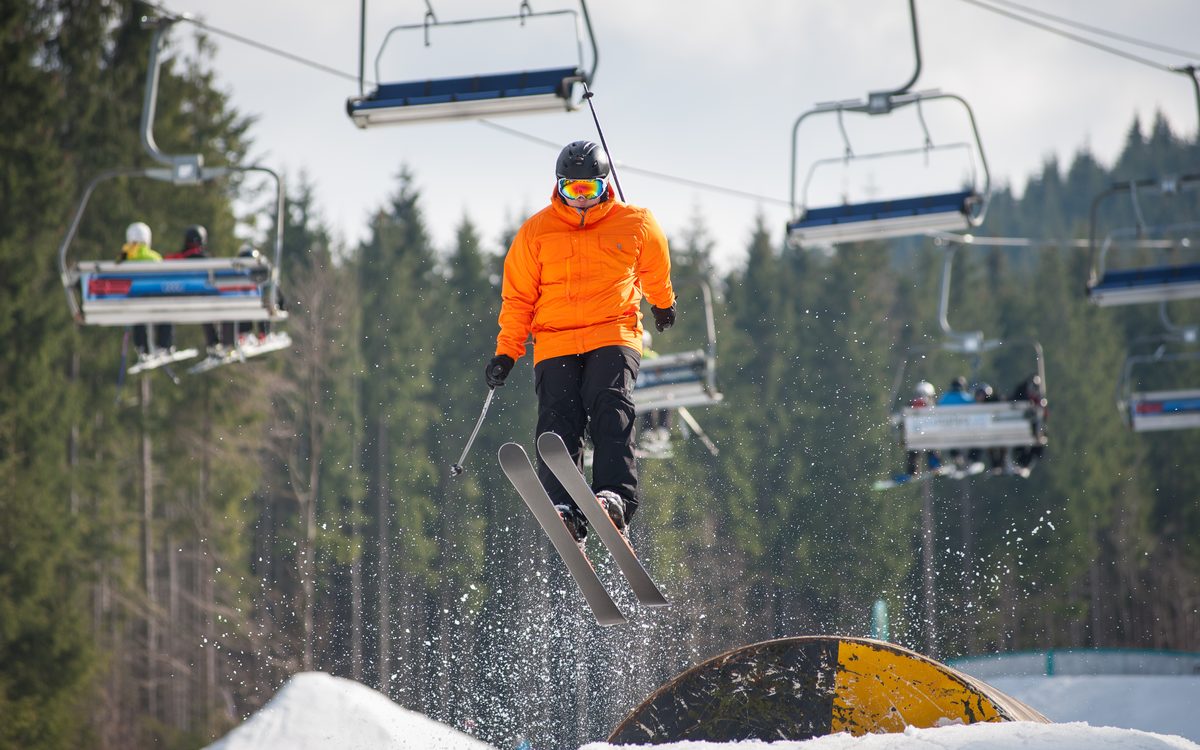
Sunday, February 15, 2026, on the bumps above Livigno: Canada’s Mikael Kingsbury beats his rivals in head-to-head duels to win the first Olympic men’s dual moguls title and become the first freestyle skier with five Olympic medals. The day before, Americans Jaelin Kauf and Liz Lemley took silver and bronze in the women’s event behind Australia’s Jakara Anthony. Freestyle skiing (often called freeskiing when it is the park-and-pipe side) is the family of skiing events judged on tricks, turns and jumps, plus the one that is just a race, ski cross.
Freestyle Skiing guides: what do you need?
New to freestyle skiing? Start with the first card. Everything here is general education, not medical advice.
History & Origins of Freestyle Skiing
Freestyle skiing grew out of ski acrobatics in the United States in the 1930s and became popular in the 1960s (Olympedia). It reached the Olympic stage as a demonstration sport at Calgary in 1988, and at Albertville in 1992 moguls became the first freestyle medal event, with aerials and ballet shown as demonstrations. Ballet never became a medal sport and international competition in it largely stopped after 2000 (Olympedia).
The programme later grew to include aerials, moguls, ski cross, halfpipe and slopestyle for both men and women. Big air and a mixed aerials team event came at Beijing 2022, and dual moguls arrived at Milano Cortina 2026, bringing the programme to 15 medal events. FIS governs the sport and was founded in 1924 in Chamonix (FIS).
- 1930s: Ski acrobatics develops in the United States.
- 1960s: The sport becomes popular.
- 1988: Demonstration sport at the Calgary Olympics.
- 1992: Moguls becomes the first Olympic freestyle medal event.
- 2022: Big air and mixed aerials team event at Beijing.
- 2026: Dual moguls added; 15 medal events at Milano Cortina.
Official results and records
- Olympedia: freestyle skiing at the Olympic Games
- Olympics.com: Milano Cortina 2026 freestyle skiing results
Legends of the Sport
Olympic medal counts below are from Olympedia as read on November 13, 2026. This is not a ranking.
- Eileen Gu (China): three Olympic golds and six medals in total.
- Mikaël Kingsbury (Canada): two golds and five Olympic medals, the most of any man in freestyle.
- Xu Mengtao (China): two golds and five Olympic medals.
- Mathilde Gremaud (Switzerland): two golds and four Olympic medals.
- David Wise (USA): two Olympic golds and three medals.
- Alex Bilodeau (Canada): two Olympic golds.
- Jakara Anthony (Australia): two Olympic golds.
- Kari Traa (Norway): one gold and three Olympic medals.
How we keep this current: we re-check facts after each major championship and update this page. Spot an error? See our editorial policy.
This page covers the freestyle disciplines at the Olympics, who competes, and how to stay safer in parks and bump fields. For the bigger picture, see our skiing hub.
Freestyle skiing at a glance
| What it is | Skiing events built around jumps, tricks and moguls, plus the head-to-head race of ski cross. |
|---|---|
| Disciplines | Moguls and dual moguls, aerials (and mixed team aerials), ski cross, halfpipe, slopestyle, big air. |
| How it is won | Judges’ scores (moguls, aerials, halfpipe, slopestyle, big air) or finishing order (ski cross, and dual moguls duels). |
| Who competes | Kids in club and park programs, then FIS-licensed athletes from the early teens; World Cup and Olympic level at the top. |
| Governing bodies | FIS worldwide; U.S. Ski & Snowboard in the US. |
| Olympics 2026 | 15 freestyle medal events, up from 13 in 2022, with dual moguls the new addition. |
How freestyle skiing works
Freestyle is really several sports that share a name. Here is what a beginner will see in each.
Moguls and dual moguls
One skier at a time races a steep field of bumps with two jumps. FIS explains that a run is scored out of 100 points: 60% for turns (five judges), 20% for air (two jumps, scored by two judges and multiplied by difficulty) and 20% for speed, measured against a pace time for the course. In dual moguls, two skiers race side by side in a bracket, one duel per round; turns count 50%, air 25% and speed 25%, and judges award points between the two skiers.
Aerials
Skiers launch off a small ramp and perform flips and twists high above a landing hill. FIS scores each jump on air (20%), form (50%) and landing (30%), then multiplies the total by a degree-of-difficulty factor from an FIS table (capped at 5.0, so 150 points is the most a jump can score). In the mixed team aerials event, Americans Kaila Kuhn, Connor Curran and Chris Lillis won gold in 2026.
Halfpipe, slopestyle and big air
These three are judged on overall impression rather than trick-by-trick. Halfpipe is a run down a snow-walled channel; slopestyle is a run down a course of rails and jumps; big air is a single huge jump. Judges score out of 100, and one guide describes the halfpipe criteria as difficulty, amplitude, variety and execution. In big air, a skier’s best two jumps count and must use different rotations or axes.
Ski cross
Ski cross is a race: after a timed seeding run, 32 men and 32 women go into elimination heats of four skiers on a narrow course with jumps, rollers and banked turns (berms). The top two in each heat advance, and the first part of the body across the line decides the order. Interference can earn a warning, a yellow card (last in the heat) or a red card (disqualification).
Who competes, and at what level
Kids usually start in a mogul or park club program at a ski area. U.S. Ski & Snowboard’s freestyle competitor memberships have an age tier for 13 and over that is required to buy a FIS license, and its sport descriptions require freestyle FIS license holders to be born in 2010 or earlier (ski cross: 2007 or earlier), for the FY24 season; check the current rules. High school and NCAA skiing do not include freestyle events: NCAA skiing lists slalom, giant slalom and classical and freestyle cross-country, and NFHS counts alpine and cross-country. College freestyle skiers usually compete in club settings. At the top, FIS runs the World Cup and World Championships.
Olympic and Paralympic status
- Milano Cortina 2026 (confirmed by NBC Olympics and FIS coverage): 15 freestyle skiing events: halfpipe, moguls, dual moguls, slopestyle, big air, aerials and ski cross for women and men, plus mixed team aerials. The United States won eight freestyle medals (three gold). China had nine.
- History (secondary source): freestyle was a demonstration sport in 1988 and has been a medal sport since 1992 (moguls), with aerials added in 1994 and halfpipe and slopestyle in 2014.
- Paralympics: FIS lists para alpine, para cross-country and para snowboard as its Paralympic disciplines; freestyle skiing is not among them.
- 2030 (French Alps): the IOC added freeride skiing and snowboarding to the program (announced July 7, 2026) but we could not confirm the freestyle event list; check the official programme for the current Games.
What freestyle asks of the body
A 2026 review of Olympic snow sports puts freestyle skiing among the gravity and technical disciplines, which emphasize neuromuscular power and technical precision, and notes that data on freestyle skiing are limited. In plain words: explosive legs for take-offs and bump absorption, a strong trunk for control in the air, and plenty of skill built over thousands of repetitions. Ski cross adds a sprint-like race effort on top of the jumps.
Health and safety for freestyle skiers
This is general information, not medical advice. If you are hurt, see a sports medicine doctor, physical therapist or athletic trainer; on the mountain, ski patrol is your first call.
What the numbers say
Freestyle is among the higher-injury snow sports at the elite level. A 2020 narrative review of 39 studies found the highest injury incidence in freestyle skiing, followed by alpine skiing and snowboarding, with the knees the most commonly and severely injured body part (29.9% of injuries). A 2023 meta-analysis of four Winter Olympics studies reported an injury rate of 28.6% for freestyle aerials, and the same study found the knee, head and ankle the most common locations across all Winter Olympic sports. These are elite rates, not what a weekend skier should expect.
Parks, jumps and helmets
- Wear a ski-specific helmet. A meta-analysis in the Canadian Medical Association Journal found about 35% lower odds of head injury for helmet wearers, with no rise in neck injuries. Look for ASTM F2040 or EN 1077. ASTM notes protection is limited and mainly at slower speeds, and the NSAA’s advice is to wear a helmet but ski as if you are not.
- Know the signs. Ski areas mark freestyle terrain with an orange oval on the trail sign (NSAA trail signage). Ratings are relative to each resort.
- Progress slowly. Start with small features and have a coach check a jump first.
- Know concussion signs. The CDC’s HEADS UP program lists headache, dizziness, confusion and balance problems. Anyone with a suspected concussion stops for the day; a healthcare provider decides when it is safe to return. Call 911 for danger signs such as repeated vomiting, a seizure, or one pupil larger than the other.
The knee and thumb injuries common in all skiing apply here too: the AAOS describes the ACL, shoulder and “skier’s thumb” among the typical injuries, and says bindings should be set and tested by a ski shop. See our skiing injuries page.
Cold and fatigue
The AAP lists fingers, toes, ears and noses as the first places for frostbite. AAOS notes many ski injuries happen late in the day; fatigue is a reason to stop. Retailer fitting guides (evo) suggest matching goggle lenses to the light.
Training, recovery and nutrition pointers
FIS has published a consensus statement on warm-up and cool-down in competitive alpine and freestyle skiers and snowboarders (2025), though its panel notes that aerials and moguls were under-represented and that evidence is limited. AAOS suggests 3 to 5 minutes of easy movement before the first run. See our ski training page, ski recovery and nutrition and supplements for skiers.
Gear that matters for freestyle skiing
- Helmet: the one piece you should not skimp on; check the ASTM F2040 or EN 1077 label and replace it after a hard impact.
- Goggles: park skiing means flat light and snow spray; a lens suited to conditions and a good helmet fit help.
- Skis and bindings: freestyle events use different skis, so ask your coach; a ski-shop technician should set and test bindings for your weight, height and ability (AAOS).
- Back and wrist protection: we found no standards source we could confirm, so ask a coach.
Starting picks: the Giro Ledge MIPS helmet, the Smith Squad goggles, and the Hypervolt Go 3 for sore legs after a park day. These are maker specifications and our reading of listings, not our tests. More on our skiing gear page.

Giro Ledge MIPS Snow Helmet
- MIPS, hard shell
- Auto Loc 2 fit system
- Check the ASTM F2040 label on your size
$85.00 at Amazon, as of Nov 17, 2026 01:07 UTC
Check price on Amazon
Smith Squad Goggles (ChromaPop)
- Cylindrical ChromaPop lens
- Anti-fog coating
- Pairs with Smith helmets
$107.93 at Amazon, as of Nov 17, 2026 01:07 UTC
Check price on Amazon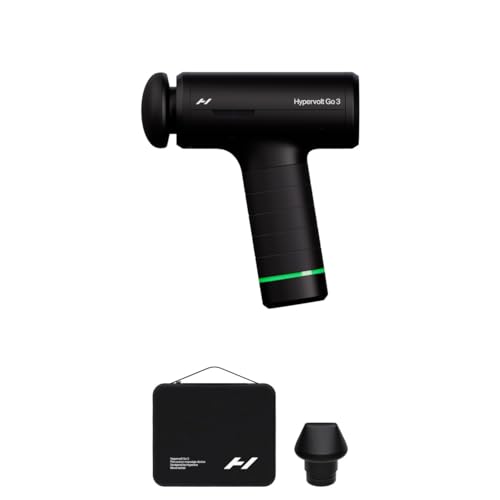
Hypervolt Go 3
- 1.6 lb
- 5 speeds
- Up to 4 hr battery
$149.00 at Amazon, as of Nov 17, 2026 01:07 UTC
Check price on AmazonRelated sports and disciplines
Parent: skiing. Siblings: alpine skiing, ski jumping, Nordic combined and ski mountaineering. In the same parks and pipes: snowboarding. Another sport that mixes air and judging: skateboarding.
Freestyle skiing FAQs
What is the difference between moguls and dual moguls?
In moguls one skier runs the course and is scored for turns (60%), air (20%) and speed (20%). In dual moguls two skiers race side by side, the weights shift to 50% turns, 25% air and 25% speed, and the winner of each duel advances.
What is the difference between halfpipe, slopestyle and big air?
Halfpipe is tricks in a snow channel, slopestyle is a course of rails and jumps, and big air is a single large jump. All three are scored out of 100 on overall impression.
How many freestyle skiing events were at the 2026 Olympics?
Fifteen, including dual moguls for the first time.
Is freestyle skiing dangerous?
At the elite level, studies find it among the higher-injury snow sports, with the knee most often hurt. Recreational risk depends on terrain, speed and skill. A helmet, a gradual progression and stopping when tired all lower the chances, and nothing removes the risk completely.
Sources
- FIS: Moguls 101, understanding moguls and dual moguls
- NBC Olympics: Freestyle skiing at Milano Cortina 2026
- NBC Olympics: Ski cross 101
- Wu et al., Winter Olympics injuries meta-analysis (2023)
- Zoppirolli et al., Olympic snow sports review (2026)
- FIS consensus statement on warm-up and cool-down (2025)
- Russell et al., helmets and head injuries, CMAJ (2010)
- AAOS OrthoInfo: Skiing injury prevention
- CDC HEADS UP: Signs and symptoms
Keep exploring: the skiing hub, skiing injuries, ski gear, our recovery tools guide, the massage guns guide, and every sport on our sports hub.