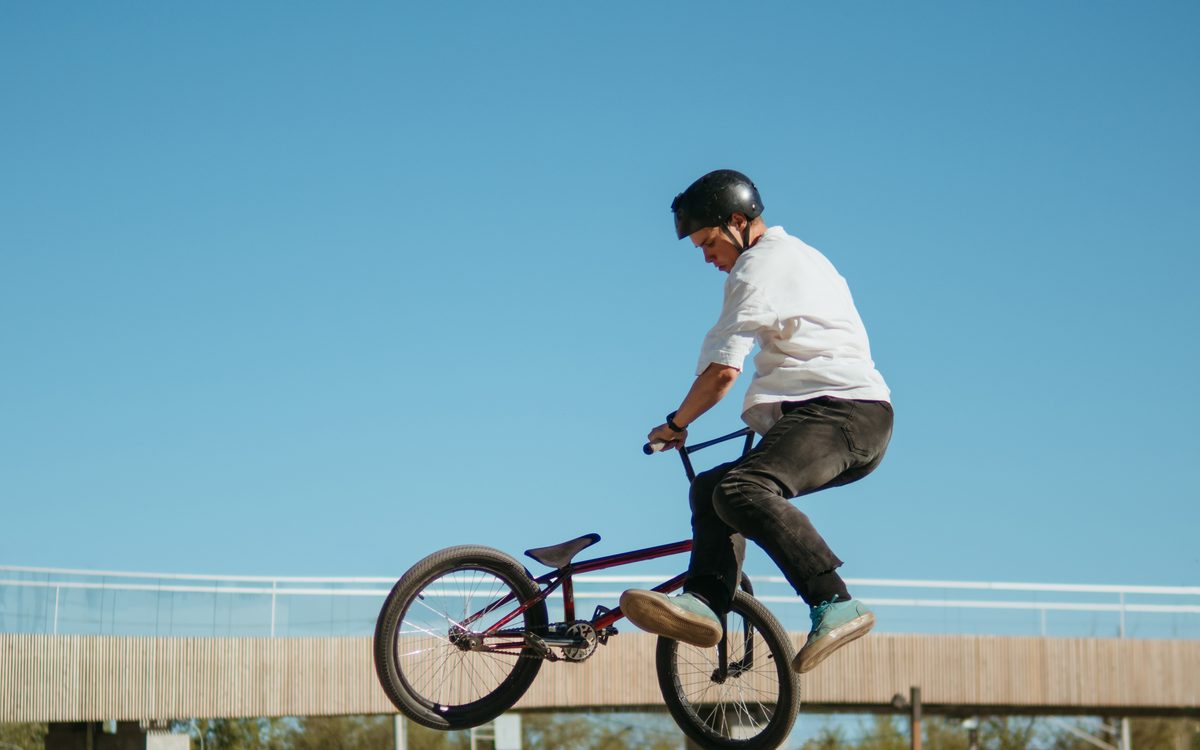
The ride home after a long park day: sore forearms, a bruise coming up on one hip, a quiet feeling in the legs that says tomorrow’s session will be slower. BMX freestyle recovery means the things that let your body and head come back after hard riding: sleep, food and fluids, easy movement, mobility work and sensible spacing of hard days. This page covers what the evidence says, including where it is weak, and how to tell normal soreness from an injury. See the BMX freestyle hub for the sport overview.
Quick answer: Sleep, regular meals and fluids, easy movement and rest days do most of the work. Evidence for gadgets and recovery treatments is mixed: a 2024 umbrella review found no recovery strategy with consistent benefit for endurance athletes. Normal soreness eases within a few days; sharp, one-sided, swelling or worsening pain, or any head injury, needs a sports medicine doctor, physical therapist or athletic trainer.
Sleep first
The CDC recommends at least 7 hours of sleep for adults, 8 to 10 for teens and 9 to 12 for children 6 to 12. Sleep is when most people feel the biggest difference in energy, mood and reaction time. A 2026 meta-analysis of napping in team ball sports found early-afternoon naps were associated with better endurance and agility in studies of 179 athletes, but the effects on technical performance were uncertain and these were not BMX riders. If sleep is short before a session, general practice is to ride more conservatively, because tiredness and crashes tend to go together. See the injury prevention page.
Load management
Hands, wrists, shoulders and the lower back take repeated impact in BMX freestyle, and no source we reviewed sets numbers for how much is too much. A general approach: alternate hard riding days with lighter ones, keep one full rest day each week, take a lighter week every few weeks, and cut the load if form, mood or sleep slip for several days. Our training page shows a weekly shape.
Mobility and flexibility
Mobility work helps many riders feel looser, particularly in the hips, shoulders, wrists and the upper back. A 2026 systematic review of stretching in flexibility-dependent sports found that static stretching improved flexibility by about 3% but was associated with small negative effects on immediate performance, and dynamic stretching showed small performance gains. A practical reading: do dynamic moves before riding, and save longer static holds for after riding or a separate session. Aim for comfortable stretch, not pain, and do not force a joint that has just been injured.
- Hips and legs. Hip flexors, hamstrings, calves and glutes get tight from the riding stance and landing.
- Wrists and forearms. Gentle wrist circles and forearm stretches after long sessions.
- Shoulders and upper back. Open-chest and shoulder-blade movements.
- Ankles. Circles and calf stretches, particularly if you ride in stiff shoes.
Recovery methods: what the evidence says
Many recovery tools are popular and the evidence is mixed. A 2024 umbrella review in endurance athletes (22 reviews, 63 studies, 1,100 athletes) concluded that no recovery strategy can be advised to enhance recovery between sessions, although individual studies suggested compression garments and cryotherapy may help and massage showed no effect. A 2026 network meta-analysis of 35 trials found that whole-body cryotherapy and light therapy had relatively large reductions in soreness at 24 and 48 hours compared with control. These studies were not in BMX riders and soreness is not the same as readiness to ride, so treat the findings as hints, not promises.
Practical reading: foam rollers, massage guns, compression and cold or heat can feel good and many riders use them for comfort. They are optional extras after the basics of sleep, food, fluid and rest. Do not use any of them to ride through pain. Our gear page mentions one comfort item.
Soreness or injury?
This is a general guide, not a diagnosis.
- Usually normal soreness: dull, widespread aching in muscles that appears a day or two after a harder session, eases with gentle movement and fades in a few days.
- Worth getting checked: sharp or pinpoint pain, pain at a joint or bone, swelling, bruising that spreads, numbness or tingling, pain that is worse each day, pain on one side only, or pain after a fall that does not settle.
- Urgent: any head blow with headache, dizziness, vomiting or confusion. The CDC HEADS UP programme lists these signs. Call 911 for severe symptoms.
The injuries page covers patterns and when to see a professional.
Recovery after a crash or a hard week
Many riders find the day after a big crash stiff and tender. Gentle walking and easy movement are common, and you should ease back to riding on smaller features first. If you are unsure whether you are hurt, ask a professional rather than guessing. Mental recovery matters too: a scary crash can shake confidence. See the mental training page.
Fuel and fluids afterwards
The 2016 joint position of the Academy of Nutrition and Dietetics, Dietitians of Canada and ACSM says well-chosen nutrition strategies enhance performance and recovery. A meal or snack with carbohydrate and protein, plus fluids, after a long session is a common approach. See the nutrition page.
BMX freestyle recovery FAQs
How many rest days do I need?
No source sets a number for BMX freestyle. A common general practice is at least one full rest day a week, plus lighter days after hard sessions. Take extra rest if your hands, wrists or shoulders stay sore.
Do foam rollers and massage guns work?
They can feel good, but evidence for improving recovery is mixed. A 2024 umbrella review found no recovery strategy with consistent benefit in endurance athletes, and massage showed no effect. They are optional extras.
Should I stretch before riding?
A 2026 review found static stretching can reduce immediate performance slightly, while dynamic movement showed small gains. Many coaches use dynamic warm-ups before riding and longer stretches afterwards.
How do I know if soreness is an injury?
Dull, widespread aching that fades over a few days is common. Sharp pain at a joint or bone, swelling, numbness or pain that worsens needs a professional. Any head blow needs a healthcare provider.
How much sleep do I need?
The CDC recommends 9 to 12 hours for children 6 to 12, 8 to 10 for teens and at least 7 for adults.
Sources
- CDC: about sleep
- 2026 meta-analysis: daytime napping and performance in team ball sports (PubMed)
- 2026 systematic review: acute stretching durations in flexibility-dependent sports (PubMed)
- Sports Medicine 2024: recovery strategies in endurance athletes, umbrella review (PubMed)
- 2026 systematic review and network meta-analysis: recovery modalities and muscle soreness (PubMed)
- ACSM / Academy of Nutrition and Dietetics / Dietitians of Canada 2016: nutrition and athletic performance (PubMed)
- CDC HEADS UP: signs and symptoms of concussion
General information for education only, not medical advice. It does not replace a sports medicine doctor, physical therapist, athletic trainer or registered dietitian who knows you. See our editorial policy for how we write and source our pages.