This article contains affiliate links: if you buy through them we may earn a commission, at no extra cost to you. Read our affiliate disclosure.
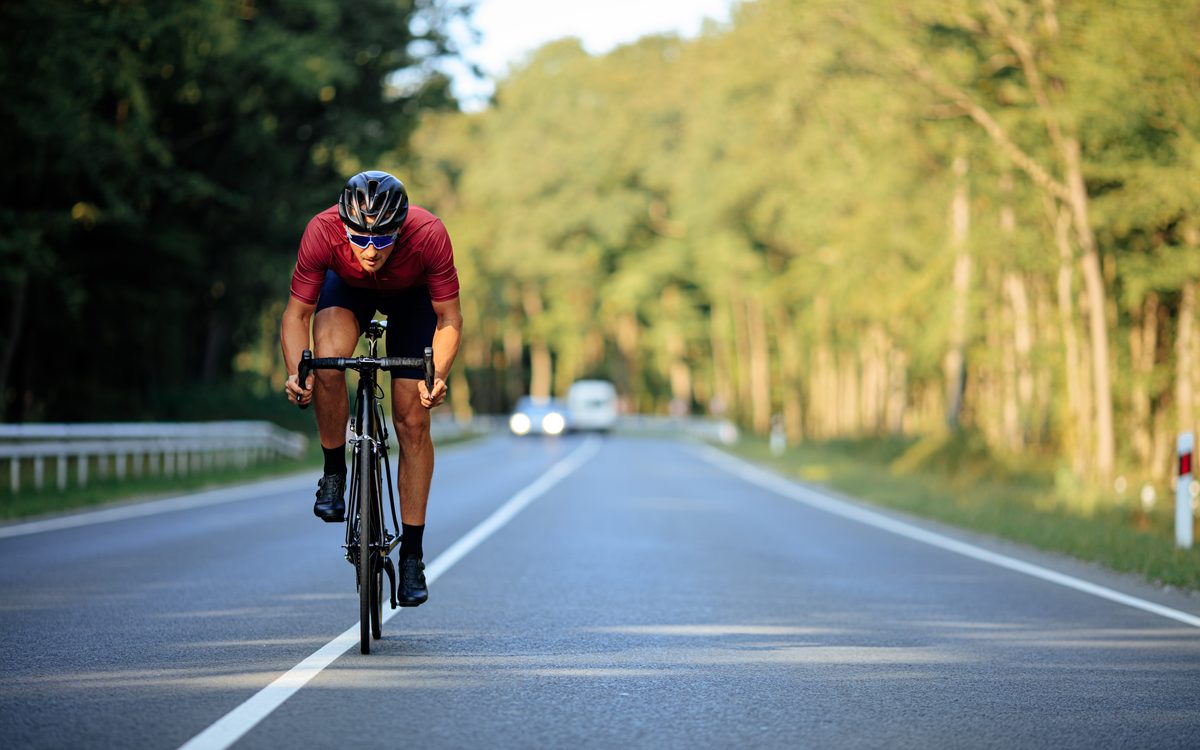
It is 7 a.m. outside a bike shop and a dozen riders are clipping in for the Saturday group ride, one eye on the sky and one on the rider who always attacks the first hill. On a Saturday in August 2024, a pack of 90 professionals rolled out of Paris on a 273-kilometre Olympic road race, headed for three trips up the cobbled Butte Montmartre. Same sport, same kind of bike, very different Saturdays. Road cycling (also called road racing or “the road”) is bicycle racing on paved public roads, in mass-start races, time trials and multi-day stage races.
Road Cycling guides: what do you need?
New to road cycling? Start with the first card. Everything here is general education, not medical advice.
History & Origins of Road Cycling
Road racing grew up in Europe in the nineteenth century. Cycling became an organized sport with a race at Saint-Cloud Park near Paris on May 31, 1868, and road races spread across Europe in the 1870s (Wikipedia, as a pointer). The sport’s governing body, the UCI, was founded in Paris on April 14, 1900 (UCI history summary). Road cycling has been on the Olympic program since the first modern Games in 1896.
The race that made road cycling a global spectacle began in 1903. Henri Desgrange, editor of the Paris sports newspaper L’Auto, created the Tour de France to sell more papers, and Maurice Garin won the first edition, which started on July 1, 1903 (Tour de France history). The first men’s road world championship was held in 1921 and the first women’s in 1959; a time trial world championship for men followed in 1994. Women’s racing at the top level took a big step in 2022 with the first Tour de France Femmes. We give only documented dates here: the story of who raced first on the road is older and less clear than any one race.
- 1868: First organized bicycle race, at Saint-Cloud near Paris.
- 1896: Road cycling is on the program of the first modern Olympics.
- 1900: The UCI is founded in Paris on April 14.
- 1903: First Tour de France, won by Maurice Garin.
- 1921: First men’s road world championship.
- 1959: First women’s road world championship.
- 1994: First men’s individual time trial world championship.
- 2022: First Tour de France Femmes, won by Annemiek van Vleuten.
Legends of the Sport
- Eddy Merckx (BEL): one of four riders with five Tour de France wins.
- Bernard Hinault (FRA): five-time Tour de France winner.
- Miguel Indurain (ESP): five-time Tour de France winner.
- Jacques Anquetil (FRA): five-time Tour de France winner.
- Tadej Pogačar (SLO): won the Tour de France in 2024, 2025 and 2026 (his fifth overall) and the men’s road world title in 2024 and 2025.
- Jonas Vingegaard (DEN): Tour de France winner in 2022 and 2023.
- Remco Evenepoel (BEL): Olympic time trial and road race champion in 2024; four straight world time trial titles from 2023 to 2026.
- Annemiek van Vleuten (NED): winner of the first Tour de France Femmes (2022), the 2022 world road race and the Tokyo 2020 Olympic time trial.
- Lotte Kopecky (BEL): world road race champion in 2023 and 2024; Olympic road race bronze in 2024.
- Demi Vollering (NED): won the Tour de France Femmes in 2023 and 2026 and the 2026 world road race title.
Official results and records
We only list champions and records here after checking them on the official source. For the latest results, go to:
- Olympedia, Paris 2024 road cycling
- time trial report
- Canadian Press
- Cycling Weekly
- Pro Cycling UK, 2026 Tour final results
- UAE Team Emirates-XRG
- Tour de France Femmes
- NBC Olympics
How we keep this current: we re-check facts after each major championship and update this page. Spot an error? See our editorial policy.
This page covers road racing: how races work, who races at which level, and how riders stay healthy on roads they share with traffic. For the whole sport, start at our cycling hub.
Road cycling at a glance
| What it is | Racing on paved roads: mass-start road races, criteriums (short laps on a closed circuit), individual time trials and stage races. |
|---|---|
| How it is won | First across the line in a road race or criterium; fastest time in a time trial; lowest total time (or most points, depending on the classification) in a stage race. |
| Participants and levels | Juniors (ages grouped in two-year bands in the US), amateur categories 5 to 1 in the US, collegiate clubs, professional teams, Olympic and Paralympic athletes. |
| Where it is played | Public roads closed or controlled for the race, plus closed circuits for criteriums. Worldwide; strongest in Europe. |
| Governing bodies | UCI (Union Cycliste Internationale) worldwide, with 197 national federations; USA Cycling in the United States. |
| Season | Spring to autumn in the northern hemisphere for most races; the pro calendar runs most of the year. |
How road racing works
In a road race, everyone starts together and the first rider across the line wins. Riders may work together, taking turns at the front to shield each other from the wind, which is why a pack (“the peloton”) travels faster than a rider alone. Road races run on big circuits or point to point. A criterium is a short, closed-circuit race, which USA Cycling’s first-time racer guide nicknames “NASCAR on bikes”: lots of corners and lots of sprints.
An individual time trial is the opposite: riders start alone at set gaps, drafting is banned, and the clock decides. At the Paris 2024 Olympics, riders left at 90-second intervals and had to keep a 2-metre side gap when passing, over a 32.4-kilometre course that was mostly flat. Stage races add up days of racing; the Grand Tours (Giro d’Italia, Tour de France, Vuelta a España) last three weeks, and the Tour de France Femmes started in 2022.
Who races, and at what level
Beginners and club riders. USA Cycling says no formal training is needed to enter a sanctioned race. Road, track and cyclocross each have five levels, from Category 5 (novice) up to Category 1, and points earned in races move you up. Juniors are grouped in two-year age bands. An annual membership includes an unlimited domestic racing license valid at more than 1,500 events, and a one-day license covers a single race day. First-timers are told to arrive early, check in for a number, and not try new food on race day. See cycling race day and youth cycling.
College and professional. US collegiate road racing runs through USA Cycling’s collegiate conferences; professional teams race the Grand Tours and one-day classics. See cycling leagues and associations.
Olympics and Paralympics. Road cycling has been part of the Olympic program since the first modern Games in 1896. As of 2026, the NBC Olympics preview for Los Angeles 2028 lists four road medal events: the men’s and women’s road race and the men’s and women’s individual time trial, around Venice Beach and surrounding Los Angeles streets. At Paris 2024, the road race was 273 km for men and 158 km for women, with a field of 90 riders per race and up to four per country, and the time trial had 35 riders per gender with up to two per country. The UCI lists road and track as the two Paralympic cycling disciplines; see para-cycling. Check the official programme for the current Games.
Physical demands
Road racing is an endurance sport with sharp spikes. Riders sit at a steady aerobic effort for hours, then need a hard burst to follow an attack, climb a hill or sprint. A scientific review of power profiling in cycling (Leo and colleagues, 2022) explains how the best a rider can hold falls as the duration gets longer, which is why coaches test efforts of different lengths. Descending and cornering also take handling skill. In long races fuel is part of the sport: the 2016 sports nutrition guidelines of the American College of Sports Medicine suggest up to 90 grams of carbohydrate an hour for events over about 2.5 to 3 hours, and a 2026 review of the professional peloton says it is still unresolved whether going above 100 grams an hour improves performance.
Health and safety on the road
This section is general information, not medical advice. If you are hurt, see a sports medicine doctor, physical therapist or athletic trainer.
Crashes and traffic
A 2025 systematic review across competitive cycling (Fallon and colleagues, 44 studies) found that in road cycling, about 48% of injuries were to the upper limb and about 14% to the head, neck or face. Skin lacerations and abrasions were the most common injury type, and fractures were second. Road cycling had the lowest concussion share of the disciplines studied (about 4.7%), although the authors note the evidence is thin for some disciplines. Away from racing, the US National Highway Traffic Safety Administration counted 1,166 bicyclists killed in traffic crashes in 2023, and its reminders include using lights, riding with traffic and wearing a helmet. A meta-analysis of studies of injured cyclists (Olivier and Creighton, 2017) linked helmet use with lower odds of head injury; the sport’s rules reflect that, and USA Cycling requires helmets at its permitted events.
If a rider hits their head, follow the CDC’s HEADS UP guidance: recognize the signs (headache, dizziness, confusion, feeling “off”), remove the rider from the ride or race, and have a healthcare provider decide when it is safe to return. Call 911 for danger signs such as repeated vomiting, a seizure, or one pupil larger than the other. Do not move someone with neck pain or tingling after a crash.
Overuse and fit
In a study of 109 professional road cyclists (Clarsen, Krosshaug and Bahr, 2010), 45% of overuse injuries involved the low back and 23% the knee, and the knee cost the most time away from riding. Bike fit is part of the conversation: a 2026 systematic review looked at whether fitting changes help low back pain in cyclists, and a professional fitting is what the American Academy of Orthopaedic Surgeons recommends for regular riders. Numbness or pain that lingers deserves a professional’s eyes. For more, read cycling injuries.
Heat and hydration
Long rides in the sun cost fluid. The AAOS advises drinking regularly on long rides, about once an hour.
Training, recovery and nutrition pointers
Road riders build an aerobic base with long, steady rides, then add intervals, hill work and race-style efforts, and many use power meters or heart-rate monitors to see the load. Rest days matter as much as ride days, and the CDC recommends at least 7 hours of sleep for adults and 8 to 10 for teens. Our cycling pages go deeper: training, recovery and nutrition and supplements, plus our heart-rate monitor guide and electrolyte powder guide.
Gear for the road
The helmet, lights and a bike that fits matter more than any upgrade. In the US, every bike helmet sold since 1999 must meet the Consumer Product Safety Commission standard (16 CFR 1203); the CPSC notes helmets are meant for a single impact, so replace one after a crash. For lights, a rear radar light such as the Garmin Varia RTL515 warns of vehicles approaching from behind (the maker says up to 153 yards); it is a heads-up tool, not a guarantee. A Giro Syntax MIPS road helmet is one option; the maker describes MIPS as a rotational-impact liner. Skratch Labs Hydration Sport is one drink mix riders use on long rides. See cycling gear for the full list.

Giro Syntax MIPS Road Helmet
- MIPS rotational-impact liner (maker)
- Road-style vents
- Check size and color before ordering

Garmin Varia RTL515 Radar Tail Light
- Radar alerts up to 153 yd (maker)
- Up to 16 h in day flash
- Pairs with Garmin devices
$149.98 at Amazon, as of Nov 17, 2026 02:07 UTC
Check price on Amazon
Skratch Labs Hydration Sport Drink Mix
- 400 mg sodium per serving
- NSF Certified for Sport (maker)
- Mix in your bottle
$23.95 at Amazon, as of Nov 17, 2026 02:07 UTC
Check price on AmazonRelated sports and disciplines
Parent: cycling. Siblings: track cycling, cyclocross and gravel cycling. Neighbors: mountain biking, BMX, triathlon (where the bike leg is road cycling) and para-cycling.
Road cycling FAQs
Is road cycling an Olympic sport?
Yes. Road cycling has been on the Olympic program since 1896. NBC Olympics lists four road medal events for Los Angeles 2028 (men’s and women’s road race and time trial). Check the official programme for the current Games.
How do I enter my first road race?
Find a USA Cycling sanctioned event, buy a one-day or annual license, and register in the novice category (Category 5). Arrive early, pin your number on all four corners, and ride the way you train. Group rides are the best preparation.
What is the difference between a road race and a criterium?
A road race covers long distances on large circuits or point-to-point courses. A criterium is a short, fast race on a closed loop with tight corners, often described as “NASCAR on bikes.”
What are the most common road cycling injuries?
From crashes: skin abrasions, then fractures, often of the arm, wrist or collarbone. From overuse: low back and knee pain. A doctor, physical therapist or athletic trainer can sort out any pain that lasts.
Sources
- UCI: about the UCI and its eight disciplines
- NBC Olympics: cycling at Los Angeles 2028
- NBC: road cycling rules and format, Paris 2024
- USA Cycling: first-time racer guide
- Fallon et al. 2025, injury and illness across competitive cycling disciplines (BMJ Open Sport and Exercise Medicine)
- Clarsen, Krosshaug and Bahr 2010, overuse injuries in professional road cyclists
- Olivier and Creighton 2017, bicycle injuries and helmet use
- NHTSA: bicyclists and other cyclists, 2023 data
- AAOS OrthoInfo: bicycle safety
- CPSC: which helmet for which activity
- CDC HEADS UP: signs and symptoms
- Morton et al. 2026, carbohydrate guidelines for endurance athletes and Wilson 2026, high-carbohydrate fueling in the peloton
- Leo et al. 2022, power profiling in cycling
- Barrajon et al. 2026, bike fitting and low back pain in cyclists
More on road cycling: the rules and road etiquette, cycling wearables, our recovery tools guide, and every sport on our sports hub.