This article contains affiliate links: if you buy through them we may earn a commission, at no extra cost to you. Read our affiliate disclosure.
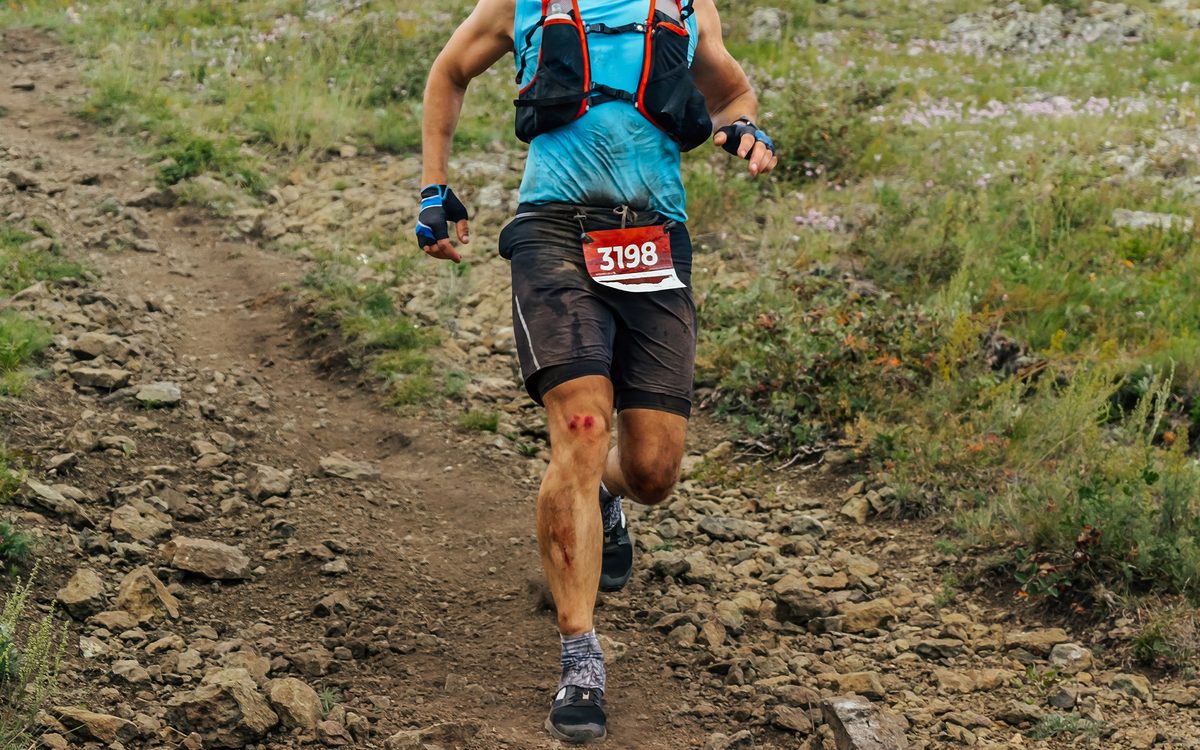
A runner who left Olympic Valley, California, at dawn is walking into Auburn the next morning, 100.2 miles and more than 18,000 feet of climbing behind her: that is the Western States 100. Most trail runners will never go that far; their big day is a wet Saturday loop in the woods with a friend and a sandwich. Trail running (sometimes called mountain running, fell running or “running off-road”) is running on natural surfaces such as dirt paths, forest tracks and mountain routes, where the hills and the footing matter as much as the pace.
Trail Running guides: what do you need?
New to trail running? Start with the first card. Everything here is general education, not medical advice.
History & Origins
Running on hills and paths is older than any organized race, so the sport’s history is best told through its races and its organizations. World Athletics notes that the Dipsea Trail Race (1905) may be the earliest known formal trail race, and that the Western States 100 (1974) and Sierre-Zinal (1977) followed (World Athletics). Mountain running got an international body first: the World Mountain Running Association began in 1984 and held its first World Trophy in 1985. Long-distance trail racing grew in the 2000s with the UTMB in 2003 and the International Trail Running Association in 2013. In 2017 World Athletics, the WMRA and ITRA agreed on one definition of trail running, and the first combined World Mountain and Trail Running Championships were held in Thailand in 2021, delayed by Covid.
- 1905: Dipsea Trail Race, possibly the earliest known formal trail race (World Athletics wording).
- 1974: The Western States race begins when Gordy Ainsleigh completes the 100-mile route in under 24 hours alongside the Tevis Cup horses (Western States). The race calls itself the world’s oldest 100-mile trail race.
- 1977: Sierre-Zinal follows (World Athletics).
- 1978: Pat Smythe is the first woman to finish Western States.
- 1984 and 1985: The WMRA is founded; its first World Trophy is held in 1985.
- 2002 and 2009: The IAAF recognizes mountain running as an international competition (2002); it becomes the Mountain Running World Championships in 2009.
- 2003 and 2013: UTMB begins (2003); ITRA is founded (2013).
- 2017: World Athletics, WMRA and ITRA agree a shared definition.
- 2021: First World Mountain and Trail Running Championships, Thailand.
Recent Champions
This section covers only the 2026 Western States 100, the one trail result we confirmed on an official page. It is a sample: it leaves out the world championships, UTMB and every other race, and we have not listed them because we could not open an official results page for them.
| Race | Men | Women |
|---|---|---|
| Western States 100, 27 to 28 June 2026 | Vincent Bouillard, 13:46:15 (course record) | Jennifer Lichter, 15:28:05 (course record) |
Runners-up: Francesco Puppi 13:51:08 and Riley Brady 15:42:14. Results verified through 13 November 2026. Latest event included: Western States 100, 2026. Source: Western States records.
Records & Milestones
Trail courses differ in distance and climb, so there are no world records comparable to the track or road. A course record is the best comparison, and only for that one course.
| Course record (100.2 miles, since 1984) | Holder | Time | Year |
|---|---|---|---|
| Open men | Vincent Bouillard | 13:46:15 | 2026 |
| Open women | Jennifer Lichter | 15:28:05 | 2026 |
| Masters men | Tyler Green | 15:05:39 | 2024 |
| Masters women | Ida Nilsson | 16:56:52 | 2024 |
Source: Western States Endurance Run records. Records verified through 13 November 2026.
Notable Athletes
Athletes whose achievements we could confirm on official pages. Fewer than usual, on purpose; not ranked, and none is connected to AthleteRx.
- Gordy Ainsleigh (USA): completed the Western States route in under 24 hours in 1974, the run that led to the 100-mile race.
- Pat Smythe (USA): first woman to finish Western States, in 1978.
- Vincent Bouillard: won Western States in 2026 in a men’s course record of 13:46:15.
- Jennifer Lichter: won Western States in 2026 in a women’s course record of 15:28:05.
- Ida Nilsson: holds the Western States masters women’s record, 16:56:52 (2024).
- Tyler Green: holds the Western States masters men’s record, 15:05:39 (2024).
Official results and records
How we keep this current: we re-check results after each major championship and update the date above. Spot an error? See our editorial policy.
Trail running at a glance
| What it is | Endurance running over mostly off-road courses. World Athletics, the mountain-running body WMRA and ITRA agreed a shared definition in 2017: the fastest time wins, and navigation skills or mountaineering equipment must not be needed. |
|---|---|
| How it is won | Fastest time over a set course. Courses are measured in distance and also in climbing, so a 10-mile trail race can take longer than a road half marathon. |
| Distances | From a couple of kilometres to 100 miles and beyond. World Championship races: Short Trail 35 to 45 km, Long Trail 75 to 85 km, plus Classic (up and down) and Uphill formats. |
| Where | Park trails, forests, mountains and desert routes; races are run by clubs, race companies and national bodies. |
| Governing bodies | World Athletics is the international federation, working with ITRA and WMRA; in the US, USATF is the governing body for athletics. |
| Season | Varies by region and race. Check each event’s date and conditions. |
How trail running works
Unlike a road race, a trail race is as much about the ground as the clock. ITRA says a trail race takes place in a natural environment with as little paved road as possible, with a maximum of 20% paved. Pace is hard to compare between courses, so many runners judge effort by feel or heart rate rather than minutes per mile, and everyone walks the steep climbs, which is normal and often faster. Downhills are where you earn time, and where most falls happen.
Races have aid stations with water, food and sometimes medical staff, but on longer events you are expected to carry some gear, usually in a hydration vest. Most races publish a mandatory gear list, cut-off times and a course map.
Formats
- Classic (up and down): in World Athletics championship events, senior classic races are 12 to 15 km with 600 to 900 m of climbing; junior races are 5 to 7 km.
- Uphill: senior uphill races are 4 to 7 km with 700 to 1,000 m of climbing and an average incline above 10%.
- Short Trail and Long Trail: 35 to 45 km (2,000 to 3,000 m climbing) and 75 to 85 km (3,500 to 6,000 m).
- Ultras: anything longer than a marathon; our ultra running page covers the sport on its own.
Who runs trails and at what level
Beginners. Most people start with a local 5K or 10K trail race, a club run or a park trail, often after getting tired of roads. No special skill is needed beyond comfortable running and a willingness to walk uphill.
Youth and school. Cross country is the school-level version of off-road running, usually on grass and park trails, and is covered on our running hub.
Elite. The world’s best compete at World Athletics Trail World Championships and at private race series. At the 2025 Trail World Championships in Canfranc, Spain, Sweden’s Tove Alexandersson and France’s Frédéric Tranchand won the Short Trail titles and Americans Katie Schide and Jim Walmsley won the Long Trail. The first combined World Mountain and Trail Running Championships were held in Thailand in 2021. Western States, established in 1977, is the oldest 100-mile trail race.
Olympic status
Trail running is not on the Olympic programme. The LA28 games plan lists athletics, cycling (including mountain bike) and other sports, but does not list trail running. A campaign called Trail Running 2032 is pushing for inclusion at Brisbane 2032, and Trailrunner Magazine reported in 2024 that an earlier petition for LA28 was unsuccessful. We found no confirmation of any later decision, so check the official programme for the current Games. Trail running has no Paralympic status that we could confirm.
Physical demands
Trail running asks for endurance, but also for strength and balance. Climbing loads the calves and glutes; descending makes the quads work hard to brake (muscles lengthen while they are under load), which is why legs often feel more sore after a downhill. Uneven ground demands ankle stability and quick reactions, and long races ask your body to keep working through fatigue, heat and hunger. A 2022 review in Arthroscopy, Sports Medicine and Rehabilitation says that most trail-running injuries are in the lower leg, mainly the knee and ankle, that over 70% are overuse injuries, and that key causes include poor neuromotor control and balance and running while fatigued.
Health and safety in trail running
This is general information, not medical advice. If something hurts and does not settle, or you are unsure, see a sports medicine doctor, physical therapist or athletic trainer.
Injuries
The 2022 trail review above reports ankle sprains as the most common acute trail injury and recommends multi-part “prehabilitation” (flexibility, balance, strength and jumping work) and early attention to small pains. For ultra distances, a 2026 narrative review of 18 studies found that lower-limb musculoskeletal injuries are most common, and that kidney injury, stomach trouble and low blood sodium also occur in long or multi-stage events, with blisters and abrasions often forcing slower pace or withdrawal. Road running studies show the same overuse pattern: a systematic review (Kakouris et al., 2021) put the overall injury rate in runners at around 40%, with Achilles tendon problems, shin pain, kneecap pain, plantar fasciitis and ankle sprains the most common. Those figures are for runners generally, not trail runners alone.
Falls, head injury and getting help
Falls are part of trail running. If you hit your head, the CDC’s HEADS UP guidance applies: stop, and see a healthcare provider before returning. Danger signs such as repeated vomiting, a seizure, worsening headache, slurred speech or unequal pupils mean call 911. On solo runs, tell someone your route and when you will be back, and carry the phone, water and warm layer that fits the terrain. Many trails have no phone signal; ask the land manager or the race about rescue and cut-offs.
Heat, fuel and low energy
The National Athletic Trainers’ Association says it takes 7 to 14 days to acclimatize to heat. The ACSM, Academy of Nutrition and Dietetics and Dietitians of Canada statement says to drink to limit fluid loss without gaining weight during exercise (about 0.4 to 0.8 litres an hour), because over-drinking is a risk too. The 2023 IOC consensus statement on Relative Energy Deficiency in Sport (REDs) warns that not eating enough for the training load harms health and performance in female and male athletes; a 2026 review applies it to ultra-trail running. If you suspect you are under-fuelling, see a sports medicine doctor or dietitian.
Training, recovery and nutrition pointers
Trail training mixes time on feet with hills, because road pace is a poor guide to trail effort. Build weekly volume gradually: the American Academy of Pediatrics suggests the “10% rule” for adding mileage, and for kids and teens advises against marathons. Add balance and single-leg strength work to protect your ankles. After a hard day, easy movement, food and sleep do the most; the CDC recommends at least 7 hours for adults and 8 to 10 for teens. Our running pages cover training, recovery and nutrition and supplements.
Gear for trail running
Shoes first: the American Academy of Orthopaedic Surgeons advises trying shoes on at the end of the day with the socks you run in, and leaving about a half inch beyond your longest toe. Look for a shoe with a grippy outsole and visit a running store for fit. After shoes, a hydration vest is the key piece for long runs: the Salomon ADV Skin 5 set is a 5-litre vest with two 500 ml soft flasks, and the Nathan VaporAir Lite 4L includes a 2-litre bladder and seven pockets, according to the makers. A balm such as Body Glide Original is a common choice against chafing, and the OOFOS OOahh Slide is a recovery sandal for after the run. Details come from the makers and Amazon listings and may change. More in our hydration vest guide and the running gear page.

Salomon ADV Skin 5 Set
- 5 L storage
- Two 500 ml soft flasks
- 220 g / 8 oz

Nathan VaporAir Lite 4L
- 2 L bladder included
- 7 pockets
- Check the size chart

Body Glide Original Anti-Chafe Balm
- 1.5 oz stick
- Plant waxes, no petroleum (maker)
- Carry it on long runs
$11.69 at Amazon, as of Nov 17, 2026 01:07 UTC
Check price on Amazon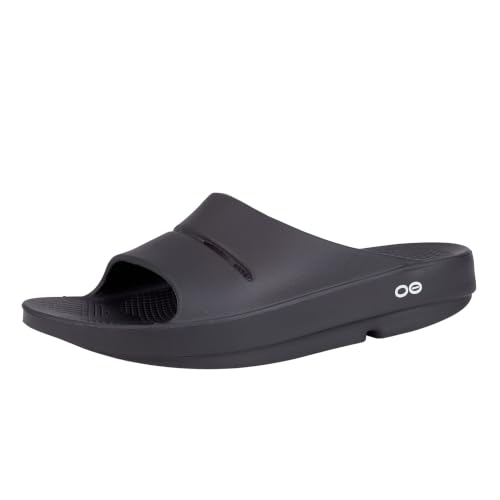
OOFOS OOahh Slide
- OOfoam slide
- APMA Seal of Acceptance
- Machine washable
$59.95 at Amazon, as of Nov 17, 2026 01:07 UTC
Check price on AmazonRelated sports and disciplines
- Running: the parent page, from 5Ks to cross country.
- Marathon and ultra running: the road and long-distance neighbours.
- Hiking and mountain biking: other ways to use the same trails.
- Obstacle course racing and track and field.
Trail running FAQs
Is trail running harder than road running?
It is different. Climbs, descents and uneven ground make the same distance slower and harder on stabilising muscles, but softer surfaces and walking breaks can feel kinder. Judge effort by feel, not pace.
Is trail running an Olympic sport?
No. Trail running is not on the LA28 sports list; supporters are campaigning for Brisbane 2032. Check the official programme for the current Games.
How far is a trail race?
Anywhere from 5 km to 100 miles or more. World Athletics Short Trail races are 35 to 45 km and Long Trail 75 to 85 km. Beginners usually start at 5 to 10 km.
Do I need trail shoes?
Easy, dry, groomed paths work in road shoes, but muddy or rocky trails are safer in shoes with more grip. Fit matters most; the AAOS advises trying them on at the end of the day.
What injuries are most common?
Ankle sprains are the most common acute injury in a 2022 review, and most trail injuries involve the knee or ankle and are overuse problems. See a professional for pain that persists.
Sources
- World Athletics: Mountain and Trail Running
- ITRA: Discover trail running
- LA28 Games Plan
- Western States Endurance Run
- Athletics Weekly: Short Trail titles, Canfranc 2025 and Long Trail titles
- Trailrunner Magazine: Why isn’t trail running in the Olympics?
- Injury prevention, safe training techniques and return to sport in trail runners (2022)
- Epidemiology of injuries and illnesses in ultra trail running (2026)
- Kakouris et al. 2021: running-related musculoskeletal injuries
- IOC consensus statement on REDs (2023) and REDs in ultra-trail running (2026)
- NATA position statement on exertional heat illnesses
- ACSM, AND and Dietitians of Canada: Nutrition and Athletic Performance
- CDC HEADS UP: signs and symptoms
- AAP HealthyChildren: Running and AAOS: Athletic shoes
- CDC: About sleep
Keep exploring: the running hub, running injuries, running gear, our hydration vest guide, knee braces for running, energy gels and the sports hub.