This article contains affiliate links: if you buy through them we may earn a commission, at no extra cost to you. Read our affiliate disclosure.
Bercy Arena, Paris, August 2, 2024. Britain’s Bryony Page, who had won silver at Rio 2016 and bronze at Tokyo 2020, floats through ten flips and twists to finish her set of Olympic medals with gold, while Canada’s Sophiane Méthot takes bronze in her Olympic debut. A few hours earlier, Ivan Litvinovich, competing as an Individual Neutral Athlete, had become the first man in the discipline to win back-to-back Olympic titles.
Trampoline Gymnastics guides: what do you need?
New to trampoline gymnastics? Start with the first card. Everything here is general education, not medical advice.
History & Origins of Trampoline Gymnastics
The modern trampoline is usually credited to the American George Nissen, who in the early 1930s, after watching trapeze artists bounce off their safety net, built what is described as the first modern trampoline in his garage and sold it under a name taken from the Spanish word “trampolin.” Some accounts add a collaborator and older bounce-and-tumble traditions, but we found no source we could confirm, so we treat the earlier history as unsettled (Wikipedia, used as a pointer; the federation’s own history page covers the same ground).
Trampolining spread through U.S. school physical education and entertainment in the 1930s, and the ten-bounce routine became the competition standard in the 1950s. The first World Championships were held in London in 1964, with American winners Dan Millman and Judy Wills Cline. The international trampoline federation joined the FIG in 1999, and individual trampoline became an Olympic event at Sydney 2000, the first Games on its programme.
- Early 1930s: George Nissen builds the first modern trampoline in the United States.
- 1950s: The ten-bounce routine becomes the competition norm.
- 1964: First World Championships, London.
- 1965: The International Trampoline Federation is formally recognized as the sport’s governing body.
- 1969: First European Championship, Paris.
- 1999: The trampoline federation merges into the FIG.
- 2000: Individual trampoline is accepted into the Olympic Games.
- 2024: Paris; Bryony Page (GBR) completes her set of Olympic medals with gold.
Legends of the Sport
Athletes from different eras, listed in rough chronological order, not ranked. George Nissen, who built the first modern trampoline, was an inventor and promoter rather than a champion.
- Dan Millman and Judy Wills Cline (USA): the first world champions, at the 1964 World Championships in London (Wikipedia, used as a pointer).
- Dong Dong (CHN): Olympic silver medalist in 2016 and 2020 (Olympics.com).
- Rosannagh MacLennan (CAN): Olympic women’s champion at Rio 2016 (Olympics.com).
- Ivan Litvinovich (BLR): Olympic champion at Tokyo 2020 and Paris 2024 and 2026 world champion (Olympics.com, World Gymnastics).
- Zhu Xueying (CHN): Tokyo 2020 Olympic champion and 2026 world champion (Olympics.com, World Gymnastics).
- Bryony Page (GBR): Olympic silver, bronze and gold medalist (2016, 2020, 2024) and world champion in 2021 and 2023 (Olympics.com, World Gymnastics).
- Yan Langyu (CHN): world champion in 2021 and 2023 and Paris 2024 Olympic bronze medalist (Olympics.com, World Gymnastics).
- Wang Zisai (CHN): Paris 2024 Olympic silver medalist and 2025 world champion (Olympics.com, World Gymnastics).
Official results and records
We only list champions and records here after checking them on the official source. For the latest results, go to:
How we keep this current: we re-check facts after each major championship and update this page. Spot an error? See our editorial policy.
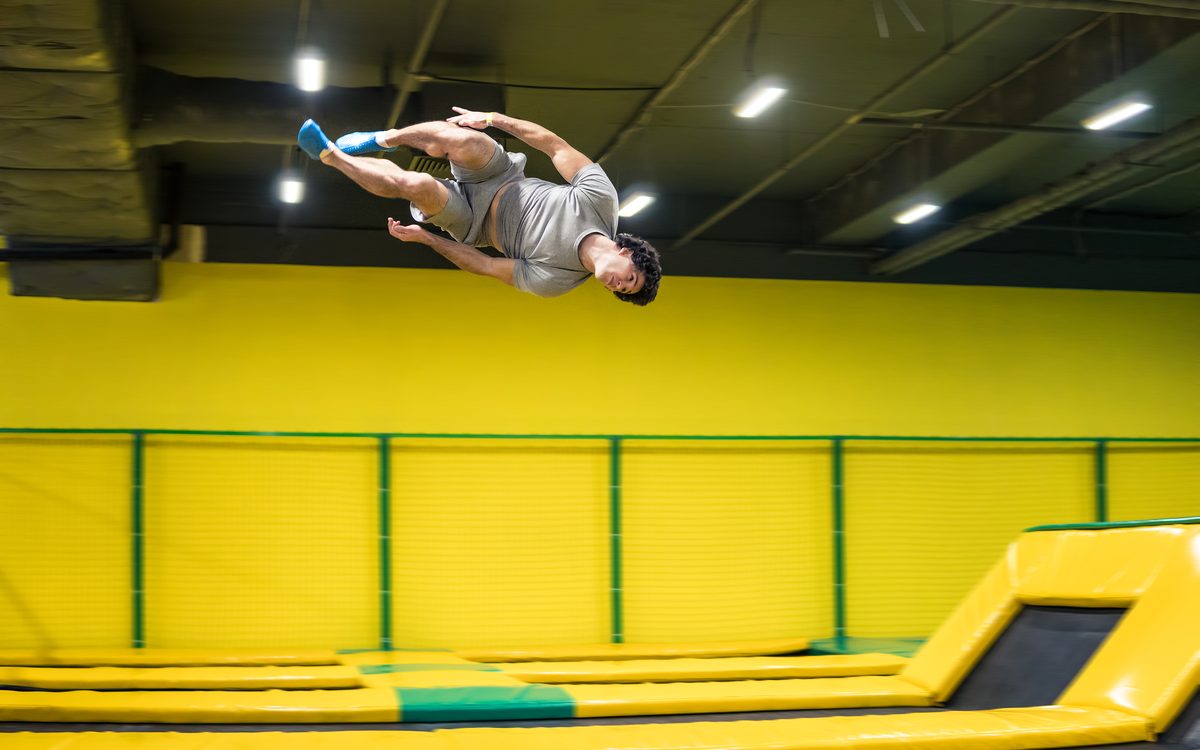
Trampoline gymnastics (also called trampolining, competitive trampoline or simply “trampoline”) is the gymnastics discipline in which an athlete bounces on a rebound bed and performs a routine of ten linked somersaults and twists, judged on form, difficulty, height and control. It is very different from jumping on a backyard trampoline. This page covers how it works, who competes and how to stay safe. The wider sport family is in the gymnastics guide.
Trampoline gymnastics at a glance
| What it is | Routines of ten elements (somersaults with or without twists) on a competition trampoline. The International Gymnastics Federation (FIG) groups four categories under trampoline gymnastics: individual trampoline, synchronized trampoline, double mini-trampoline and tumbling. |
|---|---|
| How it is scored | Execution, horizontal displacement (how little you drift from the center of the bed), time of flight (measured electronically) and difficulty are added, then penalties come off, per the FIG Code of Points 2025-2028. |
| Who takes part | Children in club programs through national and international elite athletes; men and women compete separately. USA Gymnastics runs a Trampoline & Tumbling program with Levels 1 to 10 plus an Elite track. |
| Where it is played | Gymnastics clubs with a competition trampoline and spotters. |
| Governing bodies | FIG worldwide; USA Gymnastics in the United States. |
| Olympics | Individual men’s and women’s events at Paris 2024; the FIG’s LA28 qualification document lists individual events for men and women only. |
| Season | Club meets and national championships plus the FIG World Cup series; the 2027 and 2028 series count toward LA28 qualification for individual trampoline. |
How trampoline gymnastics works
An individual routine is ten elements long. The FIG Code of Points describes the ideal as a high, continuous rhythm of jumps that turn from feet to feet or feet to back, front or seat, with no straight bounces in between, and with the athlete staying as close to the center of the bed as possible. Difficulty is built up from the rotation in each element, in small steps: for example, a quarter somersault and a half twist each add 0.1 to the difficulty. Repeating an element does not earn its difficulty a second time, which is why you see athletes mix forward and backward somersaults, tucked, piked and straight shapes, and twists.
Execution judges mark form. Separate judges watch horizontal displacement, and an electronic device times how long the athlete is actually airborne, so a higher, more controlled routine earns more. At the end, the athlete has to land and stand steady; the Code deducts for an uncontrolled finish. Spotters stand beside the bed, and they may not talk to or signal the athlete once the routine has started.
The events you will see
- Individual trampoline: one athlete, ten elements. In senior international events every routine is voluntary, meaning the athlete chooses it. Qualification 1 has two routines, with the better one counting; a smaller Qualification 2 can follow at big events; the top eight go to the final for one more routine.
- Synchronized trampoline: two athletes on side-by-side beds perform the same routine, and a synchronization score (timed to a hundredth of a second) is added. It is part of FIG competitions but is not in the Olympic qualification document for LA28.
- Double mini-trampoline: two skills per pass on a smaller bed, with its own competitions.
- Tumbling: eight skills down a sprung track, a separate apparatus that FIG groups with trampoline.
In FIG Junior and age-group events, the first routine has special requirements and the second is voluntary.
Who plays it and at what level
Most athletes start in a recreational or beginner class at a gymnastics club, then move into a competitive program. USA Gymnastics’ Trampoline & Tumbling program has a Development track with preparatory Levels 1 to 4, compulsory Levels 5 to 7 and optional Levels 8 to Open, with athletes placed by age; a separate Elite track has five divisions from Youth 11-12 up to Senior. Junior Olympic National Championships cover Levels 5 to 10 in trampoline, double mini, synchronized trampoline and tumbling. We did not find a confirmed school or NCAA varsity trampoline championship, so for most athletes the route is club to national to international.
Olympic status (as of 2026): trampoline has been in the Olympic gymnastics program in the modern era, and Paris 2024 had two individual events, men’s and women’s, with 32 quota places in total (16 men and 16 women). For Los Angeles 2028 the FIG’s qualification system document (version dated May 12, 2026) lists an individual competition for men and one for women, a maximum of two athletes per National Olympic Committee in each, and no synchronized or team event. We could not confirm the final LA28 quota total; check the official programme and the FIG for the current Games. Trampoline is not a Paralympic sport.
What it asks of the body
Trampoline is a landing sport: legs, hips and trunk repeatedly absorb and redirect force while the athlete controls rotation in the air, so leg strength, ankle stability and trunk control matter. One small cross-sectional study of 14 competitive female trampolinists aged 16 to 29, compared with 15 controls, found higher bone density at the hip and spine and stronger estimated bone strength in the trampolinists (Burt and colleagues, J Sport Health Sci 2016). It was small and cannot show cause and effect.
Health and safety in trampoline gymnastics
Trampolines carry real risk, and organizations that treat injuries say so plainly. The American Academy of Pediatrics’ 2012 policy statement notes that most trampoline injuries happen with several people on the mat at once, that cervical spine injuries often follow falls off the trampoline or attempts at somersaults and flips, and that the safety measures studied (nets, pads) had not clearly reduced risk. It strongly discourages home trampoline use and sets out recommendations for trampoline as a competitive sport and in structured training settings.
A national emergency department study looked at 2010 to 2014 data (Kasmire and colleagues, Pediatrics 2016). Estimated US emergency visits for trampoline park injuries rose from 581 to 6,932 over those years. Sprains and fractures were the most common injuries at parks and homes; compared with home trampoline injuries, park injuries were more likely to involve the lower extremity and to lead to admission. Park injuries came from falls, contact with other jumpers and flips. These numbers describe recreational jumping, not coached gymnastics.
- Coached, spotted and one at a time. Competitive routines are done by one athlete (or a synchronized pair) at a time with spotters. At home or in a park, avoid sharing the mat and avoid flips without a coach.
- Neck and spine. If someone falls and has neck pain, numbness, tingling or weakness, do not move them; call emergency services.
- Concussion. The CDC’s HEADS UP guidance is to recognize and remove: an athlete with a suspected concussion stops for the day and a health care provider decides about returning. Danger signs such as repeated vomiting, a seizure or growing confusion need emergency care.
- Ankles, wrists and backs. Sprains and overuse are common in gymnastics generally. See our gymnastics injuries page, and see a sports medicine doctor, physical therapist or athletic trainer for pain that lingers.
- Dress and rules. The FIG Code requires trampoline shoes or socks and bans jewelry, piercings and watches in competition.
Training, recovery and nutrition pointers
Training mixes bed time with off-bed conditioning. Because the work is repeated impact, sleep and spacing hard days matter. Our parent-sport pages cover the basics: gymnastics training, gymnastics recovery and nutrition and supplements for gymnasts. Supplement decisions for young athletes belong with a doctor or registered dietitian.
Gear for trampoline gymnastics
The competition trampoline, frame pads and landing mats belong to the gym, which should maintain and inspect them; we did not find an equipment standard we could cite, so ask your club about its safety program. Athletes buy a leotard or singlet, trampoline shoes or socks and, if a coach or clinician agrees, an ankle support. We have no verified trampoline-specific products, so the cards are general support and recovery picks; none is claimed to prevent injury.

ASO EVO Ankle Stabilizer
- Low-profile lace-up
- Stirrup and figure-8 straps
- Fits inside most shoes
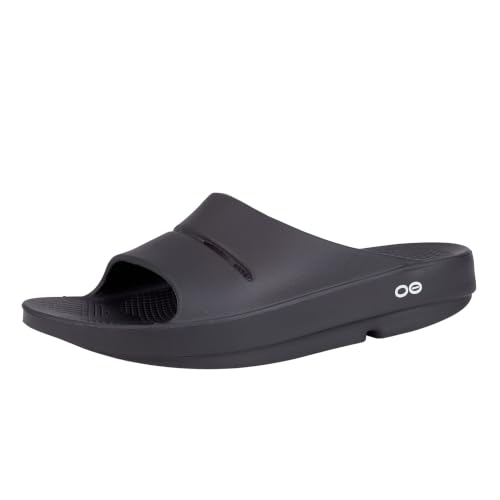
OOFOS OOahh Slide
- OOfoam slide
- APMA Seal of Acceptance
- Machine washable
$59.95 at Amazon, as of Nov 17, 2026 01:07 UTC
Check price on Amazon
TriggerPoint GRID 1.0 Foam Roller
- 13-inch roller
- Multi-density foam
- Fits a gym bag
More ideas are in our guides to ankle braces, foam rollers and recovery shoes.
Related sports and disciplines
- Parent sport: Gymnastics.
- Sister disciplines: artistic gymnastics and rhythmic gymnastics.
- Other sports with flips: diving and cheerleading.
Frequently asked questions
Is trampoline an Olympic sport?
Yes. It had men’s and women’s individual events at Paris 2024, and the FIG’s May 2026 qualification document lists individual events for men and women for Los Angeles 2028. Check the official programme for the current Games.
How is a trampoline routine scored?
Judges score execution and difficulty, a second panel scores how little the athlete drifts from the center of the bed, a sensor measures time in the air, and penalties are subtracted. A routine has ten elements and no element’s difficulty counts twice.
Is it safe for kids to learn on a backyard trampoline?
The American Academy of Pediatrics strongly discourages home trampoline use. If a child wants to learn, a gymnastics club with coaches, spotters and proper equipment is a different setting from the backyard.
What is the difference between trampoline, double mini and tumbling?
All three sit under FIG trampoline gymnastics. Trampoline uses a large bed and ten elements, double mini uses a small angled bed and a mat dismount, and tumbling uses a sprung track. Only individual trampoline is on the Olympic list.
How do I get started?
Look for a USA Gymnastics member club with a Trampoline & Tumbling program and ask about class levels, coach training and how spotting works. Recreational classes come before competitive levels.
Sources
- FIG, Trampoline Gymnastics Code of Points 2025-2028: PDF copy
- FIG, Olympic Qualification System Los Angeles 2028, Trampoline: gymnastics.sport
- Olympics.com, Paris 2024 trampoline: men’s results and women’s final; Team Canada, Méthot bronze
- USA Gymnastics, Trampoline & Tumbling Development Program rules: PDF
- American Academy of Pediatrics, Trampoline Safety in Childhood and Adolescence (2012): PubMed
- Kasmire KE et al., Trampoline Park and Home Trampoline Injuries, Pediatrics 2016: PubMed
- Burt LA et al., Competitive trampolining and bone, J Sport Health Sci 2016: PubMed
- CDC HEADS UP, signs and symptoms: cdc.gov
Keep exploring: the gymnastics hub, gymnastics injuries, youth gymnastics, our recovery tools guide and the full sports hub.