This article contains affiliate links: if you buy through them we may earn a commission, at no extra cost to you. Read our affiliate disclosure.
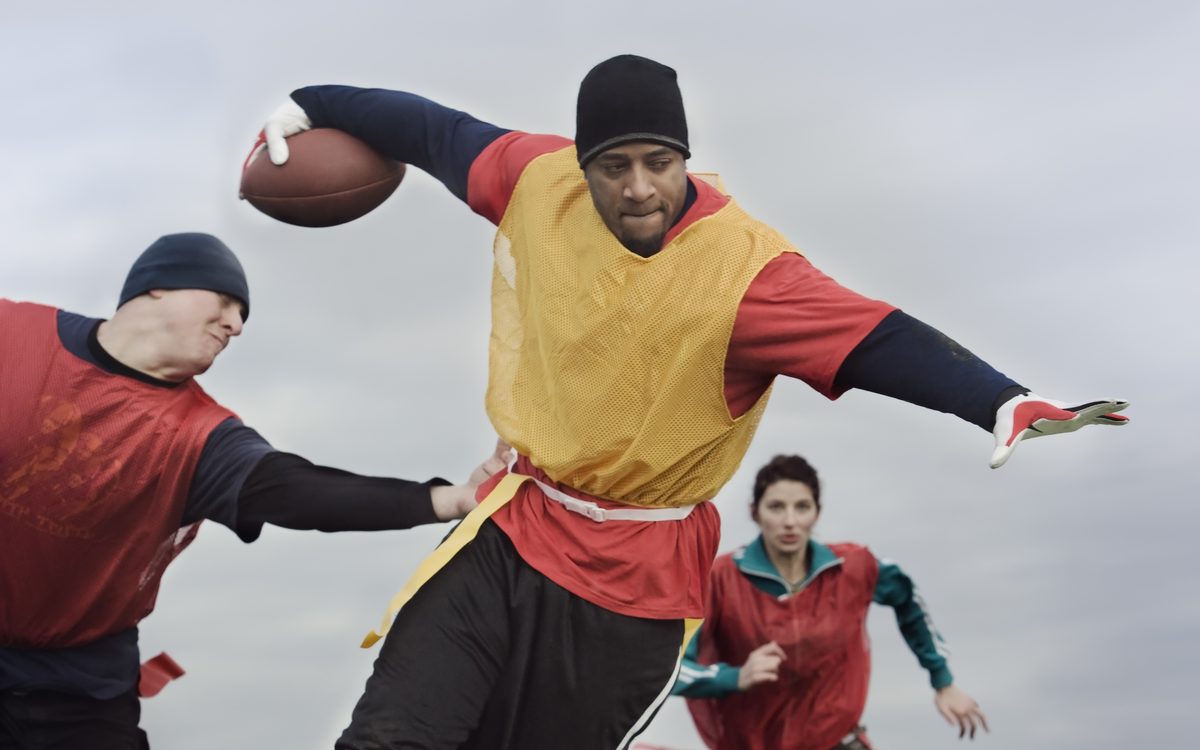
In July 2028, flag football is scheduled to make its Olympic debut in Los Angeles, with six men’s and six women’s national teams playing five-on-five. Long before that, it was already how hundreds of thousands of kids first met football: a belt with flags, and the thrill of pulling one off the ball carrier’s hip. Flag football, the non-contact form of American football, has no tackling, blocking or diving. The ball carrier is stopped by pulling a flag.
Flag Football guides: what do you need?
New to flag football? Start with the first card. Everything here is general education, not medical advice.
History & Origins of Flag Football
Flag football began as a recreational game for American soldiers during World War II, who brought it home with them. The first games are believed to have been played at Fort Meade, Maryland, and the game was first called “touch and tail football” before taking the name “flag football” after the war (Canadian Olympic Committee). Exact dates for the earliest games vary between sources, so we treat the Fort Meade story as the widely cited account, not a settled one.
The organised youth game grew out of the NFL’s Play Football health initiative in the 1990s. In 1994 the NFL ran its first youth camp series at the New England Patriots’ stadium, where it introduced flag rules, and leagues soon started in Massachusetts. Through the early 2000s youth flag spread through schools, park districts and Boys and Girls Clubs, and NFL FLAG now reports more than 830,000 participants (NFL FLAG). The international side is run by the International Federation of American Football (IFAF), whose world championships have been held for men and women. The sport’s biggest step came in 2023, when the IOC approved flag football for the Los Angeles 2028 Games. It will be the first time any gridiron football code has been on the Olympic programme.
- 1940s: Soldiers play a no-tackle version of football, with Fort Meade, Maryland the usual birthplace given (disputed in detail).
- 1994: The NFL’s first youth camp series introduces flag rules; leagues start in Massachusetts (NFL FLAG).
- Early 2000s: Youth flag spreads through schools, park districts and clubs across the US.
- 2021: The 10th IFAF world championships, held in Jerusalem, are won by the US men and women (USA Football).
- 2022: Flag football makes its debut at The World Games in Birmingham, Alabama.
- October 2023: The IOC approves flag football for the Los Angeles 2028 Games (Canadian Olympic Committee).
- 2025: The NFHS publishes its first national flag football rules for high schools (2025-26 season).
- August 2026: The IFAF World Championships in Düsseldorf decide the last Olympic qualifying spots.
- July 2028: Scheduled Olympic debut in Los Angeles.
Notable Athletes of the Sport
Because the sport is young, this is a short list of players with documented international results, in no particular order and not ranked.
- Diana Flores (Mexico): quarterback and captain of the Mexican women’s team that won World Games gold in 2022 and 2025; she is an NFL and IFAF global ambassador for flag football (USA Football).
- Darrell “Housh” Doucette (USA): quarterback who threw four touchdowns in the 2022 World Games final and was named MVP of the 2026 IFAF World Championships (USA Football).
- Vanita Krouch (USA): quarterback of US women’s teams that won IFAF world titles in 2018, 2021 and 2024, and a finalist for The World Games Athlete of the Year 2024 (USA Football).
- Sara Parker (Canada): quarterback named MVP of the 2026 women’s world championship after Canada beat the US 27-20 (Football Canada, Stingers.ca).
Official results and records
We only list champions and records here after checking them on the official source. For the latest results, go to:
- USA Football, 2026 World Championships
- USA Football, World Games 2025
- NFL.com, 2024 World Championships
- NFL FLAG
How we keep this current: we re-check facts after each major championship and update this page. Spot an error? See our editorial policy.
This page is for players, parents and coaches: how the game works, who plays at each level, what injuries to expect even without tackling, and what gear matters. It is a sibling of our football section, which covers the tackle game.
Flag football at a glance
| What it is | A non-contact version of American football. Players wear flags on a belt, and pulling a flag ends the play. |
|---|---|
| How it is won | Touchdowns are worth 6 points, with a 1-point or 2-point conversion afterward. The team with more points at the end wins. |
| Teams | Five players on the field, with rosters of up to 10 in NFL FLAG leagues. Some 7-on-7 and 9-on-9 leagues exist and their rules vary. |
| Field | NFL FLAG: 70 yards long and 30 yards wide, with two 10-yard end zones. |
| Game length | Two halves of 15 to 25 minutes in NFL FLAG leagues, with one 60-second timeout per half. |
| Levels | Youth leagues, middle and high school, adult rec and coed leagues, college (emerging), national teams, and the Olympics from 2028. |
| Governing bodies | NFL FLAG for youth in the US, the NFHS for high school rules, and the International Federation of American Football (IFAF) internationally. |
How flag football works
There is no kickoff: a coin toss decides who has the ball first. According to NFL FLAG’s rules, the offense starts on its own 5-yard line and gets four downs to cross midfield; after crossing midfield it gets three downs to score. When the ball carrier’s flag is pulled, the play is dead. These rules make flag different from tackle football:
- The quarterback can’t run. The quarterback may not run across the line of scrimmage with the ball, but can hand off or pitch backward and then catch a forward pass.
- Limited rush. Up to two designated defenders may rush the quarterback, from a 7-yard rush line, so passing plays get time to develop. Once the ball is handed off or passed backward, all defenders may rush.
- No blocking. NFL FLAG is non-contact, so there is no blocking, screening or tackling. Offensive players must stay clear of the rusher.
- Conversions. A 1-point try from the 5-yard line or a 2-point try from the 10-yard line.
Rules differ by league, age group and level. International and Olympic play is governed by IFAF, and the NFHS published its first national rules book for high school flag football for the 2025-26 school year. Always check the rule set your league uses. For tackle football’s rules, see football rules.
Who plays flag football, and at what level
Youth. NFL FLAG says it serves more than 830,000 youth athletes aged 4 to 17 in over 2,000 leagues in all 50 states. Many families start here because there is no tackling. See youth football for ages, flag versus tackle and parents’ questions.
High school. Girls flag football is growing fast in high schools. The NFHS counted 68,847 girls playing in 2024-25, a 60% increase in a single year.
College. The NAIA already sponsors women’s flag football. In January 2026 all three NCAA divisions added it to the Emerging Sports for Women program, and the NCAA has described the sport as moving toward championship status. Check with a school’s athletic department for the current situation.
Adult and elite. City recreation leagues, coed leagues and company teams are common. Internationally, IFAF is recognised by the International Olympic Committee and reports 75 national federations; a record 31 nations took part in its most recent flag football world championships, according to the NFL.
Olympic status. Flag football is scheduled for the Los Angeles 2028 Olympic Games. NFL.com reports a men’s and a women’s tournament of six teams each, 10 players per team, playing five-on-five. The 2028 schedule lists dates of 15 to 22 July 2028 at BMO Stadium, and the NFL’s clubs voted in 2025 to let NFL players take part. These details come from the NFL and a secondary source; we could not check them on olympics.com, so verify the dates, venue and field size on the official LA28 pages. Flag football is not a Paralympic sport that we could confirm.
Physical demands
We did not find a published study of how far or how fast flag players move in a game, so this section sticks to what the rules imply. With five players a side and no blocking, everyone runs: receivers sprint and cut on routes, defenders back-pedal and change direction to keep up, and the quarterback has to throw quickly because rushers start from the 7-yard rush line. Expect repeated short sprints, quick stops, jumping to catch, and a lot of bending and reaching to pull flags, with brief rests between plays. Leg and hip strength, ankle and knee control, and fitness for repeated sprints are the basics.
Health and safety for flag football
This section is general information, not medical advice. If you are hurt, see a sports medicine doctor, physical therapist or athletic trainer.
Safer than tackle, not injury-free
CDC researchers found that youth flag players ages 6 to 14 had a median of 8 head impacts in a season, against 378 for tackle players. That is a big gap, but flag still has injuries. In a study of regional and national youth tournaments (1,939 players ages 6 to 12), an athletic trainer recorded 47 injuries, a rate of 5.1 per 1,000 athlete-exposures. The head, face and neck were the most common sites (31.9%), then the ankle and foot (19.1%); most injuries were bruises (55.3%), and 74.5% came from direct impact. The study found a higher injury risk in girls, but only 195 of the players were girls, so the authors’ numbers are a caution, not a firm conclusion.
A 10-year analysis of US emergency department data (2013 to 2022) identified 2,508 flag football injuries, which the researchers estimate at 86,443 nationally. Collisions between players were the most common cause (35.7%). Younger players more often had head injuries and fractures, while older players had more sprains, strains and finger injuries. A companion study of female players found that strains and sprains were the most common diagnosis (30.2%), the finger was the most common body part (22.6%), falls were the leading cause (19.1%), and 98.2% were treated and released. These numbers describe injuries that reached an emergency department, not all injuries.
Concussion and heat
Head injuries still happen from collisions and falls. The CDC’s HEADS UP program says to recognize concussion signs (headache, dizziness, confusion, balance problems), remove the player from play the same day, and let a health care provider decide when to return. Call 911 for danger signs such as repeated vomiting, a seizure or a worsening headache. Games in summer heat call for water, shade between series and a gradual start; the National Athletic Trainers’ Association recommends 7 to 14 days to adjust to heat. Call 911 for confusion, collapse or other signs of heat illness.
Hands, ankles and knees
Catching and falling put fingers and wrists at risk, and cutting and landing load the ankle and knee. AAOS describes pivoting, cutting and jumping with a straight leg as common ways ACL tears happen, and says a sprained ankle should be checked if you can’t put weight on it or if there is marked swelling. A sudden “pop,” a knee that gives way or a finger that looks out of shape needs a professional, not another series.
Training, recovery and nutrition pointers
Because flag rewards speed, route running and clean footwork, training looks like a lighter version of football’s: sprints and agility work, hip and hamstring strength, catching and throwing, and landing technique. See football training and our speed training equipment guide. Warm up before every game, and build up slowly if you are returning after years away.
For tournament days with many games, see football nutrition and supplements. The sports nutrition position of the American College of Sports Medicine, the Academy of Nutrition and Dietetics and Dietitians of Canada recommends a familiar, carbohydrate-rich pre-exercise meal 1 to 4 hours before, and a registered dietitian can build a personal plan. Supplements are optional; talk to a doctor or dietitian first.
Sleep matters most: the CDC recommends 9 to 12 hours for children 6 to 12, 8 to 10 for teens and at least 7 for adults. Foam rollers, massage guns and recovery shoes are comfort tools, not treatment. See football recovery.
Gear for flag football
- Flag belt and flags: every player wears a belt with flags at the sides. Leagues supply them, or you can buy a set for your own team or backyard games.
- Mouthguard: NFL FLAG requires a mouthguard and says it is the only protective gear players wear. A dentist-fitted guard fits best; a boil-and-bite guard is a common alternative.
- Footwear and clothes: NFL FLAG says shorts should not have pockets and that metal cleats are not allowed in most leagues. Gloves are optional.
- Ball: official size is for ages 14 and up and junior size for ages 9 to 12, according to Wilson. Smaller balls exist for younger kids; ask your league.
Four picks: the Franklin Sports flag football set for a 5-on-5 game, with 10 belts, four cones and a field marker; the Wilson NFL Super Grip in junior size; the OPRO Gold Level mouthguard, a self-fit guard with no strap (not for fixed braces); and the OOFOS OOahh Slide from our recovery shoes guide for after the game. Product details come from makers and retail listings; we have not tested them. More on our football gear page.

Franklin Sports Flag Football Set (10 Player)
- 10 belts, up to 46 in waist
- 4 cones + field marker
- Carry bag

Wilson NFL Super Grip Football (Junior)
- Junior size, ages 9-12 (maker)
- Composite cover
- Butyl rubber bladder

OPRO Gold Level Mouthguard
- Self-fit, no strap
- Adult and kids' sizes
- Not for fixed braces (listing)
$19.99 at Amazon, as of Nov 17, 2026 02:07 UTC
Check price on Amazon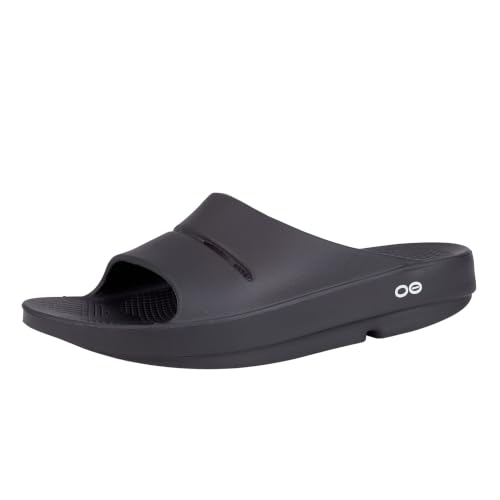
OOFOS OOahh Slide
- OOfoam slide
- APMA Seal of Acceptance
- Machine washable
$59.95 at Amazon, as of Nov 17, 2026 02:07 UTC
Check price on AmazonRelated sports and disciplines
Flag football is part of the American football family; see football injuries for the tackle game. Similar field sports built on running and passing include ultimate, rugby and lacrosse. Everything is on the sports hub.
Flag football FAQs
Is flag football safer than tackle football?
For head impacts, the CDC’s youth data say yes: a median of 8 per season for flag players against 378 for tackle players, ages 6 to 14. Flag still has bruises, sprains, finger injuries and concussions, so mouthguards, warm-ups and good coaching matter.
Is flag football an Olympic sport?
It is scheduled to be at the Los Angeles 2028 Olympics, with six men’s and six women’s teams playing five-on-five, according to NFL.com. Check the official LA28 programme for dates, venue and format.
How many players are on a flag football team?
Five on the field. NFL FLAG rosters can have up to 10 players, and the Olympic teams have 10 players. Some leagues play 7-on-7 or 9-on-9 with different rules.
What age can kids start flag football?
NFL FLAG says it serves athletes aged 4 to 17. Leagues set their own age groups, so check with your local league.
Do you need equipment to play flag football?
Very little: a flag belt, a mouthguard (required by NFL FLAG) and cleats without metal spikes or running shoes. Shorts should have no pockets. Leagues usually supply belts and balls.
Can girls play flag football in high school?
Yes. In 2024-25, 68,847 girls played high school flag football, according to the NFHS, which published its first national flag football rules for 2025-26. Availability depends on your state and school.
Sources
- NFL FLAG: Flag Football Rules
- NFL FLAG: About
- NFL: clubs approve NFL players’ participation in the 2028 Olympics
- Flag football at the 2028 Summer Olympics (dates, venue, qualification)
- NFHS: 2024-25 participation survey
- NFHS: playing rules for high school flag football
- NCAA: flag football moves toward championship status
- CDC: comparing head impacts in youth tackle and flag football
- Descriptive epidemiology of game-related youth flag football injuries (2023)
- Sex- and age-specific review of flag football injuries in the US (2025)
- Flag football injuries among female athletes, 10-year review (2025)
- CDC HEADS UP: Signs and Symptoms of Concussion
- NATA: Exertional Heat Illnesses position statement
- AAOS OrthoInfo: ACL Injuries
- ACSM, Academy of Nutrition and Dietetics, Dietitians of Canada: Nutrition and Athletic Performance (2016)
Flag football rewards speed, hands and smart habits. Keep exploring the football section, the sports hub and our recovery tools guide.