This article contains affiliate links: if you buy through them we may earn a commission, at no extra cost to you. Read our affiliate disclosure.
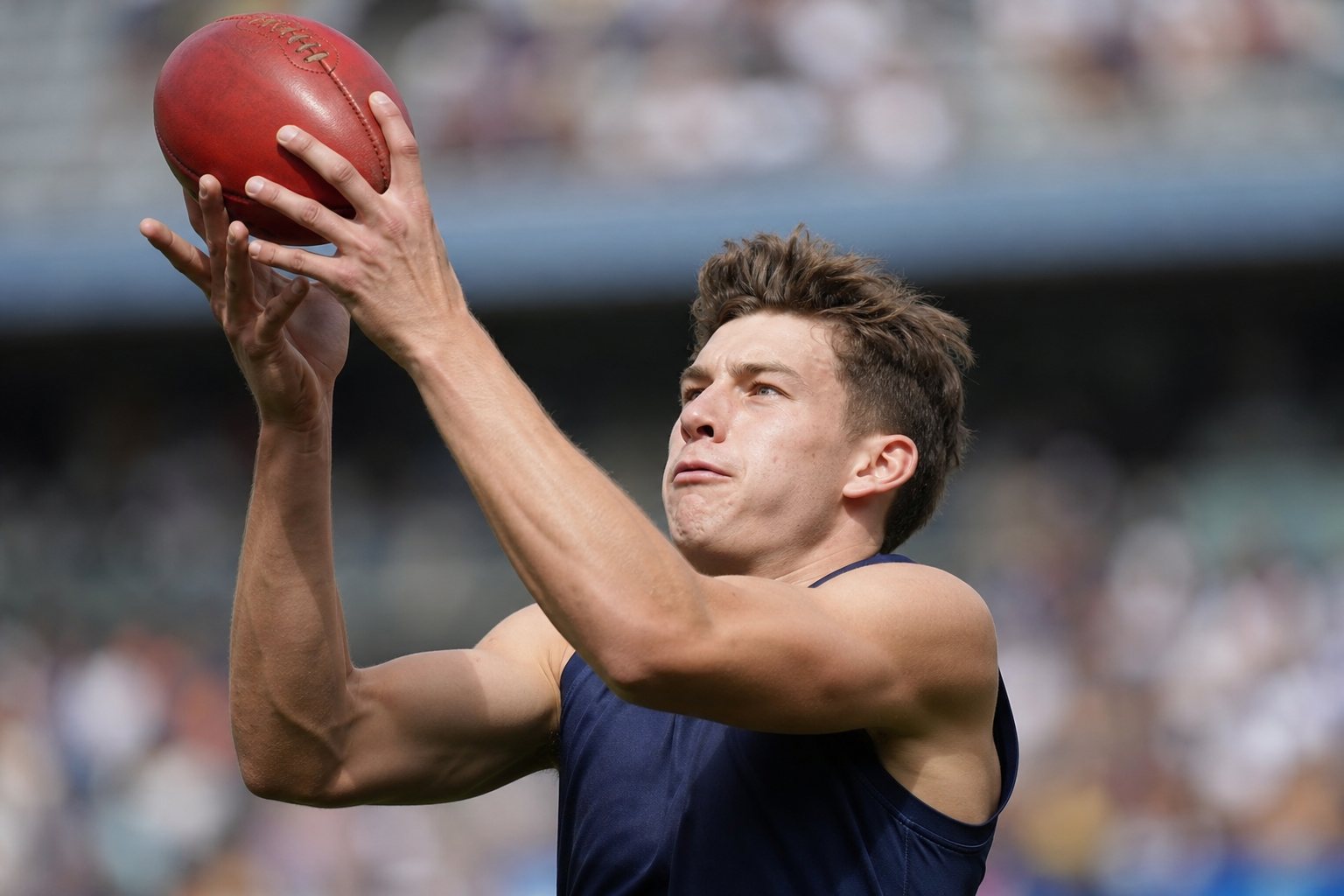
A kick sails high over a pack of players, one of them climbs on the shoulders of another and pulls it down, and the goal umpire raises both index fingers and waves two flags: six points. That is a good minute of Australian rules football, also called Aussie rules, Australian football, AFL or simply “footy.” It is an 18-a-side game played on a huge oval with an oval ball, and in 2025 the AFL counted a record 625,000 participants across Australia.
Australian Rules Football guides: what do you need?
New to australian rules football? Start with the first card. Everything here is general education, not medical advice.
History & Origins of Australian Rules Football
Australian rules football grew up in the colony of Victoria in the 1850s. In July 1858, cricketer Tom Wills wrote a letter to a Melbourne newspaper asking for a “foot-ball club” with a code of laws to keep cricketers fit in winter. The Melbourne Football Club was formed on 14 May 1859, and its first rules were written on 17 May 1859 at a meeting chaired by Wills; they are the oldest surviving laws of the game (AFL.com.au). Other early matches, including 1858 games between Melbourne schools, are also part of the story.
How much older games (including Indigenous ball games such as Marn Grook) influenced the sport is disputed among historians, so we do not give a single “inventor” story. What is documented is the steady growth that followed: clubs, a first league in 1877, the Victorian Football League and then a national competition. In 2017 the women’s league, the AFLW, began. Today the sport is played mainly in Australia, with clubs and leagues in other countries, including the United States.
- 1858: Tom Wills publishes his letter calling for a football club and laws; early matches are played in Melbourne.
- 1859: Melbourne Football Club formed (14 May); first rules written (17 May).
- 1877: The Victorian Football Association, the first major league, begins (see the AFL’s history page).
- 1896-1897: The Victorian Football League is formed; its first season is 1897.
- 1990: The VFL is renamed the Australian Football League (AFL).
- 2017: The first AFLW season, with eight clubs; Adelaide win the premiership.
- 2024-2026: Brisbane win three straight men’s premierships, equalling their 2001-2003 run.
Sources: AFL.com.au (first rules), AFL.com.au (history of Australian football), AFL.com.au (2026 Grand Final report).
Recent Champions
Scope: this list covers the Grand Finals of the men’s AFL and the women’s AFLW, the two top professional competitions, not every league or the USAFL national championships. The sport is not on the Olympic or Paralympic programme.
AFL (men), Premiers
| Season | Premier | Runner-up |
|---|---|---|
| 2026 | Brisbane Lions (14.12, 96 to 12.17, 89) | Fremantle |
| 2025 | Brisbane Lions | Geelong |
| 2024 | Brisbane Lions | Sydney |
| 2023 | Collingwood | Brisbane Lions |
| 2022 | Geelong | Sydney |
The 2026 Grand Final was played at the MCG on 26 September 2026 before 100,023 people; Fremantle’s Shai Bolton won the Norm Smith Medal (best on ground) in the losing side. Source: AFL.com.au and match report; 2025 report. Earlier years: AFL premiership history at AFL.com.au.
AFLW (women), Premiers
| Season | Premier | Runner-up |
|---|---|---|
| 2025 (season 10) | North Melbourne (9.2, 56 to 2.4, 16) | Brisbane Lions |
| 2024 | North Melbourne | Brisbane Lions |
| 2023 | Brisbane Lions | North Melbourne |
| 2022 (season 7) | Melbourne | Brisbane Lions |
The 2026 AFLW Grand Final is scheduled for Friday 27 November 2026, so it is not included yet. North Melbourne became the first AFLW club to win back-to-back premierships in 2025. Source: AFL.com.au and the 2023 match report.
Results verified through 2026-11-13. Latest completed events included: the 2026 AFL Grand Final (26 September 2026) and the 2025 AFLW Grand Final (29 November 2025).
Records & Milestones
| Record | Holder | Result | Period | Body |
|---|---|---|---|---|
| Most VFL/AFL games | Brent Harvey (North Melbourne) | 432 games | 1996-2016 | AFL |
| Most VFL/AFL career goals | Tony Lockett (St Kilda, Sydney) | 1,360 goals | Career | AFL |
| Most goals in a season | Bob Pratt (South Melbourne), Peter Hudson (Hawthorn) | 150 goals each | 1934; 1971 | AFL |
| Three straight premierships (Brisbane) | Brisbane Lions | 2024, 2025, 2026; equals 2001-2003 | 2024-2026 | AFL |
| First back-to-back AFLW premiers | North Melbourne | 2024 and 2025 flags; 2025 unbeaten season | 2024-2025 | AFLW |
Source: AFL.com.au records; Brisbane three-peat from the 2026 Grand Final report; North Melbourne from the AFLW 2025 report. Records verified through 2026-11-13.
Legends of the Sport
These are influential players from different eras, listed in no ranking order.
- Bob Pratt: kicked 150 goals for South Melbourne in 1934, still the joint season record.
- Peter Hudson: kicked 150 goals for Hawthorn in 1971, matching Pratt’s record.
- Tony Lockett: kicked 1,360 goals for St Kilda and Sydney, the most in VFL/AFL history.
- Brent Harvey: played a record 432 games for North Melbourne from 1996 to 2016.
- Erin Phillips: won the first AFLW best and fairest in 2017 and was best on ground in Adelaide’s first premiership.
- Libby Birch: North Melbourne defender who became the first player to win four AFLW premierships, in 2025.
- Ash Riddell: North Melbourne midfielder; won the 2025 AFLW best and fairest and set a Grand Final record of 39 possessions.
- Will Ashcroft: Brisbane midfielder who won the Norm Smith Medal in 2024 and 2025, only the fifth player to win it more than once.
How we keep this current: we re-check results after each major championship and update the date above. Spot an error? See our editorial policy.
This page is a plain-language guide for players, parents and curious Americans: how the game works, where it is played, what injuries to watch for (head knocks, hamstrings and ACLs top the list), and what gear matters.
Australian rules football at a glance
| What it is | A continuous, high-scoring invasion game: teams kick, handball and carry the ball (bouncing it) toward goal posts at each end, and tackling is allowed. |
|---|---|
| How it is won | A goal (the ball kicked between the two tall centre posts without being touched) is worth 6 points; a behind (ball over the line between a tall post and a short post, or other ways) is worth 1. The higher total wins. |
| Teams | Up to 18 players on the ground and no more than four on the interchange bench, under the AFL’s Laws. Community and junior leagues often change these numbers. |
| Ground and ball | An oval of 135 to 185 m long and 110 to 155 m wide. The ball is oval, 720 to 730 mm around its length. |
| Match length | Four quarters of 20 minutes of playing time, with stoppages not counted, so a quarter lasts longer on the clock. |
| Governing body | The Australian Football League (AFL) sets the Laws; in the US, the United States Australian Football League (USAFL) runs clubs and national championships. |
| Season | Varies by league. In the US, most clubs start practice in spring, with regional tournaments in June and July and Nationals in October (USAFL). |
How the game works
Play is started and restarted by an umpire bouncing or throwing the ball up so ruck players can contest it, and then it rarely stops. You can move the ball in three ways: kick it, handball it (hold it in one hand and hit it with the clenched fist of the other) or run with it. Throwing the ball is a free kick to the other team.
The rules that give the game its character:
- The mark. A player who catches or takes control of a ball that was kicked at least 15 metres, without it touching the ground or another player, takes a mark. That earns a free kick from that spot, so a catch in a pack is the highlight of many games.
- Running with the ball. You have to bounce it or touch it on the ground at least once every 15 metres.
- Tackling and holding the ball. A player with the ball can be legally tackled. The player gets a chance to dispose of the ball first; if they do not correctly dispose of it when tackled, or throw it, the umpire gives a free kick to the tackler.
- Protected contact. Umpires award free kicks for a dangerous tackle, high contact (including the top of the shoulders), forceful contact below the knees, and sliding knees or feet first into an opponent.
Field umpires and goal umpires run the match. If you are used to American football, the biggest differences are that play flows with few stoppages, there are no set plays between downs, and every player can kick, handball or carry the ball.
Who plays Australian rules and at what level
Kids and community. Junior and community footy is the base of the game. The AFL reported 625,000 participants in 2025, up 7% on the previous year, with women and girls’ participation up 14% and making up nearly a quarter of the total. Junior leagues change field size and team numbers to fit age groups; check your league’s rules.
Professional. The elite men’s competition is the AFL, played by clubs from across Australia. A professional women’s league, the AFLW, has driven growth in women’s and girls’ participation, according to a 2021 ACL review. A 2021 running study described elite women’s quarters as 15 minutes plus time-on against the men’s 20, so check the AFLW’s current laws if you need exact details. Tasmania is due to enter the men’s AFL in 2028.
In the United States. The USAFL says it has over 50 member clubs. It runs Aussie Rules Next, a contact-free program for children, and Aussie Rules Rec, a non-contact version for all skill levels, and holds three regional tournaments from June to July and its Nationals in October. We did not find college or high school programs in the sources we used, so most US players start at a club.
Olympic and Paralympic status. We did not find Australian rules football on the Olympic or Paralympic programmes. Check the official programme for the current Games.
Physical demands
A review of AFL research describes Australian football as fast and intermittent, combining tackling, kicking, high-speed running (more than other football codes) and jumping. Because the oval is so large and the game rarely stops, aerobic fitness, repeated sprinting, changing direction and jumping all count. A systematic review found that elite men ran about twice the total distance of elite women, mostly because men’s quarters are longer; relative to time played, the gap was smaller, but men did at least 50% more high-speed running (above 14.4 km/h).
Players also need strong legs for kicking and landing, and shoulders and trunk for tackling and marking.
Health and safety for Australian rules
This section is general information, not medical advice. If you are hurt, see a sports medicine doctor, physical therapist or athletic trainer.
Head injuries and concussion
In a study of junior community football in one Victorian league, 439 players were injured in the 2022 season. Of the 354 who answered a follow-up survey, the head was the most commonly injured region (54.8%), and about half of those head injuries were diagnosed or suspected concussions. Almost all injuries (94.9%) came from contact, and tackling was the most common situation (45.2%). The authors suggested that teaching players to tackle and be tackled safely may cut injuries.
The CDC’s HEADS UP program says to recognize concussion signs such as headache, dizziness, confusion, balance problems or feeling slowed down, and to remove the player from play the same day. Only a health care provider decides when a player can return. The AFL also has community guidelines with a mandatory minimum stand-down and medical clearance before return; follow your league’s version and your doctor’s advice. Call 911 for danger signs like repeated vomiting, a seizure or a worsening headache.
Hamstrings, knees and shoulders
A 2018 review of AFL injury surveillance reported 41.7 injuries per club in the 2015 season. Lower-limb injuries were the most common, and hamstring strains were the largest, at 19.1 missed games per club per season. The authors linked hamstring injuries to the amount of high-speed running and to collecting the ball while running. Shoulder sprains and dislocations from tackles and contact accounted for 11.5 missed games per club per season. A later analysis of 20 seasons (1997 to 2016) found match injuries were 2.8 times more common than training injuries.
Landing, cutting and pivoting expose players to ACL injury, and a 2021 review noted a rise in ACL injuries among women as women’s footy has grown. ACL injuries do not have to end a career, but the same review found return to previous form is challenging and repeat ACL injuries are a concern. For the community game the AFL promotes Prep-to-Play, a structured warm-up and strength routine developed to reduce concussion and ACL injuries; see your club or the AFL Play site. A sports medicine doctor or physical therapist can guide you on strength and landing technique.
Heat
Summer pre-season training and US club tournaments run in hot weather. The National Athletic Trainers’ Association recommends 7 to 14 days to adjust to heat; drink before and during play, and call 911 for confusion, collapse or other heat illness warning signs.
Training, recovery and nutrition pointers
Good preparation covers running (both steady aerobic work and repeated sprints), hamstring and hip strength, landing and change-of-direction work, and tackling technique taught by a coach. Warm up with a routine like Prep-to-Play, and build your volume gradually, especially if you are new to the game or returning after a break.
For game-day food, the American College of Sports Medicine, the Academy of Nutrition and Dietetics and Dietitians of Canada recommend a pre-exercise meal high in carbohydrate, moderate in protein, low in fat and fiber, made of familiar foods about 1 to 4 hours before. See our electrolyte powder guide for hot days, and talk to a doctor or dietitian before using supplements.
Sleep comes first: the CDC, citing the American Academy of Sleep Medicine, recommends 8 to 10 hours for teens and at least 7 for adults. Foam rollers, massage guns and recovery shoes may make tired legs feel better. They are comfort tools, not treatment. See the recovery tools guide.
Gear for Australian rules
- Mouthguard: the AFL “strongly recommends” a mouthguard for all contact training and match play. A dentist-fitted guard fits best and is usually most comfortable, but a store-bought boil-and-bite guard is better than none.
- Boots: football boots with studs for grass. The Laws let umpires inspect boots, hands and protective gear, and give free kicks for using boot studs in a way likely to cause injury.
- Headgear: the AFL’s guidance says evidence is limited that headgear prevents concussion, although it may help prevent cuts, abrasions and facial fractures. The AFL has developed Australian Football Headgear Standards; if you choose headgear, look for one that meets them.
- What you cannot wear: no jewellery, and protective equipment such as knee braces, helmets or shoulder pads is limited to what your controlling body approves.
- Ball: oval, 720 to 730 mm around its length, inflated to 69 kPa. Junior sizes are available; ask your league.
Three picks: the OPRO Gold Level mouthguard, a moldable self-fit guard with no strap, in adult and kids’ sizes (not for fixed braces); the ASO EVO ankle stabilizer, a low-profile lace-up support; and the OOFOS OOahh Slide from our recovery shoes guide. Product details come from the makers and retail listings; we have not tested them.

OPRO Gold Level Mouthguard
- Self-fit, no strap
- Adult and kids' sizes
- Not for fixed braces (listing)
$19.99 at Amazon, as of Nov 17, 2026 02:07 UTC
Check price on Amazon
ASO EVO Ankle Stabilizer
- Lace-up with figure-8 straps
- Fits left or right foot
- Low profile, fits in boots and shoes
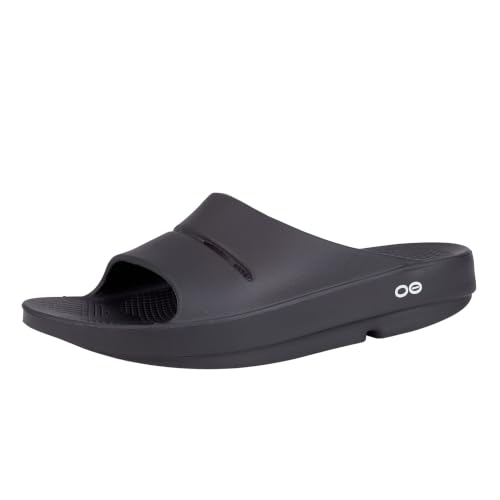
OOFOS OOahh Slide
- OOfoam slide
- APMA Seal of Acceptance
- Machine washable
$59.95 at Amazon, as of Nov 17, 2026 02:07 UTC
Check price on AmazonRelated sports
Other football codes on this site: American football, soccer and rugby. If kicking and running on a big oval appeal, lacrosse and field hockey are also worth a look. See the full list on our sports hub.
Australian rules football FAQs
How do you score in Australian rules football?
A goal is 6 points, scored when a kick goes completely over the goal line between the two centre posts without being touched. A behind is 1 point, for example when the ball passes between a centre post and an outer post. The team with more total points wins.
Do Australian rules players wear pads or helmets?
Not as a rule. Most players wear a mouthguard, which the AFL strongly recommends, and boots. Headgear is optional; the AFL says the evidence it prevents concussion is limited, though it may reduce cuts and facial injuries. Equipment must be approved by the controlling body.
How long is an Australian rules match?
Under the AFL’s Laws, a match is 80 minutes of playing time in four 20-minute quarters, with stoppages not counted, so matches last much longer on the clock. Community and junior leagues often shorten quarters.
Can I play Australian rules football in the US?
Yes. The USAFL has over 50 member clubs, with contact-free youth and non-contact recreational programs as well as the full game. Check the USAFL club list for your city.
Is Australian rules football dangerous?
It is a collision sport, and head knocks, hamstring strains and knee injuries are the main concerns. The Laws protect players with free kicks for high and dangerous contact, and the AFL recommends mouthguards and a warm-up routine. Learning to tackle properly and reporting concussion signs matter most.
Is Australian rules football an Olympic sport?
We did not find it on the Olympic or Paralympic programme. Check the official programme for the current Games.
Sources
- AFL: Laws of Australian Football 2026
- AFL: record participation in 2025
- AFL Play: Injury Prevention
- USAFL (Aussie Rules USA)
- Injuries in Australian Rules Football: overview of injury rates, patterns and mechanisms (2018)
- AFL injury characteristics differ between matches and training, 1997 to 2016
- ACL injuries in Australian rules football (2021)
- Injury characteristics in junior community-level Australian football (2025)
- Running performance of male versus female players in Australian football (2021)
- CDC HEADS UP: Signs and Symptoms of Concussion
- NATA: Exertional Heat Illnesses position statement
- CDC: About Sleep
- ACSM, Academy of Nutrition and Dietetics, Dietitians of Canada: Nutrition and Athletic Performance (2016)
Footy rewards fitness, courage and good habits. Keep exploring the sports hub, our recovery tools guide and the ankle brace guide.