
This article contains affiliate links: if you buy through them we may earn a commission, at no extra cost to you. Read our affiliate disclosure.
Five gymnasts in matching leotards, a 13-meter square of carpet and about two and a half minutes of music. In a group routine they toss and catch their apparatus in sync, and a drop can cost points. Rhythmic gymnastics, sometimes abbreviated RG, is gymnastics performed with a hoop, ball, clubs or ribbon, combining dance, flexibility and apparatus handling.
Rhythmic Gymnastics guides: what do you need?
New to rhythmic gymnastics? Start with the first card. Everything here is general education, not medical advice.
History & Origins of Rhythmic Gymnastics
Rhythmic gymnastics has several roots, and accounts of its beginnings differ. Olympics.com points to European expressive-movement systems of the 19th century, including the Swedish educator Per Henrik Ling, while World Gymnastics (the FIG) points to the German educator Rudolf Bode and a school he founded in 1911, and to a Bulgarian school in 1951 (World Gymnastics). Because the sources disagree, we treat the origin as disputed and list only dated milestones. Competition grew strongly in the Soviet Union, where the first competition was held in Leningrad in 1939.
The FIG recognized the discipline in the early 1960s (1961 per both Olympics.com and World Gymnastics), and the first World Championships were held in Budapest in 1963, where the Soviet gymnast Ludmila Savinkova won the all-around. It joined the Olympics in 1984 in Los Angeles with the individual all-around; Canada’s Lori Fung won the first title (Olympics.com). Group competition was added at Atlanta 1996. The sport is women-only at the Olympic level.
- 1939: First competition in the Soviet Union, held in Leningrad.
- 1961: The FIG recognizes rhythmic gymnastics as a discipline (one reference says 1962).
- 1963: First World Championships, Budapest; Ludmila Savinkova wins the all-around.
- 1967: Group competition is added at the World Championships.
- 1984: Olympic debut in Los Angeles; Lori Fung (CAN) is the first Olympic champion.
- 1996: The group all-around joins the Olympic programme in Atlanta.
- 2008 and 2012: Evgenia Kanaeva (RUS) wins the Olympic all-around twice, the only individual to do so.
- 2011: The FIG removes the rope from senior individual competition.
- 2024: Darja Varfolomeev becomes Germany’s first Olympic rhythmic champion, Paris.
Legends of the Sport
Athletes from different eras, listed in rough chronological order, not ranked.
- Ludmila Savinkova (URS): won the all-around at the first World Championships in 1963 (World Gymnastics).
- Lori Fung (CAN): the first Olympic rhythmic gymnastics champion, in 1984 (Olympics.com).
- Evgenia Kanaeva (RUS): Olympic all-around champion in 2008 and 2012, the only individual to win it twice (Olympics.com).
- Linoy Ashram (ISR): Olympic all-around champion at Tokyo 2020 (Olympics.com).
- Sofia Raffaeli (ITA): Paris 2024 Olympic bronze medalist and 2025 World hoop champion (Olympics.com, World Gymnastics).
- Darja Varfolomeev (GER): Paris 2024 Olympic all-around champion and world all-around champion in 2023, 2025 and 2026 (Olympics.com, World Gymnastics).
Official results and records
We only list champions and records here after checking them on the official source. For the latest results, go to:
- Olympics.com Paris 2024 results
- World Gymnastics (FIG) results
- BTA
- Olympics.com
- Olympics.com
- Olympics.com
How we keep this current: we re-check facts after each major championship and update this page. Spot an error? See our editorial policy.
Rhythmic gymnastics at a glance
| What it is | Routines to music on a floor carpet, using hand apparatus. Senior individuals perform with the hoop, ball, clubs and ribbon; groups of five perform two routines. |
|---|---|
| How it is scored | Judges score difficulty, execution and artistry, then take off penalties. Execution and artistry start at 10 and are reduced by deductions; difficulty has no maximum (per Wikipedia’s summary of the 2025-2028 Code of Points). |
| Who takes part | Mostly girls and women. International competition is women-only; men’s rhythmic exists mainly in Japan and Spain, and the FIG has not recognized a men’s program (Wikipedia). |
| Where | Club gyms and dance-gymnastics studios, national and international meets. |
| Governing bodies | World Gymnastics (the FIG) worldwide; USA Gymnastics in the US. |
| Season | Varies by club and country; club programs usually train year-round. |
How rhythmic gymnastics works
The floor is 13 by 13 meters, carpeted and without springs. Individual routines last 1 minute 15 seconds to 1 minute 30; group routines last 2 minutes 15 to 2 minutes 30. Dance steps must last at least 8 seconds, and two sets are required per routine. The gymnast’s body difficulties are jumps and leaps, balances (held at least 1 second) and rotations; up to four “risks” (dynamic apparatus throws with rotation) can be included.
The apparatus and formats
- Hoop, ball, clubs, ribbon: the four senior apparatus. The ribbon is 6 meters long on a handle. The rope was dropped from senior individual competition after 2011 but remains in junior group competition (Wikipedia).
- Individual: one gymnast, four routines, one all-around score.
- Group: five gymnasts; senior groups perform two routines, one with a single apparatus and one with mixed apparatus.
Leotards must be identical within a group. Since the 2022-2024 code, music with lyrics is allowed (Wikipedia).
Who does rhythmic gymnastics, and at what level
Kids and club. The AAP says before about age 6 most children lack the motor skills for organized sport. USA Gymnastics lists five rhythmic programs: Elite, Development, Xcel, Future Stars and Squad Development Teams. We did not find a published, single age-and-level chart for these programs, so ask a local club which route fits your child.
School and college. We did not find a high school or NCAA championship in rhythmic gymnastics. Check with your state association and USA Gymnastics.
National. The USA Gymnastics Championships include rhythmic; the 2027 event is scheduled for Des Moines, June 21 to 26 (USA Gymnastics). Three US rhythmic athletes took part in the 2026 Aeon Cup in Tokyo in October.
Olympic status, by edition
- History: the individual all-around debuted at the 1984 Los Angeles Games and the group event was added in 1996 (Wikipedia).
- Paris 2024: two events, individual all-around and group all-around.
- LA28: news reports say the IOC kept rhythmic gymnastics on the LA28 programme. We could not open the official list of rhythmic events; check the official programme for the current Games.
Physical demands
Rhythmic gymnasts need extreme flexibility, balance on one foot, jumping power, coordination with the apparatus and stamina for routines up to two and a half minutes in groups. One small randomized trial of 42 girls (average age 13.7) over 8 weeks found that plyometric games improved squat and countermovement jumps and flexibility games improved hip range of motion; it is a small study and not a training prescription.
Health and safety for rhythmic gymnasts
This is general information, not medical advice. If you or your child has pain that persists, see a sports medicine doctor, physical therapist or athletic trainer.
Injury patterns. We did not find large injury surveillance data specific to rhythmic gymnastics. A 2026 retrospective survey of 92 female gymnasts aged 7 to 24 (39 artistic, 53 rhythmic) found artistic gymnasts reported 2.95 injuries per career against 0.96 for rhythmic gymnasts, and shoulder, wrist, elbow and ankle injuries were more common in artistic. It also found gymnasts training five times a week reported more injuries. It is a small, self-reported survey, so treat the numbers as a hint, not a rate.
Early specialization, overuse and fueling. The AAP names rhythmic gymnastics, along with gymnastics, figure skating and diving, as sports that may require early specialization, and notes that female athletes in these sports have a higher risk of overuse injuries and the female athlete triad. Its 2024 report recommends at least 1 to 2 days a week off sport-specific training and 2 to 3 months off a year, and flags bone stress injuries and menstrual disruption as warning signs. The 2023 IOC consensus on Relative Energy Deficiency in Sport (REDs) covers female and male athletes. Talk to a doctor or sports dietitian about fueling; this is not an area for guesswork or crash diets.
Flexibility. Work on flexibility with a qualified coach, and stop and ask a professional if you feel pain beyond ordinary stretching.
Head injuries and floor safety. Falls and collisions with other gymnasts in group work can happen. Follow CDC HEADS UP: recognize the signs, remove the gymnast from activity and have a health care provider decide when it is safe to return. See also the U.S. Center for SafeSport’s policies on observable, interruptible training.
Training, recovery and nutrition pointers
- Train: technique, flexibility and balance with a qualified coach. See gymnastics training.
- Recover: sleep (CDC: 8 to 10 hours for teens), rest days and care for tired feet. See gymnastics recovery and foam rollers.
- Eat: enough fuel for training matters most. See nutrition and supplements.
Gear for rhythmic gymnastics
Gymnasts need a leotard (identical within a group), and the competition apparatus; ask your club about footwear. The FIG publishes apparatus norms, so buy competition hoops, balls, clubs and ribbons on your coach’s advice. We do not recommend a specific apparatus brand here because we have no verified listings for them. For conditioning, a floor mat and recovery tools help.

BalanceFrom 4-Panel Folding Gymnastics Mat
- 10 x 4 ft, 2 in thick
- Folds to 4 x 4 ft, 15 lb
- Hook-and-loop ends

TriggerPoint GRID 1.0
- 13 x 5 in foam roller
- Multi-density surface
- For calves and quads after training
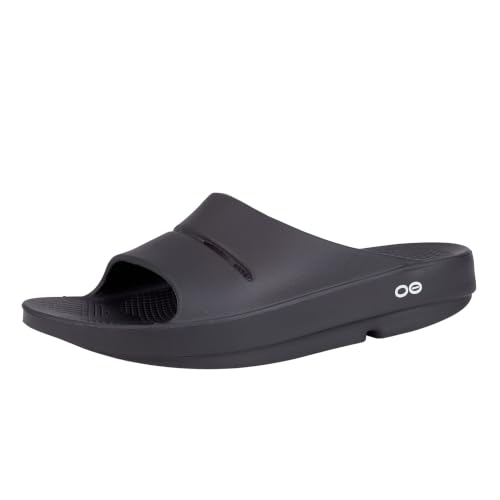
OOFOS OOahh Slide
- OOfoam slide
- APMA Seal of Acceptance
- Machine washable
$59.95 at Amazon, as of Nov 17, 2026 02:07 UTC
Check price on AmazonRelated sports and disciplines
Parent: Gymnastics. Siblings: artistic gymnastics and trampoline gymnastics. Also dance, figure skating and cheerleading.
Rhythmic gymnastics FAQs
What apparatus are used?
Seniors use the hoop, ball, clubs and ribbon. Rope still appears in junior group competition.
How long is a routine?
Individual routines run 1:15 to 1:30 and group routines 2:15 to 2:30.
Is rhythmic gymnastics in the Olympics?
Yes: individual all-around since 1984, group since 1996, with two events at Paris 2024. For LA28, check the official programme for the current Games.
Can boys do rhythmic gymnastics?
International competition is women-only, and the FIG has not formally recognized a men’s program. Some countries, such as Japan and Spain, have men’s or mixed competition at national level (Wikipedia).
Is it safer than artistic gymnastics?
One small survey reported fewer career injuries in rhythmic gymnasts, but we cannot say it is safer. Overuse, fueling and flexibility-related concerns still apply, so see a sports medicine professional for pain that lingers.
Sources
- World Gymnastics (FIG) rules, including the Rhythmic Gymnastics Code of Points 2025-2028
- USA Gymnastics, Rhythmic
- Rhythmic gymnastics (Wikipedia, secondary) and Gymnastics at the 2024 Summer Olympics (Wikipedia, secondary)
- Comparative analysis of injury profiles in artistic and rhythmic gymnastics (2026)
- Plyometric and flexibility games in youth rhythmic gymnastics, randomized trial (2026)
- AAP clinical report on overuse, overtraining and burnout (2024)
- IOC 2023 consensus on Relative Energy Deficiency in Sport (REDs)
- CDC HEADS UP and CDC sleep
- AAP HealthyChildren, Is your child ready for sports
Keep exploring: the gymnastics hub, gymnastics injuries, youth gymnastics, our recovery tools guide, and every other sport on our sports hub.