This article contains affiliate links: if you buy through them we may earn a commission, at no extra cost to you. Read our affiliate disclosure.
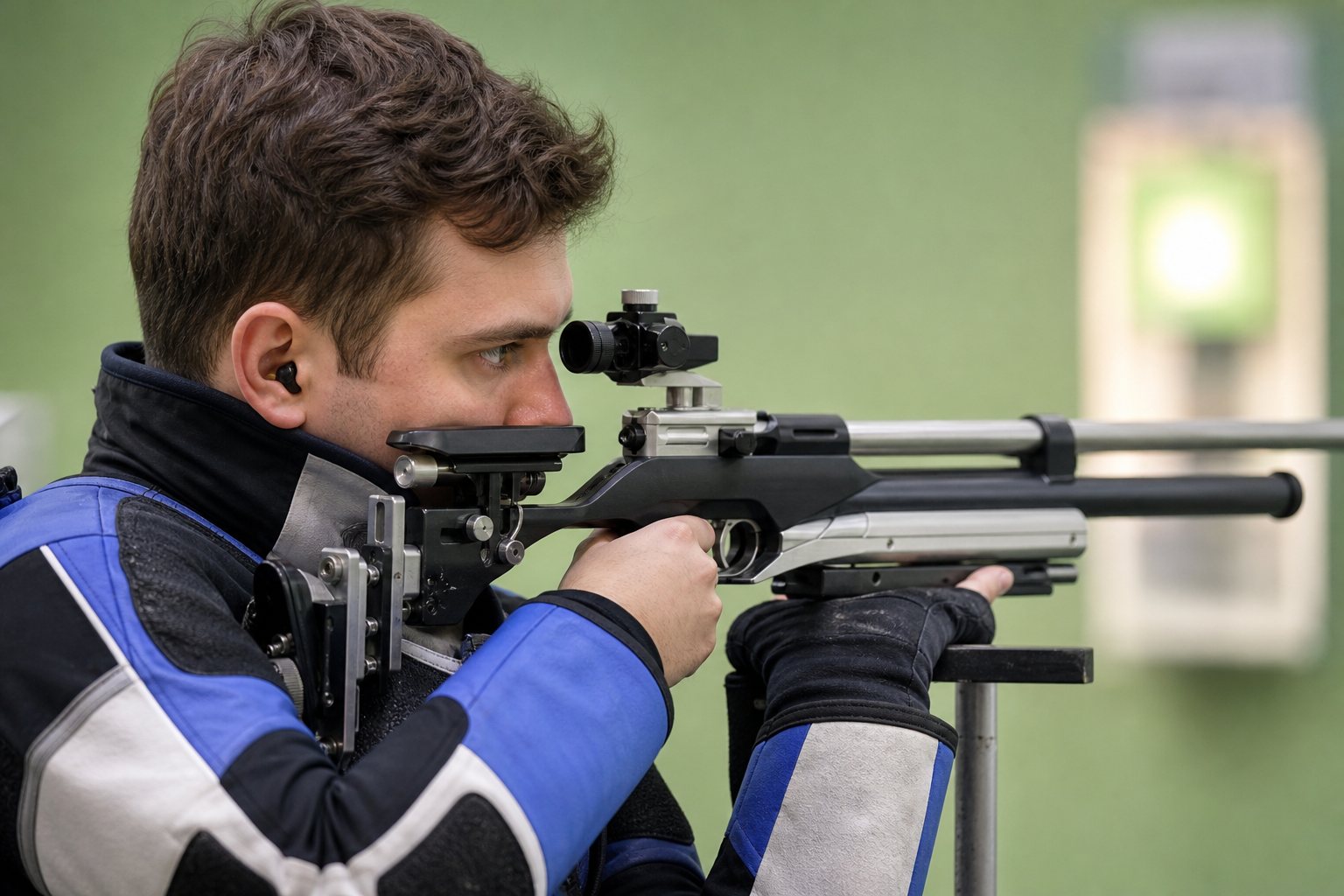
The range at Châteauroux, France, goes quiet before the last shots of a final. Eight shooters are left, each shot is scored to a tenth of a point, and the best a single shot can earn is 10.9. After every round the lowest scorer is eliminated until two shooters remain for the duel that decides gold and silver. That was the scene at the Paris 2024 Paralympic Games, where the sport competed from 30 August to 5 September. Para shooting, which the Paralympic movement calls shooting Para sport and many people call Paralympic shooting or adaptive target shooting, is precision target shooting with rifles and pistols for athletes with a physical or vision impairment.
Para Shooting guides: what do you need?
New to para shooting? Start with the first card. Everything here is general education, not medical advice.
History & Origins of Para Shooting
Para shooting has been on the Paralympic programme at every Games since 1976, when 39 athletes from 10 countries took part (Paralympic.org). Events cover rifle, pistol and shotgun (Para trap), with rifle and pistol shot at 10 m, 25 m and 50 m. The sport follows ISSF rules alongside World Shooting Para Sport’s own technical rules, which account for athletes with impairments. Targets have 10 scoring rings, many events use decimal scoring with 10.9 as the highest score per shot, and the top eight qualifiers go to a final where scores reset to zero. The sport has kept growing: Para trap and its new classes were adopted in 2017, vision impaired shooting joined World Shooting Para Sport in 2019, and in April 2026 the IPC and ISSF signed an agreement to move governance of the sport to the ISSF, pending ratification at the ISSF General Assembly scheduled for late 2026.
- 1976: First Paralympic appearance, 39 athletes from 10 countries.
- 2017: World Shooting Para Sport adopts Para trap and new classes for it.
- 2019: Vision impaired shooting joins World Shooting Para Sport.
- 2024: Paris has 160 athletes from 51 countries; China, South Korea and Germany top the medal count.
- April 2026: IPC and ISSF sign an agreement to transfer governance to the ISSF (takes effect after ratification, scheduled late 2026).
Official results and records
- Paralympic.org: Para shooting results
- Paralympic.org: Para shooting
- ISSF: International Shooting Sport Federation
Legends of the Sport
Para-athletes with the most Paralympic medals, as listed by Paralympic.org. This is not a ranking.
- Jonas Jacobsson (SWE): 30 Paralympic medals (17 gold, 4 silver, 9 bronze) between 1980 and 2012, the most decorated male athlete on the Paralympic.org list.
- Elizabeth Kosmala (AUS): 12 medals (9 gold, 3 silver) between 1976 and 1988, the top female medallist on the list.
- Zhang Cuiping (CHN): 12 medals (5 gold, 4 silver, 3 bronze), competing from 2008.
- Santo Mangano (ITA): 7 medals (4 gold, 1 silver, 2 bronze) between 1988 and 1996.
- Thomas Johansson (SWE), Siegmar Henker (GER) and Yang Chao (CHN): 6 Paralympic medals each.
How we keep this current: we re-check facts after each major championship and update this page. Spot an error? See our editorial policy.
This page explains how the sport works, what the classes are for, how people get started, and how to stay healthy at the range. It is about target shooting only: paper targets, air rifles and air pistols, small-bore .22 guns, and in some events clay targets. Para shooting is a close cousin of the standard sport shooting page, and the two share most of their safety rules.
Para shooting at a glance
| What it is | Target shooting with rifles and pistols at 10 m, 25 m and 50 m, adapted so that athletes with a physical or vision impairment can compete. |
|---|---|
| How it is scored | Aim for the centre of a 10-ring target. Scores are split into decimals, so a centre shot is worth up to 10.9. The top eight in qualification reach the final, where the lowest scorers drop out round by round until a duel for gold and silver. |
| Who competes | Women, men and mixed events. The sport is practised in more than 75 countries, and Team USA athletes compete through USA Shooting. |
| Paralympic status | On the programme at every Games since Toronto 1976, at Paris 2024 (13 medal events) and confirmed for LA28 (13 medal events, 15 to 27 August 2028). |
| Governing body | World Shooting Para Sport (WSPS), part of the IPC, in 2026. The IPC and ISSF signed an agreement in April 2026 to move the sport to the ISSF, if ISSF member federations approve it in December 2026. |
| Season | International World Cups and World Championships through the year, with the Paralympics every four years. National matches follow local range calendars. |
How para shooting works
The aim is the same as in any target shooting: put each shot as close to the centre as you can, calmly, over and over. In pistol events athletes shoot with one hand, seated or standing. In rifle events they shoot standing, kneeling or prone (lying down), and all three positions can be adapted, including from a wheelchair. The sport’s rulebook, the WSPS Technical Rules and Regulations (in effect from January 2026), is where the details of positions and equipment checks live.
At the Paris 2024 Games the 13 medal events were three for men, three for women and seven mixed, split between rifle and pistol: the men’s and women’s 10 m air rifle standing, the men’s and women’s 50 m rifle three positions, the men’s and women’s 10 m air pistol, and mixed events for prone and standing rifle, 25 m pistol and 50 m pistol. Those events use two classes, SH1 and SH2, explained next.
What the classes are for
Classification exists to group athletes so that winning is decided by shooting skill rather than by the effects of an impairment. It is sport-specific, so an impairment that qualifies someone for one sport may not qualify them for another. On paralympic.org the shooting classes are described like this:
- SH1 pistol: athletes with an upper and/or lower limb impairment. Pistol has this one class.
- SH1 rifle: athletes with a lower limb impairment, who can support the rifle themselves.
- SH2 rifle: athletes with an upper limb impairment, with or without a lower limb impairment. They use a shooting stand to support the rifle.
- SH-VI rifle: athletes with a vision impairment, in 10 m rifle events.
- Para trap (SG-S, SG-L, SG-U): clay-target classes for athletes with a lower limb impairment (seated or standing) or with an impairment in the non-shooting arm.
Athletes must have an eligible impairment such as impaired muscle power, limb deficiency, hypertonia, ataxia, athetosis, impaired passive range of movement, leg length difference or vision impairment. The full profiles are in the WSPS classification rules, which take precedence over any summary. Classification is done by trained classifiers, and USA Shooting says an athlete needs international classification to compete at the Paralympic Games.
Who shoots and at what level
Getting started. USA Shooting suggests that a new para shooter begin with a local adaptive sports organization that offers shooting, or a local shooting club, to find upcoming matches. Programs are set up and supervised by the range, so ask about equipment, bench and stand access, and trained range officers before you go. Youth and school options depend heavily on the state and the club; ask the club rather than assuming.
Club to elite. National selection runs through USA Shooting’s para selection procedures, published each year. Internationally, WSPS runs World Cups and World Championships; the 2026 World Championships were held in Changwon, Korea, and WSPS has announced a 2027 World Cup in Sydney that carries direct LA28 quota places.
Paralympic history, by edition. Shooting has been on the programme since Toronto 1976, when 39 athletes from 14 countries competed in three medal events. By Tokyo 2020 there were 154 athletes from 44 National Paralympic Committees, and Paris 2024 expected up to 160. For LA28, the IPC announced on 3 June 2025 that the sport keeps 13 medal events (three men’s, three women’s, seven mixed) with 150 athlete places. As of 2026, check the official programme for the current Games before relying on any event list.
Who runs it. In April 2026 the ISSF and IPC signed an agreement to transfer governance of the sport to the ISSF. It only takes effect if ISSF member federations approve it at their December 2026 General Assembly; if they do, the ISSF takes over from early 2027, followed by a two-year integration period. The ISSF says the road to LA28 remains unchanged.
Physical demands
Shooting looks still, but the stillness is the work. Athletes hold a stable position for the length of a match, control breathing and heart rate between shots, and keep attention steady for a long qualification round. Posture and the support system (chair, stool, stand or sling) matter as much as the arms. Strength is spent on holding, not moving, so trunk and shoulder endurance and a good setup count for more than power. Because classes differ widely, there is no single fitness template; a coach or physical therapist who knows the athlete’s impairment should shape any program.
Health and safety in para shooting
This is general information, not medical advice. If you are hurt or in pain, see a sports medicine doctor, physical therapist or athletic trainer.
Range safety rules
The National Shooting Sports Foundation’s rules of safe gun handling apply to every shooter. The ones that matter most at any match: keep the muzzle pointed in a safe direction; keep firearms unloaded when not actually in use; do not rely on a gun’s safety; be sure of your target and what is beyond it; use the correct ammunition; and always wear eye and ear protection. Follow the range officer’s commands. Adaptive setups, such as stands and wheelchair supports, should be checked by a range officer before live fire, and anyone who uses a loader or helper should agree on commands first.
Lead and noise
Firing-range lead is a real exposure for people who shoot often. A 2017 review of 36 studies found that blood lead levels above 10 micrograms per deciliter were reported in some shooters in 31 of them, and nearly all measurements exceeded the 5 micrograms per deciliter reference level recommended by the CDC and NIOSH. Reviewers pointed to simple habits such as changing clothes after shooting. Air rifles and air pistols, the main Paralympic events, use pellets rather than powder-fired ammunition, but small-bore and trap events still bring noise: wear hearing protection that your range recommends, and ask the range manager about ventilation and cleaning. If you shoot indoors regularly, ask your doctor whether lead testing makes sense.
Back, shoulders and long sessions
Static positions load the back and shoulders. In a survey of 114 US college rifle athletes (not a para-specific study), 89% reported at least one episode of low back pain, and 24% of those missed at least a day of training or competition in a season. Para shooters have not been surveyed in the same way, so treat that as a reminder to build breaks and position changes into long practice sessions. Wheelchair and seated athletes should also ask their clinician about seat cushions and skin checks when they sit through long matches.
Training, recovery and nutrition pointers
Dry-fire practice, position work and a consistent routine produce most of the gains, with a coach or experienced club mentor shaping them. Off the range, many shooters add core, shoulder and posture work and aerobic fitness for steadier nerves. Short sessions with breaks usually beat one long, tiring one. Recovery is mostly sleep and movement: the CDC recommends at least 7 hours for adults and 8 to 10 hours for teens. Eat normally, stay hydrated at long matches, and take caffeine seriously if you notice that it makes your hold shakier. For general guidance see the shooting hub and our recovery tools guide.
Gear and extras
Para shooters use the same kinds of rifles and pistols as other target shooters, adapted for support: a shooting stand for SH2 rifle athletes, a chair or stool, and sometimes a wheelchair-adapted position, all checked at equipment control under WSPS rules. A firearm, eye and ear protection, and a sling or jacket where the rules allow come from range stores and specialist dealers, and we do not list them here because choices depend on class, event and local law. What we can suggest are two supporting items for long match days: a big water bottle and comfortable shoes for the walk back to the car.

Nalgene Sustain 32 oz
- 32 oz, wide mouth
- BPA-free
- Fits most chair cup holders
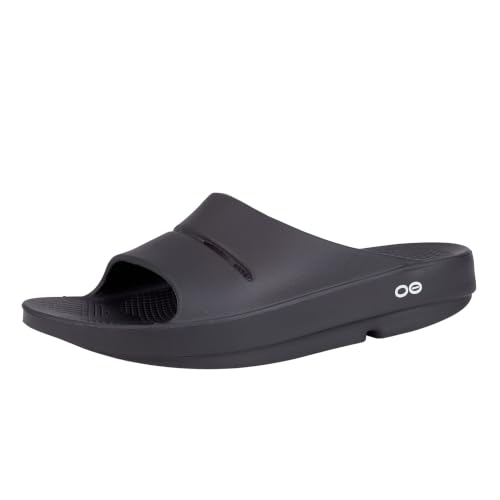
OOFOS OOahh Slide
- OOfoam slide
- APMA Seal of Acceptance
- Machine washable
$59.95 at Amazon, as of Nov 17, 2026 01:07 UTC
Check price on AmazonRelated sports and disciplines
Parent: Shooting. Another precision sport with a Paralympic version: archery and para archery. Browse more adaptive sports with goalball and para table tennis.
Para shooting FAQs
Is para shooting in the Paralympics?
Yes. It has been on the programme at every Paralympic Games since Toronto 1976, and the IPC confirmed it for LA28 with 13 medal events. Always check the official programme for the current Games.
What do SH1 and SH2 mean?
They are sport classes. SH1 is for shooters who can support their own firearm, with an impairment in the lower limbs or in the upper and/or lower limbs for pistol. SH2 is for rifle shooters with an upper limb impairment, who use a stand to support the rifle.
Can athletes with vision impairment shoot?
Yes. The SH-VI class competes in 10 m rifle events, under special vision-impaired technical specifications from WSPS.
How do I try it?
Start with a local adaptive sports organization or shooting club that offers supervised target shooting, and ask for an introduction with a range officer. USA Shooting can point you to clubs and to its para program.
Why are scores shown with decimals?
Finals use decimal scoring so close shots can be separated. The centre of the target is worth 10.9, the highest possible score for one shot.
Sources
- Paralympic.org: Paris 2024 introduction to shooting Para sport
- Paralympic.org: classification in shooting Para sport
- World Shooting Para Sport: rules and regulations
- IPC: LA28 Paralympic medal event programme and athlete quotas
- ISSF: agreement with the IPC on shooting Para sport
- NSSF: rules of safe gun handling
- Lead exposure at firing ranges, a review (Environ Health, 2017)
- Low back pain in college rifle athletes (Int J Sports Phys Ther, 2025)
- CDC: sleep
Keep exploring: the shooting hub, the sports hub, our recovery tools guide and recovery shoes guide.