This article contains affiliate links: if you buy through them we may earn a commission, at no extra cost to you. Read our affiliate disclosure.
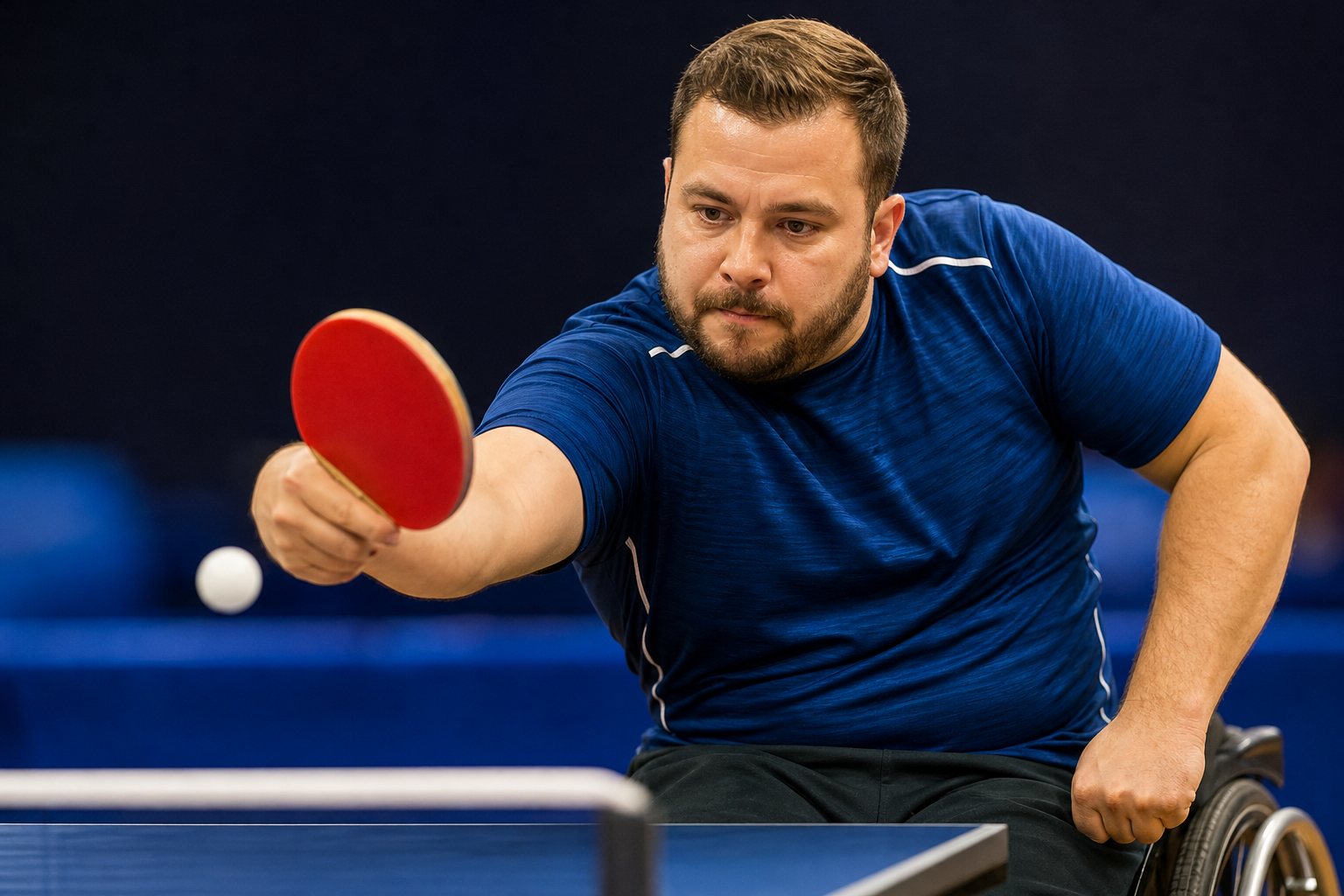
In the semifinal of the men’s Class 6 singles at the Paris 2024 Paralympic Games, defending champion Ian Seidenfeld of the United States faced Italy’s Matteo Parenzan, the world number two. Parenzan won with short serves and quick short returns, 11-7, 11-2, 11-8, and Seidenfeld left with bronze, his second Paralympic medal. His father and coach, Mitch Seidenfeld, had won a Class 6 gold at Barcelona 1992. Para table tennis, also called Paralympic table tennis, wheelchair table tennis (for its seated classes) or para ping pong, is table tennis played by athletes with a physical or intellectual impairment under rules that closely follow the Olympic game.
Para Table Tennis guides: what do you need?
New to para table tennis? Start with the first card. Everything here is general education, not medical advice.
History & Origins of Para Table Tennis
Table tennis began in Great Britain in the 1880s, first played on dining tables with household items (Paralympic.org). The sport has been part of the Paralympic movement from the very start: it was a demonstration sport at the 1950 Stoke Mandeville Games, a forerunner of the Paralympics, and then on the programme of the first Paralympic Games in Rome in 1960 (Paralympic.org). Those first events were open only to athletes in wheelchairs; players who stand were added at Toronto 1976.
The governing body is the International Table Tennis Federation (ITTF), founded in 1926. The first Para Table Tennis World Championships took place in Assen, the Netherlands, in 1990. Para table tennis also has a link with the Olympic Games: at Beijing 2008, Bruna Alexandre of Brazil is described by Paralympic.org as the first Para player to compete at both Games, and Natalia Partyka of Poland, a Paralympic champion, competed at the Olympics in 2008, 2012 and 2016.
- 1880s: Table tennis is invented in Great Britain.
- 1926: The ITTF is founded.
- 1950: Table tennis is a demonstration sport at the Stoke Mandeville Games.
- 1960: Rome hosts the first Paralympic Games, with 11 table tennis medal events, all for wheelchair athletes.
- 1976: Toronto adds the first events for standing players.
- 1990: First Para Table Tennis World Championships, Assen.
- 2008: Beijing: first Para player to compete at both the Olympics and the Paralympics.
- 2021: Tokyo 2020 (held 2021) has 31 table tennis medal events.
- 2028: Los Angeles is set to have 32 events (Paralympic.org).
Official results and records
We list official sources instead of repeating results we have not checked ourselves:
- Paralympic.org: Para table tennis (results, medals, athlete profiles)
- Paralympic Games results
- ITTF (World Para Table Tennis Championships and rankings)
Notable Athletes of Para Table Tennis
Athletes from different eras and classes. This is not a ranking.
- Xiaoling Zhang (CHN): named by Paralympic.org as the most successful athlete in the sport; her profile lists six Games from Seoul 1988 to Beijing 2008 (profile).
- Natalia Partyka (POL): a fourth consecutive Paralympic singles gold at Rio 2016, youngest Paralympic table tennis champion at Athens 2004, and an Olympian as well (profile).
- Bruna Alexandre (BRA): first Para player at both Games (Beijing 2008) and Class 10 singles gold medallist at Tokyo 2020 (profile).
- Melissa Tapper (AUS): competed at both the Paralympic and Olympic Games at Rio 2016.
- Mitch Seidenfeld (USA): Class 6 men’s singles gold at Barcelona 1992; his son Ian Seidenfeld won bronze at Paris 2024 (USATT).
How we keep this current: we re-check facts after each major championship and update this page. Spot an error? See our editorial policy.
This page covers how the sport works, what the 11 classes mean in plain words, who plays at which level, how to stay healthy, and the gear worth knowing about. If you are new to the standard game, start with our table tennis hub; everything about strokes, spin and the ball carries over.
Para table tennis at a glance
| What it is | Table tennis for athletes with physical impairments (classes 1 to 10) or an intellectual impairment (class 11), played seated in a wheelchair or standing. |
|---|---|
| How it is won | Singles and doubles. A set goes to the first player to 11 points with a two-point margin; matches are best-of-five sets. |
| Table | The same size as the standard table: 2.74 m long and 1.52 m wide. For wheelchair play the table legs are set back at least 40 cm from the end line so chairs can roll in. |
| Levels | Local clubs and adaptive programs, national championships, international tournaments, World Championships and the Paralympic Games. More than 100 countries compete. |
| Governing body | International Table Tennis Federation (ITTF); USA Table Tennis (USATT) in the United States. |
| Season | Year-round indoors. International events run through the year; the Paralympics come every four years. |
How para table tennis works
If you have watched a table tennis match you already understand a para match. The rules follow the Olympic version for equipment, match process and scoring, with a few adjustments. Serving, for example, normally means resting the ball on an open palm and tossing it at least 16 cm upward before striking it; where an athlete cannot do that, the ball may be tossed by placing it on the elbow or on the racket. Players with limited grip may have the racket attached to the hand. Seated players generally may not touch the table with their free hand while the ball is in play, though leaning on it is allowed if the table does not move.
What a beginner sees is speed: smashes can exceed 100 km/h, and games usually last no more than 30 minutes. Seated players cover the table with their arms and trunk; standing players use footwork adjusted to their impairment. A study that charted shots in wheelchair matches (20 elite men across classes 1 to 5) found that backhand shots were the most used technique in every class and that most serves landed in the central, far-from-the-net zone.
The 11 classes in plain words
Classes group athletes with similar effects of impairment on play, so a match is decided by skill and tactics. In classes 1 to 10 a lower number means the impairment has a greater effect on performance. The IPC’s table tennis page describes them like this.
- Classes 1 and 2 (seated): little or no sitting balance, with the playing arm badly (class 1) or moderately (class 2) affected. Class 2 players may tape the racket to the hand to compensate for weak grip.
- Class 3 (seated): full hand and arm function but limited trunk balance.
- Class 4 (seated): some sitting balance and fully functional arms and hands; they can move forward to meet a serve.
- Class 5 (seated): normal sitting balance and arm function; they can reach sideways to hit the ball.
- Classes 6 to 10 (standing): impairments from both arms and legs affected (class 6) through mild leg or arm impairment (class 9) to relatively mild ones such as a stiff ankle or wrist (class 10), where athletes of short stature may also compete.
- Class 11: athletes with an intellectual impairment, typically difficulty with pattern recognition, sequencing and memory, or slower reaction times.
In doubles, pairs are put together by their classes. Getting an international class means a formal evaluation by classifiers; a national club can tell you where to start.
Who plays and at what level
Clubs and community programs. Many table tennis clubs and adaptive sports organizations welcome para players, and a regular table is all you need to begin. Wheelchair players should check that the club’s tables allow chairs to roll in under the end line, or use a table with set-back legs.
National and international. USA Table Tennis keeps a US Para National Team listed by class. For Paris 2024 the US team qualified through class-specific gold medals at the 2023 Parapan American Games, according to USATT, and included Ian Seidenfeld (Class 6), Jenson Van Emburgh (Class 3) and Tahl Leibovitz (Class 9). The ITTF ran the first Para Table Tennis World Championships in Assen, Netherlands, in 1990, and the 2026 edition is set for Pattaya, Thailand, in November 2026 with 165 men and 165 women, the first gender-parity field.
Paralympic status, by edition. Table tennis was part of the first Paralympic Games, Rome 1960, with 11 medal events, 28 years before it joined the Olympics. Standing players first competed at Toronto 1976. Tokyo 2020 had 31 medal events; at Paris 2024, team events were dropped and doubles and mixed doubles events were added. For LA28 (15 to 27 August 2028) the IPC confirmed 32 medal events (15 for men, 15 for women and 2 mixed) and 280 athlete places, split equally between men and women. As of 2026, check the official programme for the current Games. Bruna Alexandre of Brazil became the first para player to compete at both the Olympics and Paralympics, at Beijing 2008.
Physical demands
Table tennis is a reaction sport: short bursts of fast movement, constant visual tracking and quick decisions, repeated for hours in training. Seated players rely on the trunk, shoulders and arms to reach and recover; the less trunk balance a class has, the more the non-playing arm often has to steady the body. Standing players load the legs and hips in quick, short steps. Brain and eyes work as hard as muscles, which is why coaches spend time on serve receive, spin reading and placement. Because classes differ widely, work out your training with a coach who understands your impairment.
Health and safety in para table tennis
This is general information, not medical advice. For pain, a sudden change in function or anything that worries you, see a sports medicine doctor, physical therapist or athletic trainer.
What the numbers say. Injury surveillance at the Paris 2024 Paralympic Games counted 535 injuries among 4,450 athletes over 14 days, an incidence of 8.6 per 1,000 athlete days, with taekwondo, 5-a-side football and sitting volleyball higher than other sports; table tennis was not among the sports flagged as high. Table tennis-specific injury figures for para athletes are thin, so we do not quote one. In a separate one-year study of 102 Brazilian para athletes in four other sports, injuries to the shoulder complex, then the ankle and knee, carried the greatest burden. That is a reminder that athletes who depend on their arms for movement and play should respect shoulder load.
- Shoulders and wrists: warm up with easy arm circles and light strokes before hard rallies, and ask a physical therapist about shoulder strength and posture, especially if you push a wheelchair.
- Chair and floor safety: check brakes, anti-tip devices and seat straps before play, and keep the floor free of stray balls, which are an easy slip or roll hazard for chairs and feet.
- Skin and seating: long sessions in a chair call for the seating and skin-check routine your clinician has taught you.
- Head and eyes: a fall from a chair can cause a concussion. The CDC’s HEADS UP guidance is to recognize the signs, remove the player from play, and have a healthcare provider decide when to return.
Training, recovery and nutrition pointers
Most of the work is on the table: multiball drills for serve receive and placement, and match play against different styles. Off the table, many athletes add shoulder and trunk strength, balance work for standing classes and aerobic fitness for long tournament days. Recovery starts with sleep: the CDC recommends at least 7 hours for adults and 8 to 10 for teens. On tournament days, eat familiar foods, sip fluids between matches and keep some carbohydrate snacks in your bag. See the standard sport’s pages for training, recovery and nutrition, and apply them with your coach’s help.
Gear
Para players use the standard equipment: a racket, ITTF-approved rubbers, a plastic ball and a regulation table and net. What differs is how it is set up: table legs set back for chairs, sport wheelchairs that follow the ITTF’s regulations, and in some classes a racket attached to the hand. Ask your classifier or coach about what your class allows before you buy a chair or modify a racket. For a first paddle, a ready-made racket with approved rubber is a sensible start; a home table makes daily practice easy.

Butterfly 603 Table Tennis Racket Set
- Pre-made shakehand racket
- ITTF-approved Wakaba rubber (maker)
- Case included
$102.99 at Amazon, as of Nov 17, 2026 01:07 UTC
Check price on Amazon
JOOLA 15mm Indoor Ping Pong Table
- Regulation size
- Quick-clamp net set
- Single-player playback mode
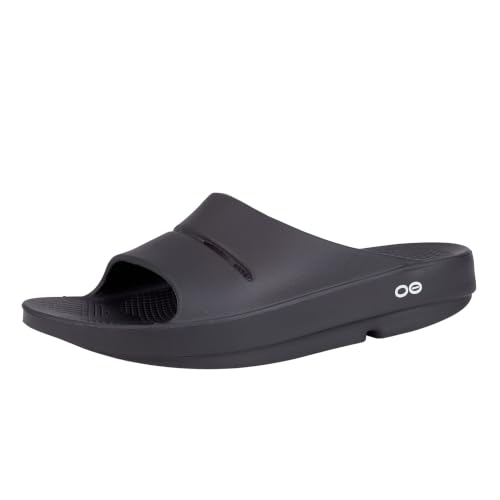
OOFOS OOahh Slide
- OOfoam slide
- APMA Seal of Acceptance
- Machine washable
$59.95 at Amazon, as of Nov 17, 2026 01:07 UTC
Check price on AmazonRelated sports and disciplines
Parent: Table tennis. Also see para badminton, badminton and para archery.
Para table tennis FAQs
Is para table tennis a Paralympic sport?
Yes. It was in the first Paralympic Games in 1960 and the IPC confirmed it for LA28 with 32 medal events. Check the official programme for the current Games.
Do wheelchair players use a different table?
It is the same size, but for wheelchair play the table legs are set at least 40 cm inside the end line so chairs can get close.
What do the class numbers mean?
Classes 1 to 5 are seated, 6 to 10 are standing and 11 is for intellectual impairment. In classes 1 to 10 a lower number means the impairment has a greater effect on play.
Can someone with one arm or no hand play?
Yes, with adapted serving. Where a normal palm toss is not possible, the ball may be tossed by placing it on the elbow or on the racket.
How long is a match?
Matches are best-of-five sets to 11 points, and games usually last no more than 30 minutes.
Sources
- Paralympic.org: table tennis
- Paralympic.org: classification in table tennis
- Paralympic.org: 10 things to know about Para table tennis
- IPC: LA28 Paralympic medal event programme and athlete quotas
- USA Table Tennis: Seidenfeld bronze at Paris 2024
- USA Table Tennis: Paris 2024 Team USA
- Notational analysis of wheelchair Paralympic table tennis (Int J Environ Res Public Health, 2023)
- Injury and illness at the Paris 2024 Paralympic Games (Br J Sports Med, 2026; PMID 42103446)
- Injuries and illnesses in 102 Para athletes (2025)
- CDC HEADS UP: signs and symptoms; CDC: sleep
Keep exploring: the table tennis hub, table tennis injuries, the sports hub, our recovery tools guide and resistance bands guide.