This article contains affiliate links: if you buy through them we may earn a commission, at no extra cost to you. Read our affiliate disclosure.
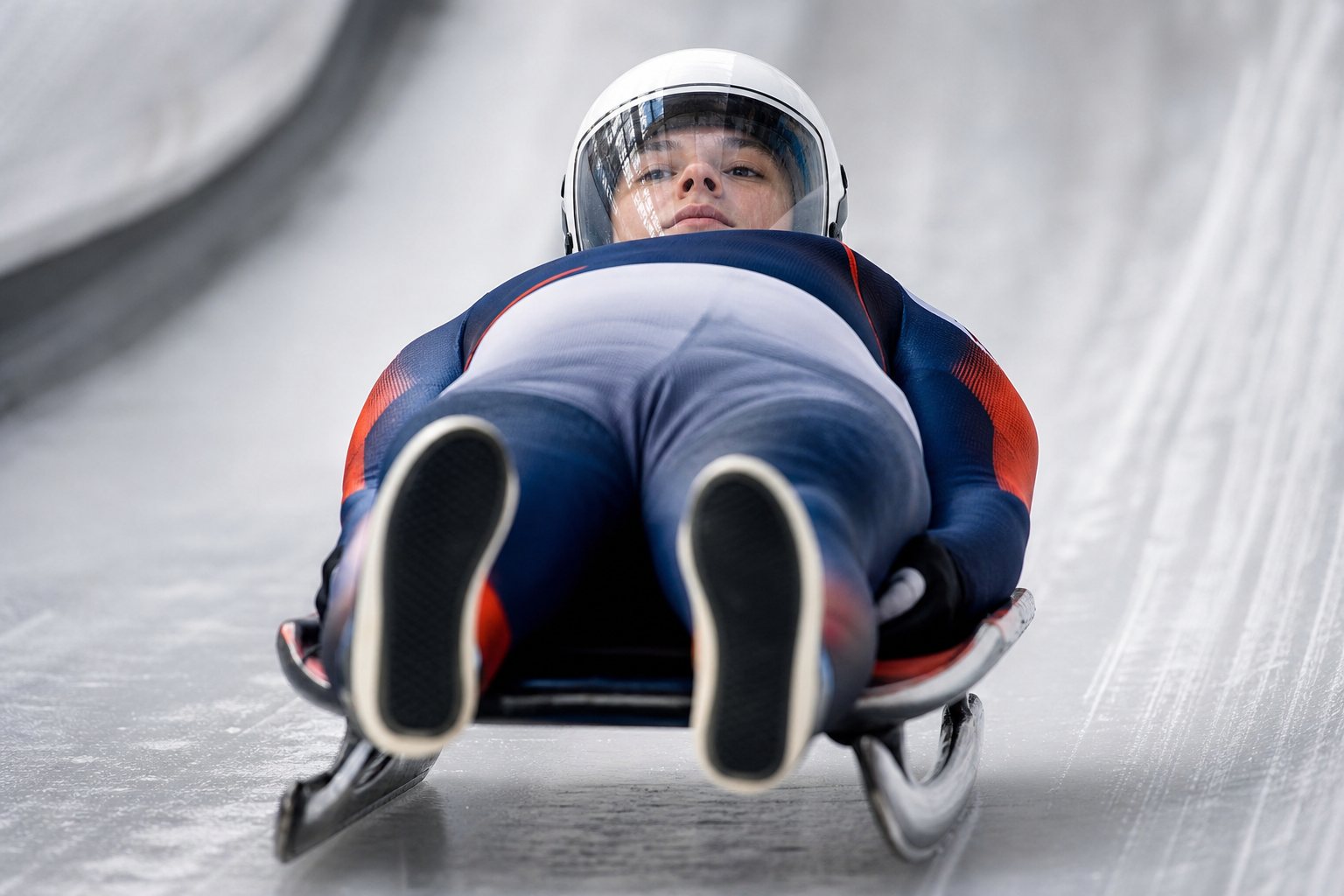
Cortina d’Ampezzo, February 2026, and the home crowd is on its feet. Italy’s Andrea Voetter and Marion Oberhofer, in the very first Olympic women’s doubles luge race, slide to gold, ahead of Germany and Austria. Hours earlier on the same ice, Germany’s Max Langenhan had set four track records in four runs to win the men’s singles in 3:31.191. Luge (sometimes called artificial-track luge, to tell it from natural-track luge) is the sliding sport where you lie on your back, feet first, with no brake and no steering wheel.
Luge guides: what do you need?
New to luge? Start with the first card. Everything here is general education, not medical advice.
History & Origins of Luge
Luge is sledding on your back, feet first, and people have raced sleds for a long time. The first recorded luge competitions took place in 1890 at the Innsbruck-based Academic Alpine Club, according to Olympedia. The International Luge Federation (FIL) lists the first international sled contest as 12 February 1883, on a road between Davos and Klosters in Switzerland (FIL). Older sledding traditions exist in many mountain regions, but we only list dates we could tie to those pages.
Racing moved from roads and natural tracks to purpose-built iced tracks, and the first World Championships on an artificial track were held in Oslo in 1955. Luge joined the Winter Olympics at Innsbruck in 1964. Since then the program has kept growing: a mixed team relay was added in Sochi in 2014, and at Milano Cortina 2026 the open doubles event was split into men’s and women’s doubles for the first time (Olympedia).
- 1883: First international sled contest, Davos to Klosters, Switzerland (FIL).
- 1890: First recorded luge competitions at the Innsbruck-based Academic Alpine Club (Olympedia).
- 1913 and 1914: International Tobogganing Association formed; first European Championships (Olympedia).
- 1954: The IOC recognizes luge as an Olympic sport (Olympedia).
- 1955: First World Championships, in Oslo (FIL, Olympedia).
- 25 January 1957: FIL founded in Davos with delegates from 13 nations (FIL).
- 1964: Luge debuts at the Innsbruck Winter Olympics (FIL, Olympedia).
- 1979: First natural-track World Championships, Inzing, Austria (FIL).
- 2014: Team relay added to the Olympics in Sochi (Olympedia).
- 2026: Men’s and women’s doubles are separate Olympic events for the first time (Olympedia).
Legends of the Sport
Athletes from different eras, in no ranking order. Medal counts are Olympic totals as listed by Olympedia, read 13 November 2026.
- Georg Hackl (Germany): three Olympic golds and five Olympic medals in total.
- Armin Zöggeler (Italy): six Olympic medals, two of them gold.
- Natalie Geisenberger (Germany): six Olympic golds and seven medals in total.
- Felix Loch (Germany): three Olympic gold medals.
- Tobias Wendl and Tobias Arlt (Germany): doubles partners, each with seven Olympic golds and eight medals in total.
- Max Langenhan (Germany): won the men’s singles at Milano Cortina 2026 in 3:31.191 and set track records in all four runs (FIL).
Official results and records
We have not copied results tables here. For current results, see the International Luge Federation (FIL), Olympics.com luge and Olympedia luge. Results verified through 13 November 2026; the latest Games checked was Milano Cortina 2026 (men’s singles only).
How we keep this current: we re-check results after each major championship and update the date above. Spot an error? See our editorial policy.
Here is how luge works, how kids and adults really start, the injury research and the gear.
Luge at a glance
| What it is | Racing down an iced track on a small sled, lying on your back and feet first. |
|---|---|
| How it is won | Lowest combined time over the runs, timed to the thousandth of a second. Olympic singles are four runs over two days; doubles are two runs in one day. |
| Events | Men’s and women’s singles, men’s and women’s doubles, and a four-sled team relay (five Olympic events in 2026). |
| Participants | Age classes from youth to general class; the sport is led by Germany, Austria and Italy. |
| Where | Artificial ice tracks. In the US the Olympic-level tracks are at Lake Placid, New York, and Park City, Utah. Natural-track luge (on snow-covered mountain roads) and alpine luge also exist. |
| Governing bodies | International Luge Federation (FIL) worldwide; USA Luge in the United States. |
| Season | Winter on ice; summer and fall wheeled-sled sessions are used for scouting and training. |
How luge works
At the start, the athlete sits on the sled and grips two handles, rocking back and forth to build momentum, then pulls and pushes with gloves that have small spikes. Once under way, the athlete lies back and steers by pressing on the runners with the calves and shifting the shoulders. There are no handlebars and no brakes. NBC Olympics says sleds can exceed 145 km/h (90 mph). Reference summaries put racing sleds at about 21 to 25 kg for singles and 25 to 30 kg for doubles; the FIL rules say sled dimensions are tightly defined and that weight varies by age group and event, with extra weight for lighter athletes governed by the rulebook.
Singles, doubles and the team relay
- Singles: one athlete, four runs over two days at the Olympics; the combined time ranks everyone. Men start higher up the track than women.
- Doubles: two athletes on one sled. Two runs in a single day.
- Team relay: a country sends four sleds in order (women’s singles, men’s doubles, men’s singles, women’s doubles). Each athlete slaps a touch pad at the finish, which opens the next start gate while the team clock keeps running. Germany won it in 2026 for the fourth straight Games, Austria took silver and Italy bronze; the US finished fifth.
Who plays luge and at what level
Youth and juniors. FIL organizes racing by age class: youth B, youth A, juniors and the general class. In the US, USA Luge runs a summer “Slider Search” tour using sleds on wheels and invites promising kids to screening camps at its Lake Placid or Park City facility. Those who do well can try ice at a sanctioned track in Lake Placid, Park City or Muskegon, Michigan. Local clubs include the Adirondack Luge Club in Lake Placid and the Wasatch Luge Club in Park City. Some past Slider Search clinics have been aimed at children around 8 to 12; check usaluge.org for what is on offer now.
School and college. We found no NCAA or high school championship for luge. Athletes train with clubs and national programs.
Elite. FIL runs the World Cup and World Championships. Luge has been an Olympic sport since 1964, and Germany leads the all-time medal table. In 2026 the reports we read had Germany winning the men’s singles (Langenhan), the women’s singles (Julia Taubitz), the men’s doubles (Tobias Wendl and Tobias Arlt) and the team relay, with Italy winning the women’s doubles, a new event at these Games. A US athlete named Farquharson was reported with bronze in the women’s singles. Medal tallies differed between the sources we read, so check olympics.com for the official table.
Olympic and Paralympic status
- Olympics: five luge events at Milano Cortina 2026 (Cortina Sliding Centre). For the French Alps 2030 Games, reports from the FIL say luge is planned for the refurbished 1992 track at La Plagne. The event list for 2030 is not confirmed on the pages we could read: check the official programme for the current Games.
- Paralympics: we did not find luge on the Paralympic Winter Games program. Check paralympic.org for the current Games.
Physical demands
Langenhan’s four winning runs added up to 3:31.191, so a run lasts roughly a minute or less. It starts with a burst of arm and shoulder pull on the handles, then the effort changes: holding a tight position on your back while small calf and shoulder movements steer the sled. In plain terms that asks for upper-body power for the start, a steady trunk and neck, and lots of practice on the track. We did not find a published fitness profile for luge athletes, so we do not give test numbers.
Health and safety in luge
General information only; for a specific injury, see a sports medicine doctor, physical therapist or athletic trainer.
What the studies found
- US Olympic Training Center, 1985-1992: in a 1997 study in the American Journal of Sports Medicine, 1,043 athletes took 57,244 runs and had 407 injuries. Contusions were 51% and strains 27%, concussions 2% and fractures 3%, and crashes caused 64% of injuries. The authors called luge “relatively safe,” with an injury rate comparable to recreational alpine skiing.
- 46 weeks with 40 elite athletes (2024): illness was the most common health problem (41.9%), followed by acute injuries (31.9%) and overuse injuries (24.0%). Acute injuries were most often in the hand, foot, head and neck; overuse problems most often in the shoulder and lower back. Four concussions were recorded, and none of those athletes took more than three days off normal training, which the authors note is shorter than current return-to-sport guidance.
- Sliding sports as a group: a 2018 review found concussions were 13 to 18% of injuries in sledding sports, and that “sled head” (a foggy headache after repeated bumpy runs) is poorly understood.
Concussion: the CDC’s HEADS UP says to recognize and remove. A person with a possible concussion stops for the day and is seen by a healthcare provider, who decides when they may return. Call 911 for danger signs like repeated vomiting, a seizure or a worsening headache.
Rules and habits that protect sliders
- Slide only on tracks approved and prepared for the age group, with a coach, and wear the helmet and protective gear your program requires.
- Follow the program’s progression. USA Luge’s recruiting pages describe moving from wheeled sleds to ice at a sanctioned track, not straight to the top of a fast track.
- The sport is a reminder of the stakes: Georgian luger Nodar Kumaritashvili died in a training crash before the 2010 Winter Games, which is part of why track safety and young sliders’ progression get close attention.
- Cold tracks mean long waits at the start house: layers, warm hands and fluids matter. See the CDC’s hypothermia and frostbite guidance in our sources.
Training, recovery and nutrition pointers
Off the ice, sliders train explosive pulling and starting power, shoulder and back strength, and trunk control. Neck conditioning is worth discussing with a physical therapist or strength coach given the head-injury data. Time on the sled, starting drills and video review are the core. Recovery is ordinary: sleep (the CDC says 8 to 10 hours for teens, at least 7 for adults), regular meals with enough fluid, and rest days. Rolling out a tight upper back and shoulders is a comfort measure many athletes like. For shoulder and back care, see our skiing recovery page for winter-sport ideas and our recovery tools guide; for fueling basics, see the skiing nutrition page for cold-weather principles.
Gear
Racing sleds, helmets and suits meet FIL rules and come through a club or national program. FIL’s rules require tight race suits, protective helmets and spiked gloves for the start; they publish separate helmet guidelines, so ask your coach before buying anything for the track. What beginners can usefully add on their own is the support kit: warmth while waiting, and recovery tools.

HotHands Hand Warmers, 40 pairs
- Air-activated
- Maker: up to 10 hours each
- For cold start houses
$25.60 at Amazon, as of Nov 17, 2026 01:07 UTC
Check price on Amazon
TriggerPoint GRID 1.0 Foam Roller
- 13 in multi-density
- Hollow core
- Foam rolling for comfort

Theragun Mini (3rd Gen)
- 3 speeds
- 3 attachments
- Travel case
$219.99 at Amazon, as of Nov 17, 2026 01:07 UTC
Check price on Amazon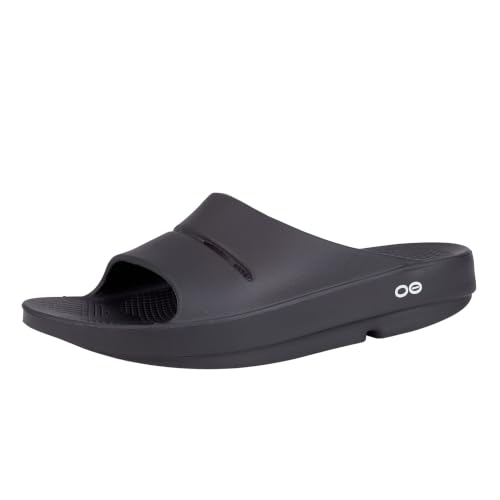
OOFOS OOahh Slide
- OOfoam slide
- APMA Seal of Acceptance
- Machine washable
$59.95 at Amazon, as of Nov 17, 2026 01:07 UTC
Check price on AmazonThese are comfort items, not safety equipment: they do not replace a certified helmet, coaching or medical care. More in our massage gun guide and recovery shoes guide.
Related sports and disciplines
- Bobsleigh and skeleton, the other sliding sports on the same tracks.
- Speed skating and curling, more ice sports.
- Skiing, for winter-weather and head-injury basics.
Luge FAQs
How fast is luge?
NBC Olympics says Olympic sleds can exceed 145 km/h (90 mph), which makes luge the fastest of the three sliding sports in reference summaries.
How do you steer a luge?
By pressing on the runners with the calves and shifting the shoulders and body weight. There are no handlebars and no brakes.
How can a child get started in luge?
Look for USA Luge’s Slider Search events and local clubs in Lake Placid and Park City; coaches scout kids on wheeled sleds and invite promising ones to a screening camp.
What is the difference between luge and skeleton?
In luge you lie on your back, feet first, and steer with your legs and shoulders. In skeleton you lie on your stomach, head first.
Is luge safe?
Studies describe luge as having injury rates comparable to recreational alpine skiing, mostly bruises and strains, but crashes at speed can cause concussions and fractures. Progression, track standards and coaching matter.
Sources
- NBC Olympics: How does Olympic luge work?
- FIL: rules for artificial track
- FIL: Max Langenhan wins Olympic gold in Cortina
- NBC Olympics: luge results, Milano Cortina 2026
- Cummings and colleagues (1997): injuries in the sport of luge
- Tomaselli and colleagues (2024): health problems in elite luge athletes
- McCradden and Cusimano (2018): concussion in sledding sports
- FIL: La Plagne for the 2030 sliding events
- CDC HEADS UP, CDC sleep and CDC preventing hypothermia
More to explore: the sports hub, the skiing injuries page for cold-weather and head-injury basics, recovery tools and foam rollers.