This article contains affiliate links: if you buy through them we may earn a commission, at no extra cost to you. Read our affiliate disclosure.
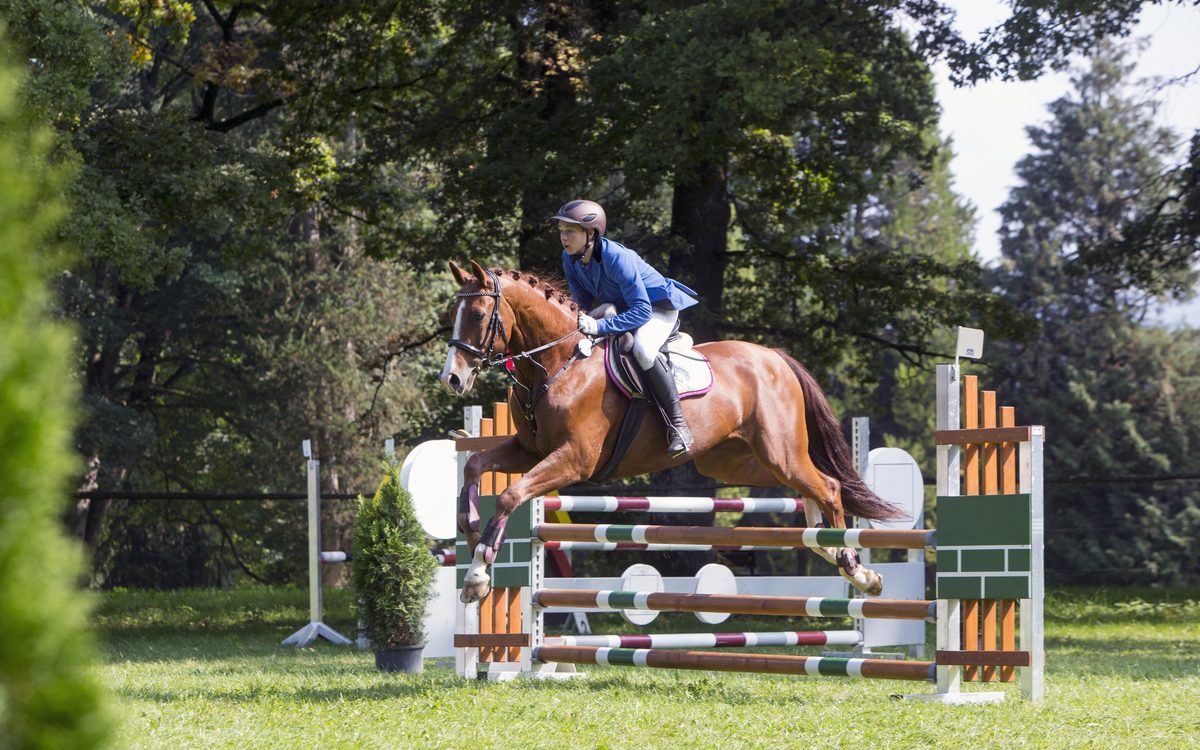
The arena goes quiet. A rider circles, the bell rings, and a chestnut horse turns toward a wide white oxer. A few strides later the pair are over it and into a combination, and every sound in the building is the thud of hooves and the rattle of a rail that stays in its cups, or doesn’t. At Paris 2024, Germany’s Christian Kukuk won individual gold and Great Britain took the team title. Show jumping (also called jumping, stadium jumping or the “jumper” division) is the equestrian sport where a horse and rider race a course of fences, and the fewest faults wins.
Show Jumping guides: what do you need?
New to show jumping? Start with the first card. Everything here is general education, not medical advice.
History & Origins of Show Jumping
Jumping horses over fences began as a practical skill of the hunting field, and organized jumping competitions are a fairly recent invention. Horse “leaping” contests drew attention at the Dublin horse show in 1869 and reached Britain in the 1880s; the first major show jumping competition in England was held at Olympia in 1907. An early form of jumping appeared at the 1900 Olympics, and the sport took its modern form at the 1912 Games, where it has been on the programme ever since (FEI history).
Two things shaped what riders do today. First, the international federation (FEI) created common rules, and national bodies such as what is now the United States Equestrian Federation (formed in 1917 as the American Horse Shows Association) built the show circuits. Second, course design moved from natural-looking obstacles to the coloured poles, oxers and combinations we see now, with faults for knockdowns and refusals. Where jumping first started as a sport, and who the first “show jumper” was, is not settled, so we only list dated, documented steps below.
- 1869: Horse “leaping” competitions gain prominence at the Dublin horse show.
- 1900: An early form of jumping is included at the Paris Olympics.
- 1907: First major English show jumping competition, at Olympia in London.
- 1912: Show jumping in its current form appears at the Stockholm Olympics.
- 1917: The American Horse Shows Association (now USEF) is formed.
- 1949: Capt. Alberto Larraguibel clears 2.47 m on Huaso in Chile, the still-quoted high jump record.
- 2024: Paris Olympics: Germany’s Christian Kukuk wins individual gold and Great Britain the team title.
Legends of the Sport
Influential riders across eras, listed in no particular order.
- Hans Günter Winkler (Germany): won Olympic gold in 1956 on the mare Halla and is one of the most decorated riders in Olympic jumping history.
- Raimondo d’Inzeo (Italy): Olympic individual champion at Rome 1960, who rode with his brother Piero for Italy.
- Pierre Jonquères d’Oriola (France): Olympic individual gold in 1952 and 1964.
- Nick Skelton (Great Britain): won individual gold at Rio 2016 at age 58.
- Steve Guerdat (Switzerland): Olympic champion in 2012 and silver medallist at Paris 2024.
- McLain Ward (United States): Olympic team gold in 2004 and 2008 and team silver in 2020 and 2024.
- Ben Maher (Great Britain): Tokyo 2020 individual champion and a member of the Paris 2024 team-gold squad.
- Henrik von Eckermann (Sweden): 2022 World Champion (individual and team) and Tokyo 2020 team gold medallist.
Official results and records
We only list champions and records here after checking them on the official source. For the latest results, go to:
How we keep this current: we re-check facts after each major championship and update this page. Spot an error? See our editorial policy.
This page covers the stand-alone sport for riders, parents and fans: how faults are counted, the levels and classes, the Olympic picture, and the injury research and gear rules that matter. Eventing also includes a jumping phase; see our eventing page for that.
Show jumping at a glance
| What it is | A horse and rider jump a numbered course of fences in an enclosed arena, within a set time. |
|---|---|
| How it is scored | Faults. A knockdown or first disobedience costs 4 faults, each second over the time allowed costs 1, and a fall or a second disobedience means elimination (USEF). Fewest faults wins; ties go to a jump-off. |
| Participants and levels | Riders of all ages on horses and ponies; fence heights from about 2 feet 3 inches (0.70 m) up to the Olympic maximum of about 1.6 m (5 feet 3 inches). |
| Where it is played | Indoor and outdoor arenas, from schooling shows to Olympic stadiums. |
| Governing bodies | FEI worldwide; US Equestrian (USEF) in the United States, which licenses competitions. |
| Olympic status | Team and Individual jumping medals on the LA28 programme. |
How a round works
Riders walk the course on foot first, then ride it in a set order. The course designer builds verticals, spreads (oxers), water jumps and combinations of two or three fences set a few strides apart. The USEF defines a knockdown as a change to any part of the fence that sets its height, whether the rail falls or lands on a different support. A refusal means stopping in front of a fence, a run-out means avoiding it, and a rider who circles or loses forward movement can also be penalized. After a refusal or run-out the rider must re-jump the same fence.
- 4 faults: a knockdown, the first disobedience, or a knockdown of the timing equipment.
- 1 fault: for each commenced second over the time allowed.
- Elimination: a second disobedience, a fall of horse or rider (in most classes), going off course, or jumping a fence before it is reset.
Different classes use different scoring tables. Some are scored on faults and time, some on faults only, some convert faults into seconds, and optimum-time classes reward finishing close to a target time. Tied riders often return for a shorter, faster jump-off. A horse is judged to have fallen when its shoulder and haunch on the same side touch the ground, and a rider has fallen when separated from a horse that has not fallen, in a way that requires remounting.
Who plays it and at what level
Youth and school. USEF rules give riders under 25, juniors, young riders and amateurs their own classes, and ponies compete in pony jumper sections. Pony Club, 4-H, the Interscholastic Equestrian Association and college programs are the usual routes; see our youth riding page.
Club to elite. The USEF says jumpers may be of any breed, height or sex, and offers sections for young horses aged four to seven. Fence heights run in 5 cm steps, with classes advertised as height ranges such as 1.30 to 1.35 m (4’3″ to 4’5″). The USEF table runs from 0.70 m up to at least 1.45 m (4’9″), and international classes go higher.
Olympics, by edition. Equestrian has been Olympic since 1912, with men and women on equal terms. At Paris 2024, Germany’s Christian Kukuk won the individual title and Great Britain won team gold. For LA28, the LA28 organizers list Team and Individual jumping, with obstacles up to 1.6 m, at Santa Anita Park in Arcadia. Jumping closes the equestrian programme on a provisional timetable: team qualifier on 25 July 2028, team final on 26 July, individual qualifier on 28 July and individual final on 29 July. Check the official programme for the current Games before planning travel.
Physical demands
A round lasts only a minute or two, but riders need leg strength and balance to stay with the horse over fences, a stable core and good reactions. Research on rider heart rate shows how excitement builds: one study found riders’ heart rates rising from about 91 beats per minute at rest to about 150 during a public performance. Most riders also train off the horse for strength, flexibility and aerobic fitness.
Health and safety for show jumping
This section is general information, not medical advice. If you are hurt, see a sports medicine doctor, physical therapist or athletic trainer.
Injury patterns
- Overall rate. A German survey of 363 show jumpers found 3.7 injuries per 1,000 hours of exposure, with the head the most affected body region at 31% (2022 study).
- Helmets and vests. In the same survey, riders who often or always wore a helmet had significantly fewer head injuries and shorter total injury time, and riders who often or always wore a safety vest had significantly fewer spinal injuries. These are associations from self-reported data, not guarantees.
- Professionals can be hurt more seriously. A study of 264 show jumpers (105 professionals, 159 amateurs) recorded 636 injuries; 40.9% of professionals’ injuries and 23.9% of amateurs’ were severe. Head injuries were 15% of all injuries and fractures 12%, and 33.7% of riders reported persistent pain at some site (2011 study).
- Falls cause the worst injuries. CDC researchers estimated about 103,000 emergency-department visits a year in the US for horse-related injuries in 2001 to 2003, with about two-thirds of the injured people mounted when they fell or were thrown. A 2025 study of 357 collegiate riders found more than half fell in a year, and 78% would not replace their helmet after every fall.
- The back. A 2025 analysis estimated about 54,830 US emergency-department patients with spine injuries from riding between 2000 and 2023, nearly half in the lumbar region. Spinal and pelvic injuries are linked to falls and must be ruled out after one.
Rules and equipment
USEF rules make a certified helmet compulsory when mounted at licensed hunter/jumper competitions and strongly encourage it everywhere; body protectors are allowed in any class, with ASTM F1937 or SEI standards recommended; boots must have a distinguishable heel. Look for ASTM F1163/SEI on the helmet label, have it fitted by someone qualified, and follow the maker’s advice to replace it after an impact. Abuse of the horse, such as excessive whip or spur use, is grounds for elimination.
Concussion
Follow the CDC’s HEADS UP rule: recognize and remove. A rider who may have hit their head stops for the day and sees a healthcare provider, who decides when riding resumes. Call 911 for danger signs such as repeated vomiting, a seizure or worsening headache, and never move someone with a possible neck or back injury.
Training, recovery and nutrition pointers
Jumping lessons with a qualified instructor, flatwork for balance, and your own strength and mobility work all help. The CDC recommends 150 minutes of moderate activity a week for adults plus two days of strength work. On show days, bring water and snacks and plan around your class times. See our horseback riding training, recovery and nutrition and supplements pages, and our resistance bands guide. Talk to a doctor or dietitian before taking supplements.
Gear
Show jumping requires a certified helmet, boots with a heel, breeches and a jacket in the show ring. A body protector is optional in most classes but worth considering for schooling and big fences. Verified standards come from the labels (ASTM/SEI); the rest is maker information. Our full list is on the horseback riding gear page.
Picks to start: the Ovation Deluxe Schooler helmet (listed as ASTM F1163-15 and SEI certified), the Tipperary Contender body protector (maker lists ASTM and SEI), the Ariat Heritage IV Zip Paddock boot, and OOFOS OOahh slides for after the class.

Ovation Deluxe Schooler Helmet
- ASTM F1163-15 + SEI (listing)
- Removable washable liner
- Dial adjuster

Tipperary Contender ASTM Body Protector
- ASTM and SEI certified (maker)
- Lace sides, zip front
- Adjustable shoulders

Ariat Women's Heritage IV Zip Paddock Boot
- Full-grain leather
- 4LR stabilizing shank
- Zip closure
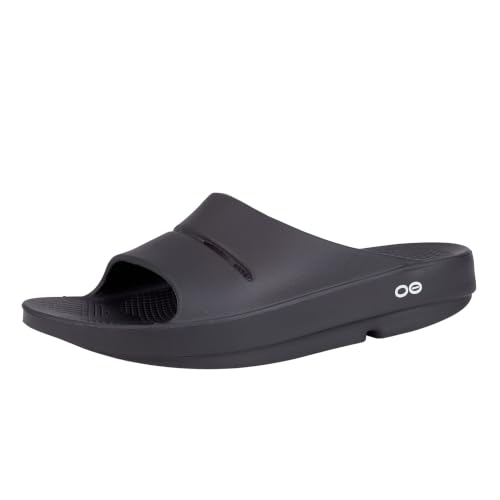
OOFOS OOahh Slide
- OOfoam slide
- APMA Seal of Acceptance
- Machine washable
$59.95 at Amazon, as of Nov 17, 2026 02:07 UTC
Check price on AmazonRelated sports and disciplines
Parent: horseback riding. Siblings: eventing and dressage. Also: para equestrian, polo and horse racing.
Show jumping FAQs
How do you win a show jumping class?
By finishing with the fewest faults, and in some classes the fastest time. A knockdown or a first refusal costs 4 faults, each second over the time allowed costs 1, and ties are often decided in a jump-off.
How high do show jumpers jump?
Beginner classes start around 2 feet 3 inches (0.70 m). At the Olympics, LA28 describes obstacles up to 1.6 m (about 5 feet 3 inches).
Is show jumping an Olympic sport?
Yes. Jumping has Team and Individual medals on the LA28 programme, scheduled for 25 to 29 July 2028 at Santa Anita Park (provisional). Check the official programme for the current Games.
What is the difference between show jumping and eventing?
Show jumping is one phase in an arena. Eventing adds dressage and a cross-country ride over fixed obstacles, and includes a jumping phase of its own.
Do show jumpers have to wear helmets?
At USEF-licensed hunter/jumper competitions, riders must wear a certified helmet whenever mounted. Wearing one at every ride, at home too, is what the U.S. Pony Clubs policy (“every ride, every time”) asks of members.
Sources
- USEF Jumper Division rules (JP) and GR8: Conduct of Licensed Competitions
- LA28 Equestrian and FEI: LA28 equestrian timetable
- Olympics.com: Paris 2024 jumping results
- Studies: German show jumper injuries, 2022; show-jumping injuries, 2011; CDC authors, horse-related injuries; collegiate equestrians; spine injuries; rider heart rate
- CDC HEADS UP and CDC activity guidelines
Keep exploring: riding injuries, riding rules, our recovery tools guide and the sports hub.