This article contains affiliate links: if you buy through them we may earn a commission, at no extra cost to you. Read our affiliate disclosure.
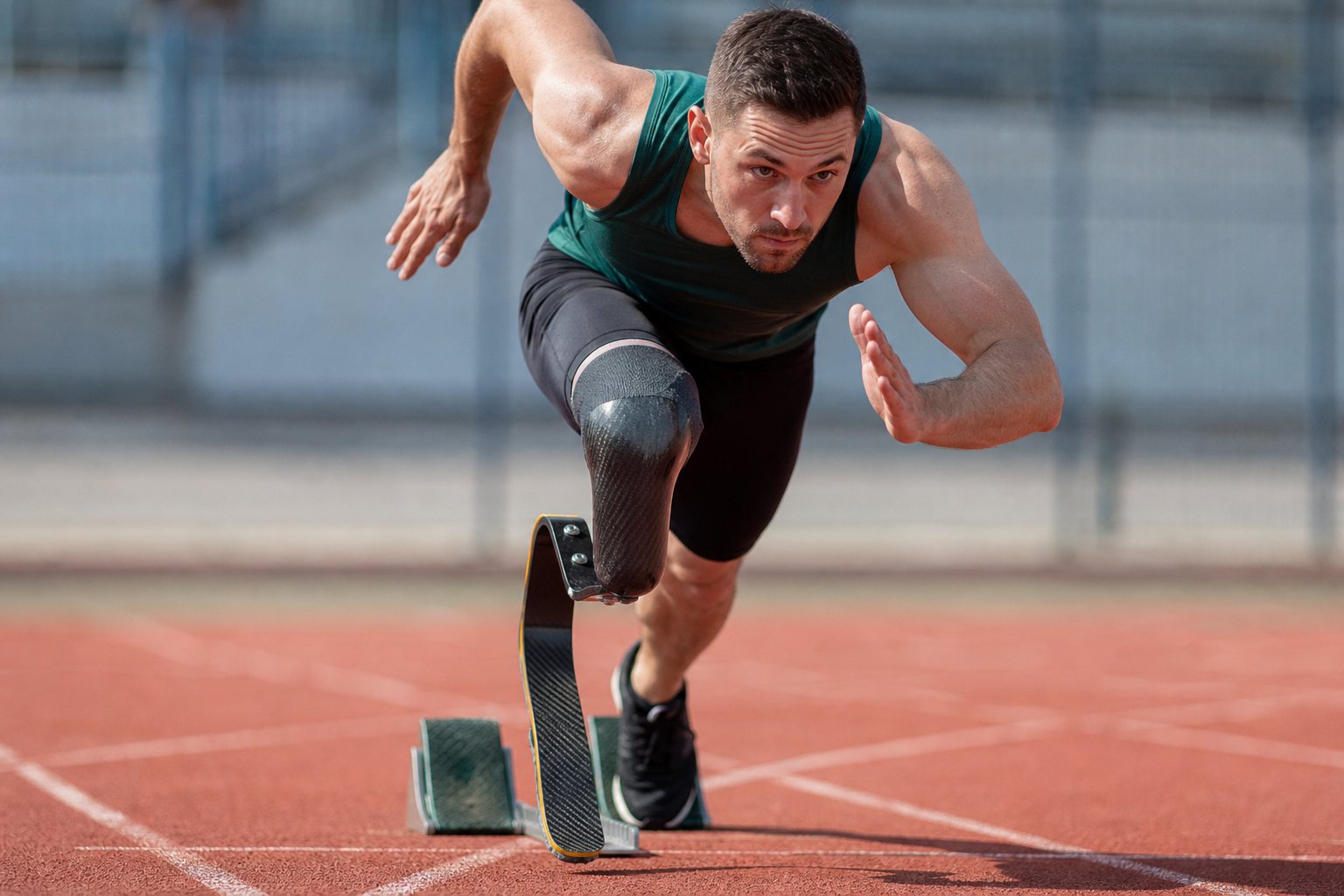
It is the final day of the Paris 2024 Paralympics, and the marathon runners are heading for the finish at the Esplanade des Invalides while, at the Stade de France, the track meet that began on 30 August is winding down. A racing wheelchair rolls by with its driver bent low over the push rims; a runner with a prosthetic leg sprints past; a blind athlete runs joined to a guide by a short rope. Para athletics (Para track and field) is track, field and road racing for athletes with physical, vision or intellectual impairments, and it is the biggest sport at the Paralympic Games.
Para Athletics guides: what do you need?
New to para athletics? Start with the first card. Everything here is general education, not medical advice.
History & Origins of Para Athletics
Para athletics began as a javelin event at the Stoke Mandeville Games in 1952, for athletes with spinal cord injuries, many of them injured war veterans. It became a core sport of the first Paralympic Games in Rome in 1960, and over the following decades new groups joined: wheelchair racers in 1964, blind and amputee athletes in 1976, and athletes with cerebral palsy in 1980. The sport now runs through World Para Athletics, with World Championships, regional championships and a Grand Prix series (Paralympic.org).
- 1952: The Stoke Mandeville Games hold the first Para athletics competition, a javelin event for athletes with spinal cord injuries.
- 1960: Rome hosts the first Paralympic Games; Para athletics has 31 athletes from 10 countries in 25 medal events.
- 1964: Tokyo: 42 medal events; wheelchair racing debuts.
- 1976: Toronto adds full medal events for blind and amputee athletes.
- 1980: Arnhem: athletes with cerebral palsy compete for the first time.
- 1984: The first marathon events at the Paralympics.
- 1994: First World Championships, in Berlin.
- 2003: First European Championships, in Assen.
- 2017: First World Junior Championships, in Nottwil.
- 2020: Tokyo adds a mixed-gender 4×100 m universal relay.
Notable Athletes of Para Athletics
These athletes are listed alphabetically by surname, not ranked, and none of them endorses AthleteRx. Medal facts come from each athlete’s page on Paralympic.org.
- Bart Dodson (USA) won eight gold medals in the TW1 class at the 1992 Paralympics.
- Hannah Cockroft (GBR) T34 wheelchair racer; nine Paralympic golds across London 2012, Rio 2016, Tokyo 2020 and Paris 2024.
- Tatyana McFadden (USA) T54 wheelchair racer; eight Paralympic golds from London 2012 to Tokyo 2020, from 400 m to 5000 m.
- Franz Nietlispach (SUI) won eight medals, six of them gold, at Seoul 1988.
- Markus Rehm (GER) long jumper; five Paralympic golds from London 2012 to Paris 2024 (T64 at Tokyo 2020 and Paris 2024).
Official results and records
For current champions and records, go to the official sources below. We do not copy results tables here unless we have checked them on the official page.
- Paralympic.org: Para athletics (Games results, history and World Para Athletics information)
- Paralympic.org: Para athletics history
How we keep this current: we re-check facts after each major championship and update this page. Spot an error? See our editorial policy.
Para athletics at a glance
| What it is | The track, jumping, throwing and marathon events of athletics, open to athletes with eligible impairments. The rules are close to those of non-disabled athletics, with adaptations such as guides and racing wheelchairs. |
|---|---|
| How it is won | Fastest time, longest jump or throw, or highest clearance in each event, within a “sport class” of athletes with a similar effect of impairment on the event. |
| Participants and levels | Athletes with physical, vision and intellectual impairments: club and school programs, national championships, World Championships, Paralympic Games. |
| Events | Track: 100, 200, 400, 800, 1,500, 5,000 m and relays. Field: long jump, high jump, club throw, discus, javelin, shot put. Road: marathon. |
| Governing body | World Para Athletics, part of the International Paralympic Committee (IPC), based in Bonn, Germany. In the US, USATF’s Para program. |
| Games | Paralympic sport since the first Games in Rome in 1960; 164 medal events at Paris 2024. |
How it works: classes, events and equipment
Events look familiar. What is new for most spectators is the sport class, a letter and two digits such as T54 or F46. The T stands for track (including jumps) and F for field (throws). Paralympic.org explains that the tens digit groups athletes by type of impairment and that within each group, “the lower the number within each impairment type, the more severe the impairment.” In plain terms, classification exists so that athletes whose impairments affect the event in a similar way compete against each other. It is not a medical label of the person.
- 11 to 13: vision impairment. T11 and F11 athletes have very low vision or none and run with a guide.
- 20: intellectual impairment.
- 31 to 38: coordination impairments (the 30s are used for seated throws and wheelchair racing as well as for standing events).
- 40 and 41: short stature.
- 42 to 47: limb deficiency, leg length difference, reduced muscle power or reduced range of movement in the legs (42 to 44) or arms (45 to 47).
- 51 to 57: the same kinds of impairment for athletes who race in a wheelchair or throw seated, with T51 to T54 for wheelchair racing.
Equipment is part of the sport. Under World Para Athletics rules, wheelchairs count as sports equipment and racing chairs are lightweight and aerodynamic. Paralympic.org’s Paris 2024 introduction says leg prostheses are required in track events and optional in field events. Athletes with a vision impairment have a sighted guide, who may be linked to the runner with a rope tether; in jumps and throws, an acoustic device or a sighted “caller” can signal the take-off point or the target. Field events use the club, discus, shot put and javelin; club throw has been on the Paralympic program since Rome 1960.
Who takes part, and at what level
Getting started. USATF’s Para program says competition is open to athletes with disabilities such as dwarfism, amputation, visual impairment, spinal cord injury, cerebral palsy or stroke, and points newcomers to its Athlete Handbook and its “How Do I Become a Paralympian?” document. Coaches and officials have their own education pages. We did not confirm youth or school program details from this source; ask your local club, school athletic department or adaptive-sports organization.
International. World Para Athletics lists the Paralympic Games, World Championships, regional games and a Grand Prix series. The first World Championships were in Berlin in 1994, the first European Championships in Assen in 2003 and the first World Junior Championships in Nottwil in 2017.
Paralympic status, by edition. Para athletics began as a javelin event for athletes with spinal cord injuries at the Stoke Mandeville Games in 1952. At the first Paralympics, Rome 1960, 31 athletes from 10 countries contested 25 medal events. Tokyo 1964 grew to 42 and introduced wheelchair racing. Full medal events for blind and amputee athletes were added in Toronto in 1976, athletes with cerebral palsy first competed in Arnhem in 1980, and the first Paralympic marathons were in 1984. Tokyo 2020 had around 1,100 athletes in 168 medal events and a new mixed-gender 4×100 m universal relay. Paris 2024 had 164 medal events, held from 30 August to 8 September, with the marathon on the last day. Para athletics is on the initial 22-sport program for the Los Angeles 2028 Paralympics (15 to 27 August 2028), though we have not confirmed the number of medal events there; check the official programme.
Physical demands
Because the sport covers every athletics event, the demands change by event and by class. A 100 m sprinter needs explosive power; a marathon wheelchair racer needs upper-body endurance and a smooth push; a seated thrower needs trunk and shoulder power from a seated position. For athletes who push wheelchairs for racing and in daily life, the shoulders and arms carry much of the load, which is why shoulder care features below. Training for any class is individual, and a coach who knows the athlete’s impairment matters more than any general plan. Our track and field training page covers the common ground.
Health and safety in Para athletics
This is general information, not medical advice, and the right approach depends on the athlete’s impairment. See a sports medicine doctor, physical therapist or athletic trainer who knows Para sport.
Injury patterns
The best large study is Blauwet and colleagues in the American Journal of Sports Medicine (2016), which followed 977 athletes over the 10-day London 2012 Paralympic athletics competition. The overall injury rate was 22.1 per 1,000 athlete-days. Ambulant athletes had the most injuries to the thigh (16.4 percent of their injuries), mostly in track events, while wheelchair and seated athletes had the most to the shoulder and collarbone region (19.3 percent), mostly in field events. Athletes in seated throwing had a higher rate (23.7) than wheelchair racers (10.6), and most injuries did not cause time loss. A one-year Brazilian study of 102 Para athletes (swimming, athletics, powerlifting and taekwondo) found the shoulder complex had the greatest burden, followed by the ankle and knee.
Heat
Heat is a recognized risk for athletes with some impairments. At the 2015 Para Athletics World Championships, temperature readings regularly exceeded the American College of Sports Medicine and athletics guidelines for cancelation, according to a retrospective audit by Grobler and colleagues. In a survey of 107 Paralympians around Tokyo 2020, 57 percent had previously had heat-stress symptoms and 9 percent a medical diagnosis of exertional heat illness. Practical steps include drinking regularly, shade, cooling and acclimatizing; ask your own clinician about your thermoregulation.
Collisions, guides and concussion
Athletes with a vision impairment may be more likely to have a concussion than other athletes, according to a 2024 narrative review, though the evidence is limited and incidence is poorly measured. The CDC’s HEADS UP program lists headache, dizziness, confusion and balance problems as signs; anyone who hits their head should stop and see a healthcare provider before returning, and call 911 for danger signs such as repeated vomiting or a seizure. Train with your guide on the tether and agree signals for turns and the finish.
Training, recovery and nutrition
Sleep matters for every athlete: the CDC recommends at least 7 hours for adults and 8 to 10 for teens. Recovery tools such as foam rollers and massage guns are about comfort, not treatment, and some may not suit every body; talk with your clinician. See the parent sport’s recovery and nutrition and supplements pages, and note that Para athletes subject to anti-doping should check any supplement against the rules of their federation.
Gear
Racing wheelchairs, throwing frames and running prostheses are fitted, custom equipment from specialist makers and prosthetists; we do not recommend a model. Everything below is general athletics gear that suits many ambulant athletes, and it is not a substitute for advice from your coach or prosthetist.
- Spikes: sprinters on foot use spikes with a stiff plate and replaceable pins; check your facility’s maximum spike length.
- Hydration: an electrolyte drink mix for hot meets.
- Recovery shoes: soft slides for tired feet.
Three picks: the Nike Rival Sprint spikes, Nuun Sport electrolyte tablets and the OOFOS OOahh slide.

Nike Rival Sprint Track and Field Spikes
- 3/4-length plate
- Six replaceable spikes
- Rubber at the heel

Nuun Sport Electrolyte Tablets
- Electrolyte drink tablets
- Check the label
- Ask a dietitian about your needs
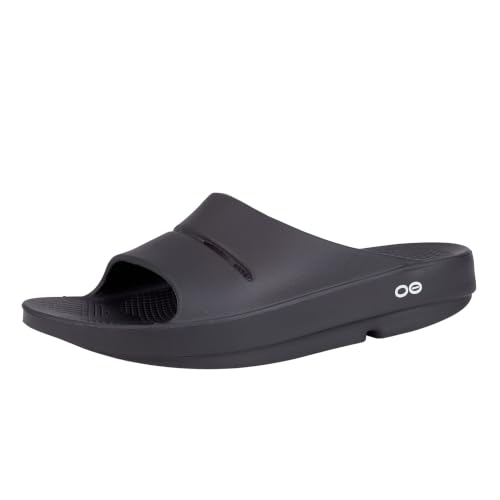
OOFOS OOahh Slide
- OOfoam slide
- APMA Seal of Acceptance
- Machine washable
$59.95 at Amazon, as of Nov 17, 2026 02:07 UTC
Check price on AmazonRelated sports
Parent: track and field. Running: the marathon. Other Paralympic sports on this site: Para swimming, wheelchair basketball, Para cycling, Para triathlon, Para powerlifting.
Para athletics FAQs
What does T54 or F46 mean?
T means track (running and jumping), F means field (throwing). The number is the sport class: the tens digit marks the type of impairment, and a lower number means a more severe effect. T54 is a wheelchair racing class; F46 is an upper-limb class for standing throws and jumps.
How do blind runners race?
With a sighted guide, who may be connected by a rope tether. In jumps and throws, sound signals or a caller mark the take-off and the target.
How many events are there at the Paralympics?
There were 164 medal events in athletics at Paris 2024, making it the largest sport on the Paralympic program, and 168 at Tokyo 2020.
Are wheelchair racing chairs the same as everyday chairs?
No. Racing chairs are lightweight and aerodynamic and are treated as sports equipment. Wheelchair racing debuted at the Paralympics in Tokyo 1964.
How do I get started in Para athletics?
Start with USATF’s Para program pages and its athlete handbook, then contact a local track club, school coach or adaptive-sports organization. Classification for national or international competition is handled by the federation.
Sources
- Paralympic.org: Paris 2024, introduction to Para athletics
- Paralympic.org: Para athletics classification explained
- Paralympic.org: history of Para athletics
- Paralympic.org: LA28 initial sport programme
- USATF Para: about Para track and field
- Blauwet et al. 2016, injuries in Paralympic track and field, London 2012 (PubMed)
- Grobler et al. 2019, illness and heat at a Para athletics World Championships (PubMed)
- Alkemade et al. 2023, heat and Paralympians, Tokyo 2020 (PubMed)
- Teodoro et al. 2024, concussion in Para athletes with vision impairment (PubMed)
- Madaleno et al. 2025, injuries in Para athletes across four sports (PubMed)
- CDC HEADS UP: signs and symptoms
Keep exploring: the track and field hub, track and field injuries, our recovery tools guide, and every other sport on the sports hub.